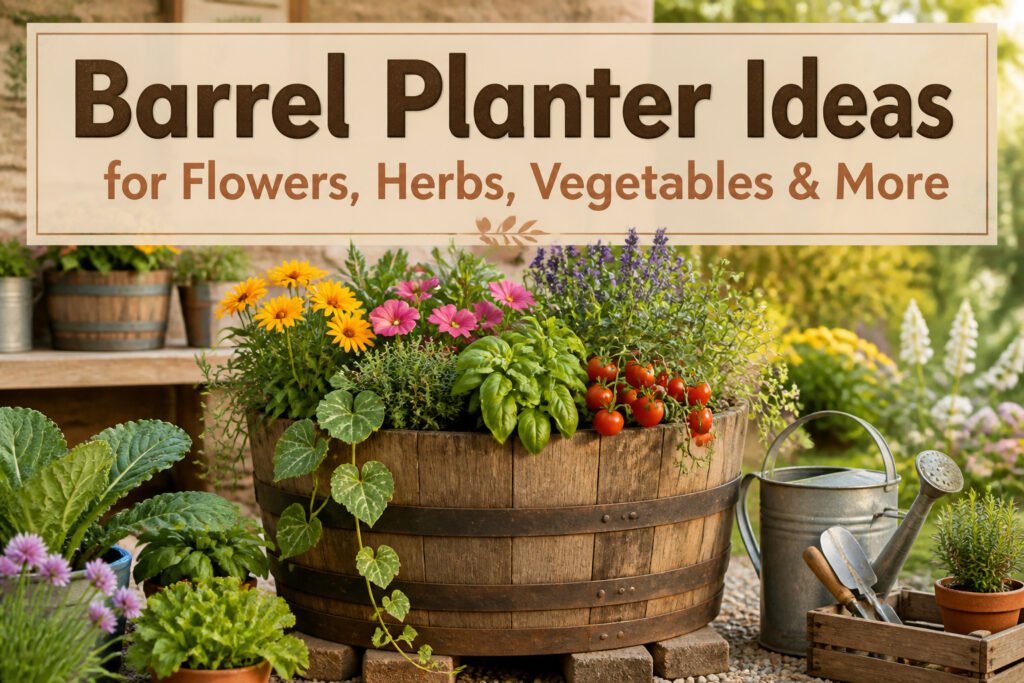
A barrel planter can hold flowers, herbs, vegetables, water, or even become furniture itself; what decides which idea fits your space is whether you need production, decoration, or standing height for guests. The catch is drainage: seal the interior for a fountain, drill holes for tomatoes, and always raise the barrel on bricks so water does not rot the staves from below.
1. Classic Flower Arrangements

A 32–36 inch barrel height gives real room to work with, and the thriller-filler-spiller method keeps the scale from feeling top-heavy. I start with a canna lily dead center; at that container depth it has the root run to push six feet or more by midsummer and still reads as proportional rather than gangly. Around it, three each of pink geranium, coleus, and euphorbia knit the midlayer together, their foliage weaving over the canna’s lower stems so the transition from wood rim to bloom feels gradual, not like a plant on stilts. The spillers matter just as much for balance: bacopa and Supertunia ‘Latte’ trailing the rim soften that hard edge and draw the eye down. Monthly fertilizing carries the whole thing; a slow-release granular at planting won’t last the season in a container this size, and hungry cannas show the shortage fast with pale new leaves.
2. Herb Gardens
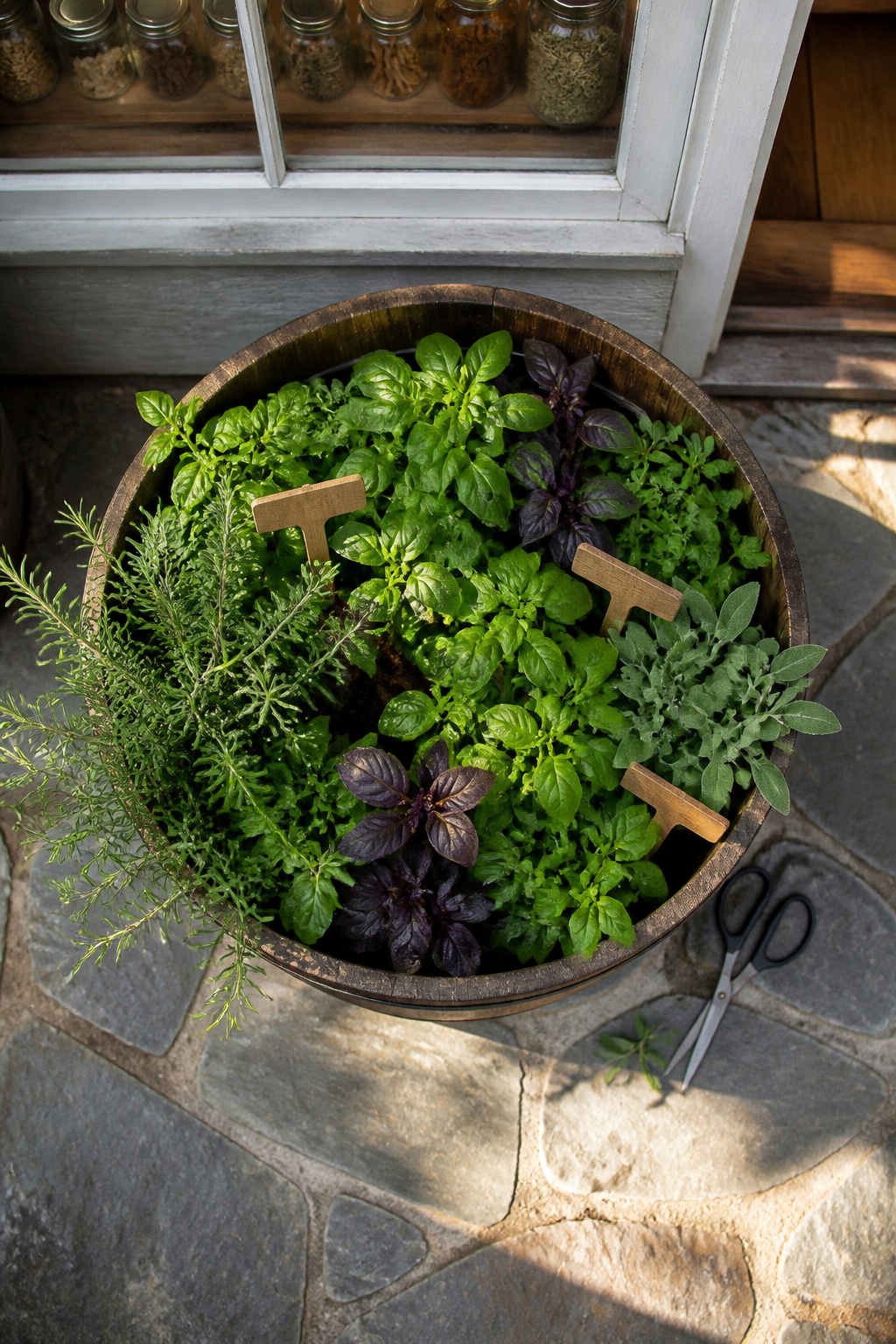
A barrel planted with herbs sits right outside my kitchen door, where I can step out and snip basil for a sauce or lavender for a drawer sachet without crossing the yard. The depth suits rosemary and sage down in the center while thyme, parsley, and smaller basils fill the edges. Herbs need the same drainage setup and lighter soil fill as any barrel planting, with broken cinderblock at the bottom and a mix of potting soil, humus, and amendments on top. I save some weight and cost by filling about one-fifth of the lower barrel with crushed plastic nursery pots, then layering fresh mix above.
The real difference from annual flowers is the harvesting. Cutting basil back repeatedly through the season, or shearing lavender for its second flush, means steady nutrient draw and more frequent watering than a set-it-and-forget-it flower display. I feed herbs lighter and more often rather than one heavy dose at planting. Small wooden tags keep the varieties straight when everything is leafing out at once.
3. Vegetable Gardens
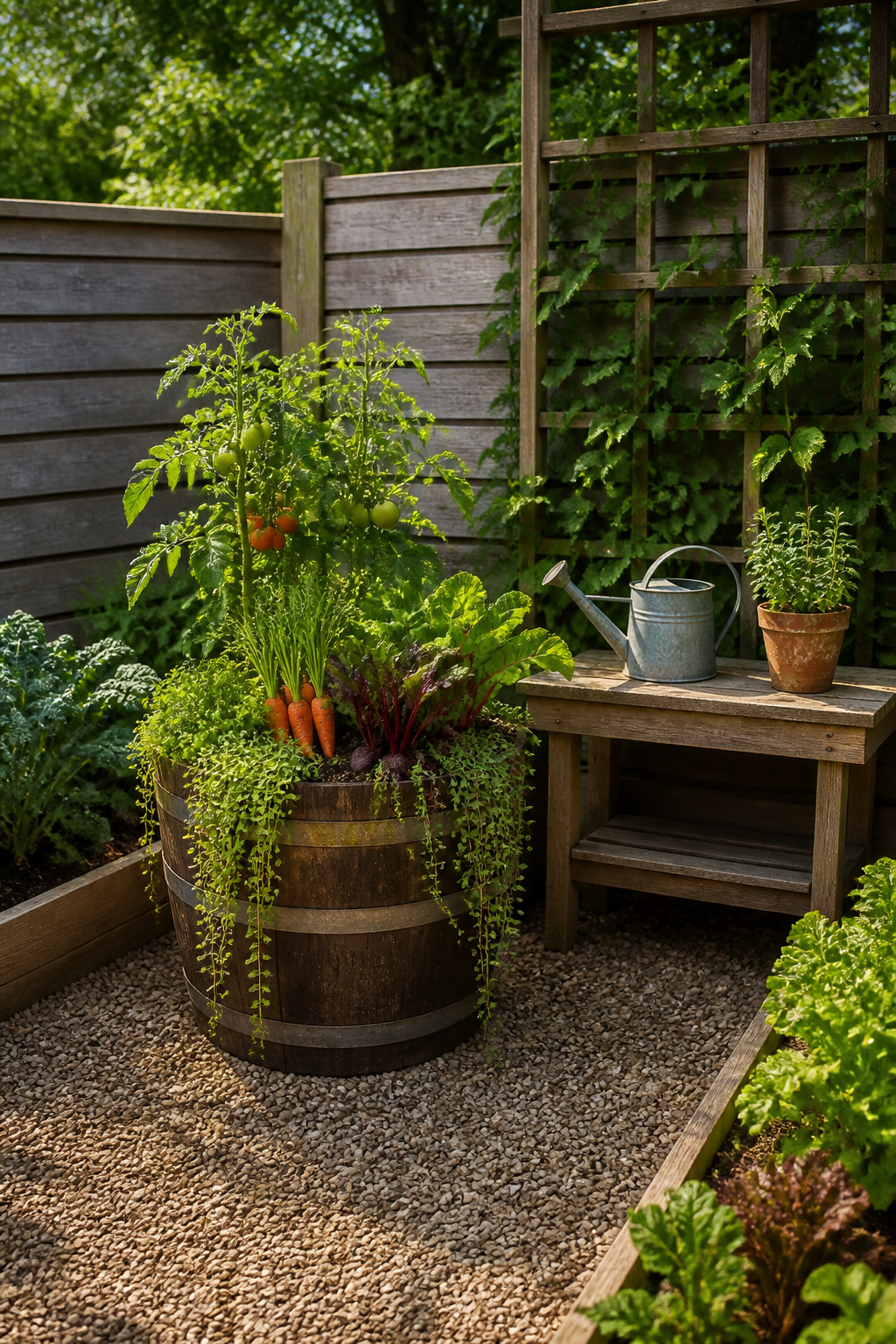
A whiskey barrel holds enough soil for vegetables that would struggle in a standard pot. Tomatoes especially need that depth: their roots run deep, and a half-barrel gives them the vertical room to establish properly instead of circling at the bottom. I have seen peppers do well in the same setup, though they are less fussy about root space.
Root vegetables are where the comparison to raised beds gets interesting. A barrel matches the depth of most raised bed designs, so carrots, beets, and radishes grow straight and full rather than forking against a hardpan. The difference is scale. One barrel might hold a single tomato or a tight block of carrots, while a raised bed offers row-length planting. For a patio gardener working with a few containers, the barrel is the more practical choice. For someone with yard space and a larger harvest in mind, raised beds win on volume.
The height also matters for maintenance. Watering, harvesting, and checking for pests all happen closer to standing level, which I appreciate more each season.
4. Fairy Gardens
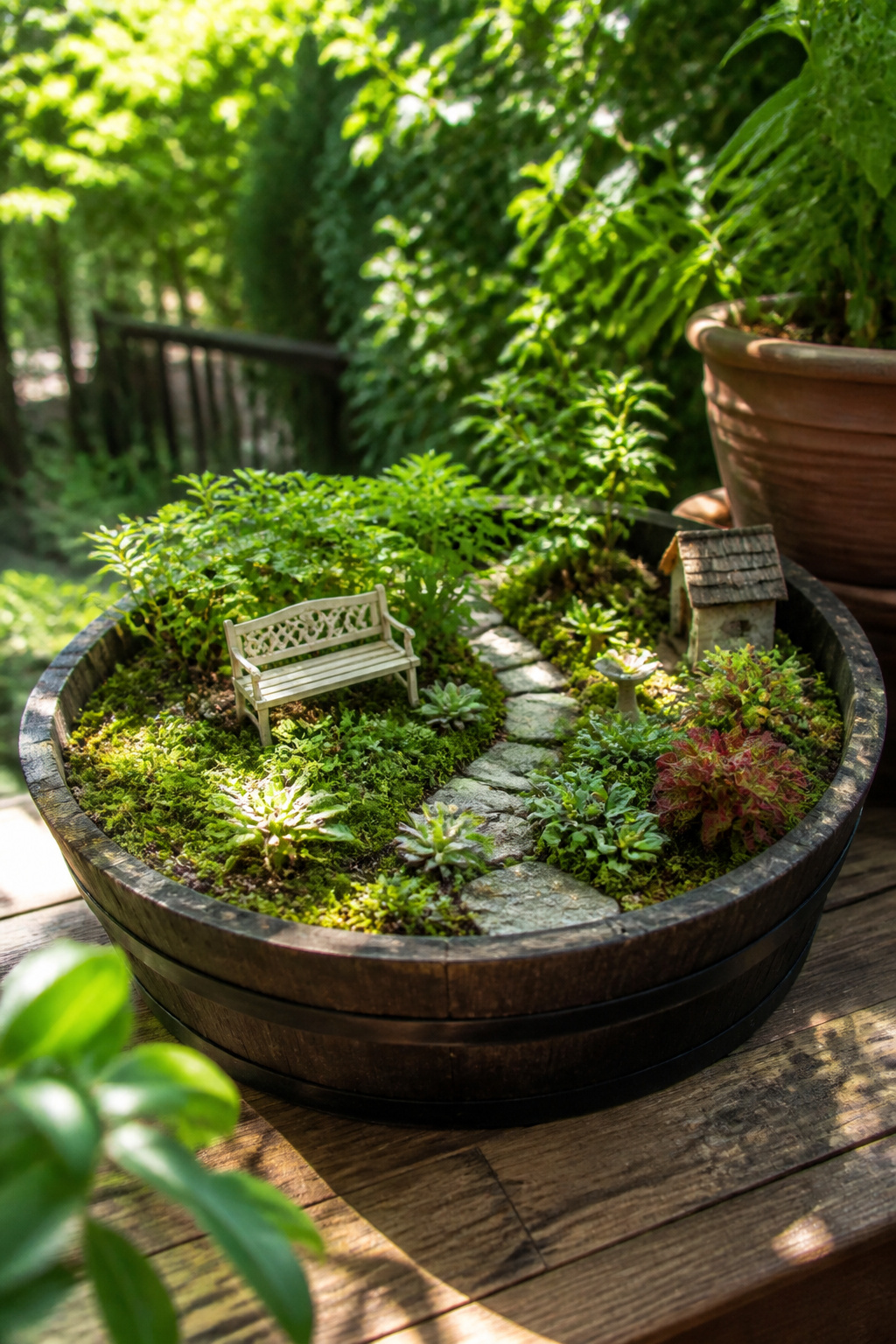
A fairy garden turns the curved walls of a barrel planter into a contained world viewed from above. The soil depth stays shallow, often six inches or less, since the plants are dwarf varieties chosen for scale rather than production. Moss, small-leafed sedums, and creeping thyme handle the drier conditions near the surface; a miniature path of flat stones or a tiny bench completes the scene without asking the plants to feed you.
The care shifts from productive plantings in two ways. Watering is lighter and more frequent because the shallow root layer dries fast, and fertilizing is minimal since lush growth spoils the proportion. A barrel used for tomatoes or herbs needs deep, rich soil and regular feeding. A fairy garden asks for restraint.
This is the most decorative use of the eight ideas here. The payoff is visual, not edible, and the effort goes into arrangement rather than harvest. For a gardener working a small patio who wants something alive but not demanding, the trade is usually worth it. Start with a single focal piece, a small arbor or a painted door against the stave curve, and build outward so the scale reads true from the rim.
5. Water Features
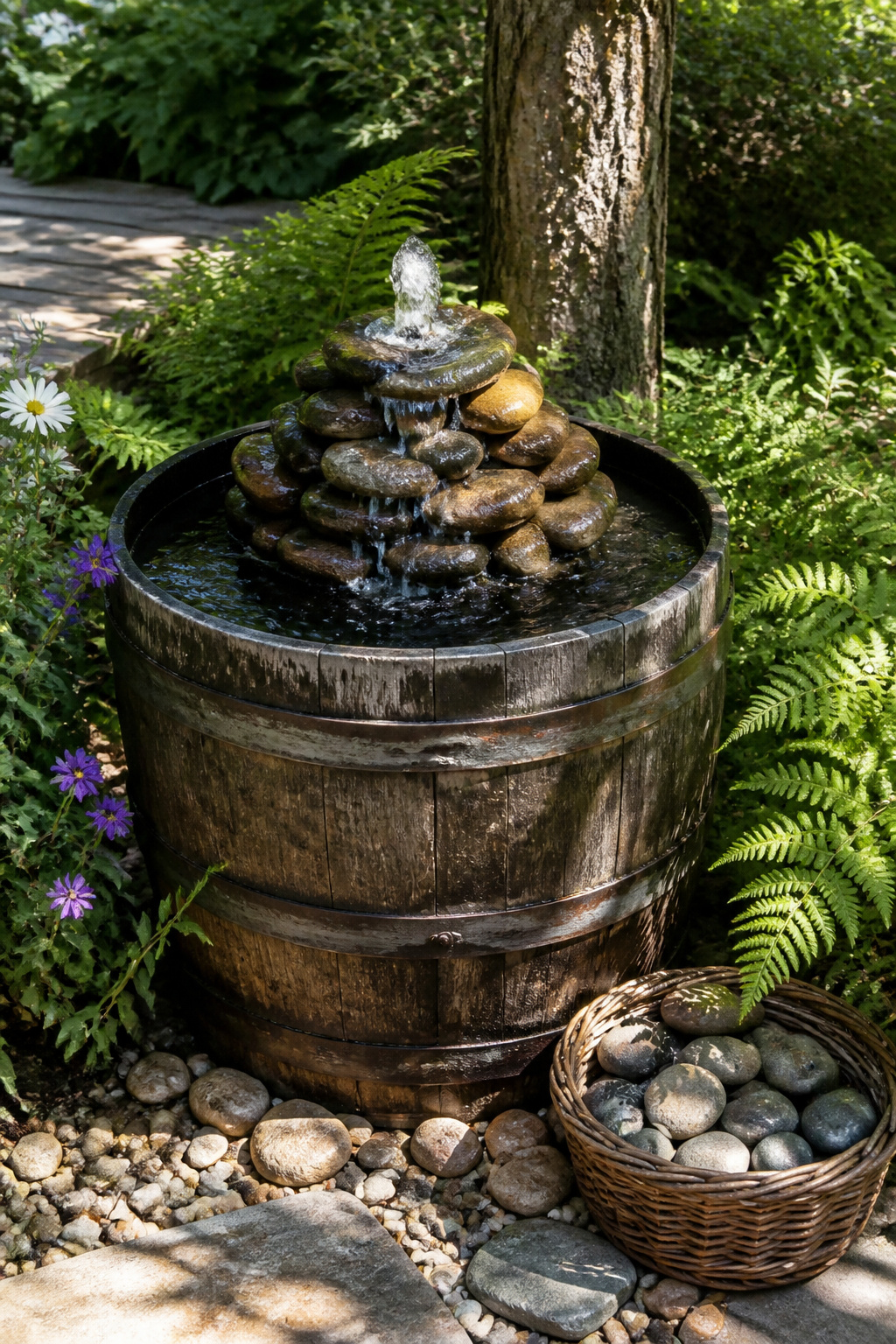
A whiskey barrel that holds water needs the opposite treatment from one that drains it. The inside must be sealed with a pond liner or marine-grade epoxy, not drilled for drainage, or the water will weep through the staves and rot the bands from the outside in. The 32–36 inch height puts the water surface at roughly knee level, which means a small submersible pump sits on the bottom and pushes water up through a spout or rock stack you can actually see over without standing above it. That same height makes the barrel more fountain than pond; the water surface is narrow and mostly vertical, so it reads as a trickle or jet rather than a still pool. Algae grows faster in sunlit standing water than it does in planted soil, and fallen leaves from nearby trees will sink and foul the pump intake, so the maintenance is closer to tending a birdbath than to caring for a planter. I would place it where you can reach the rim with a net and a bucket without stepping into flowerbeds, because you will be doing that more often than watering.
6. Seasonal Displays
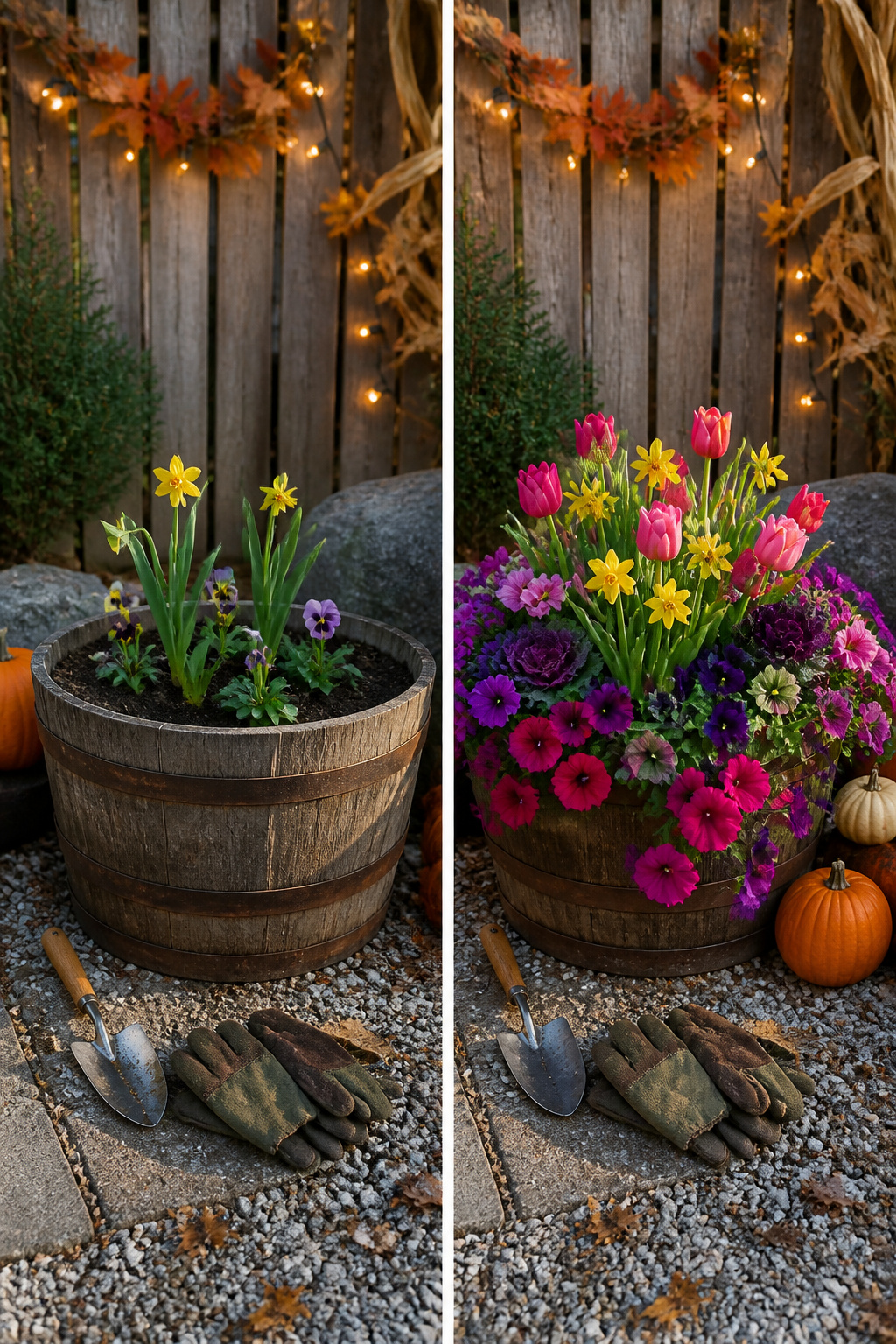
A single barrel planter can carry your garden through the whole calendar if you replant it with the season rather than treating it as permanent furniture. Spring bulbs go in first: tulips and daffodils, set deep enough that later plantings won’t disturb them. By late May those foliage clumps are dying back and the soil is warm enough for summer annuals. Petunias fill out fast and cover the gap until the bulbs are ready to lift.
Come September, pull the spent annuals and switch to chrysanthemums with ornamental kale tucked at the edges. The kale holds color well past frost and buys you time before the winter shift. December means evergreens, white birch poles for height, and white lights if you want evening presence through the short days. The barrel itself stays put; only the contents rotate. What I like about this rhythm is that it keeps the planter from becoming background noise. Each change marks the season in a way a static arrangement never quite manages.
7. Teacup and Decorative Designs
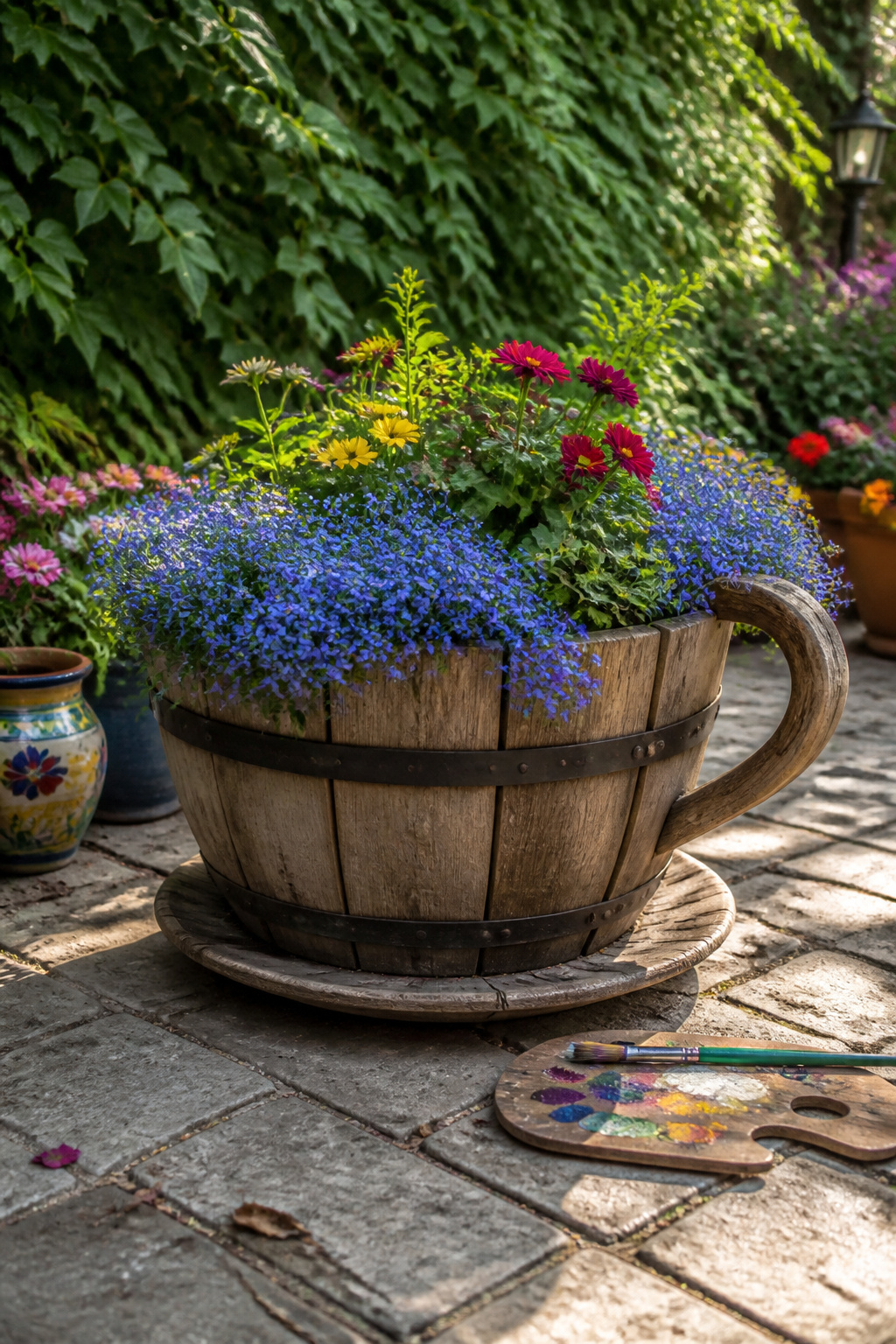
Some barrel planter ideas treat the barrel as raw material rather than a container. Cutting the staves free and rearranging them into a teacup shape takes a bandsaw, a drill, and a afternoon of hardware store runs, but the result reads as garden sculpture rather than repurposed cooperage. The handle and foot are usually pine or cedar, bolted through the stave ends; the cup itself holds roughly the same soil volume as a half-barrel, so drainage and root depth stay practical.
Laying a barrel on its side and burying it partway creates a different effect: plants spill from the opening as if the barrel had tipped and emptied. A winery I read about used blue lobelia for this, and the color against the oak reads like water pouring out. Both builds demand more tooling than a simple halved planter. You are cutting curves, adding legs or a base, and solving for how the thing stands level once soil goes in. The teacup especially wants bracing; a full load of damp earth will torque those staves outward if the bottom ring is not screwed tight.
8. Rustic Furniture and Drink Stations

A full whiskey barrel sits about 32–36 inches high, which happens to land right at comfortable standing height without modification. That makes the intact barrel a natural starting point for a drink station or small bar surface rather than a planter. The metal hoops need the same wire brushing and securing with self-tapping screws you’d do for planting prep, but the bottom stays closed and the interior gets cleaned out for ice buckets or bottle storage rather than drainage holes. I have seen these set up with a simple wooden disc on top for a level serving surface, though a fair number of people just use the flat barrel head itself if it is still sound. Small potted plants or trailing greenery around the base keep it from looking like patio furniture that wandered off course. The half-barrel versions work lower as side tables between chairs, but for standing conversation the full height wins outright.
Drainage Preparation
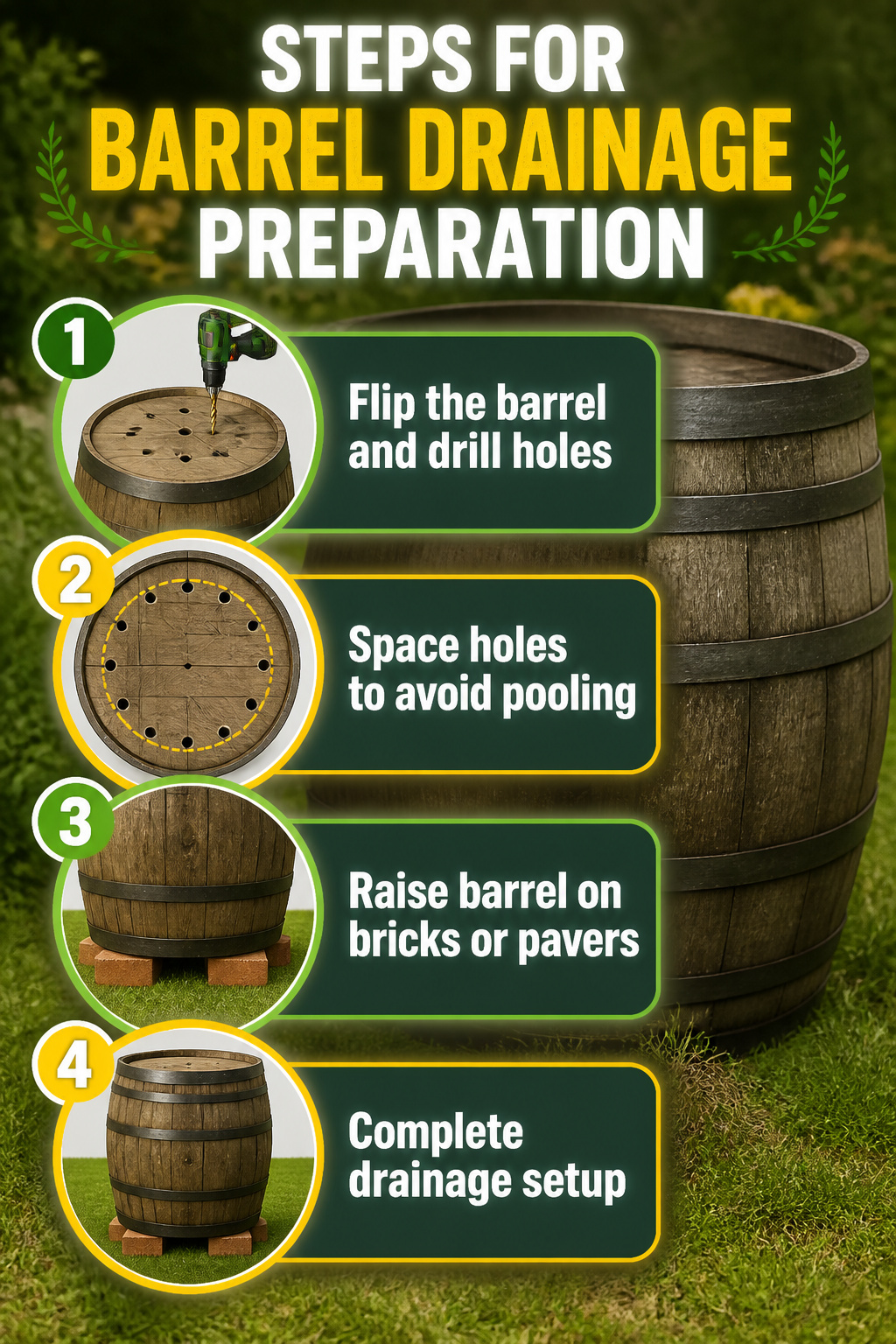
Water sitting against roots for more than a day or two is what turns a promising barrel planting into a soggy loss. The fix happens before any soil touches the wood.
- Flip the barrel and drill drainage holes in the bottom. Most builders use between three and eight holes, each 1/2 inch to 1 inch across. The number depends on what you are growing and how often you water: more plants or more frequent watering means more holes to let the excess out faster.
- Space the holes so water does not pool in any one spot. A cluster in the center leaves the edges wet; spreading them toward the outer third of the base drains the whole floor evenly.
- If the barrel will sit on soil or lawn, raise it on bricks or pavers. That gap lets water escape instead of soaking back up into the wood, and the bottom stays sound seasons longer.
Soil Filling Techniques

A full whiskey barrel holds far more soil than most plant roots can use. I fill about one-fifth of the bottom with crushed plastic nursery pots, then add potting soil above. The pots reduce weight and cut soil costs significantly, and drainage stays intact if the barrel already has holes.
Root depth is what makes or breaks this shortcut. Herbs and annual flowers typically need six to eight inches of soil; tomatoes and other vegetables want twelve to sixteen. Crushing the pots flat and layering them evenly prevents the soil above from settling into deep pockets that would leave some roots stranded in dry air.
Some gardeners use empty milk jugs or water bottles instead. Both work, though nursery pots crush more compactly and leave fewer gaps where water pools. I leave the drainage holes in the pots open; blocked holes turn that bottom layer into a soggy reservoir that roots will not penetrate.
The soil line should sit two to three inches below the barrel rim. Water pools and runs off if you fill flush to the top, and soil washes out with it.
Plant Combinations That Work
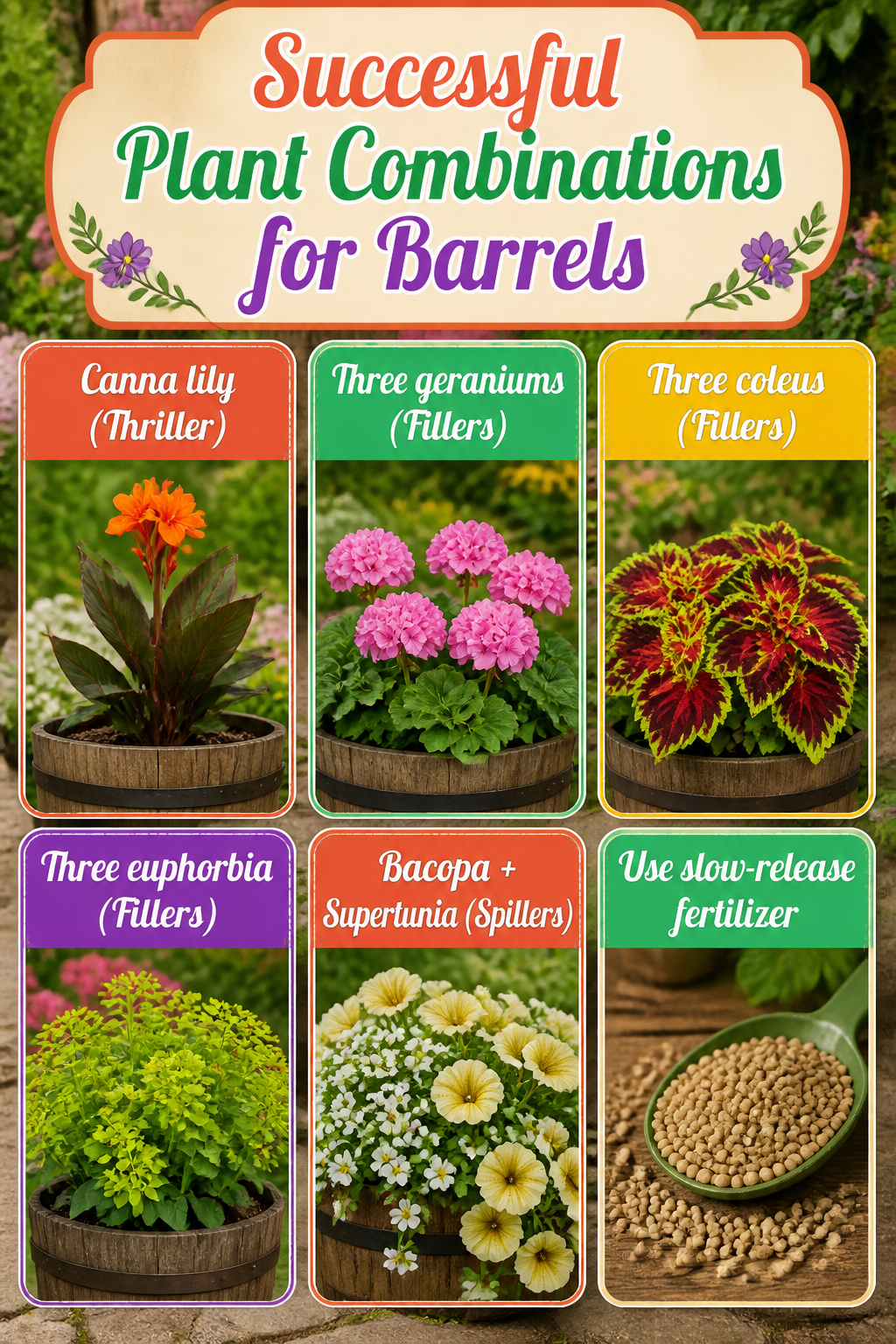
The thriller-filler-spiller method works in any barrel planter once you read the plant label for three things: mature height, growth habit, and whether it trails. A canna lily placed dead center gives you the thriller, shooting up tall enough to hide its own leggy base. Around it, three pink geraniums, three coleus, and three euphorbia plants weave together at mid-height as fillers, their leaves interlacing so no soil shows through by July. For the spill, three bacopa and three Supertunia ‘Latte’ go at the rim and tumble over the edge, softening that hard barrel line into something that looks grown rather than planted.
Three of each plant is the working density here, which sounds crowded in May but reads as lush by August. The slow-release fertilizer sprinkled at planting time matters; without it, the heavy feeders in this mix, especially the canna and the Supertunia, stall out just as they should be hitting stride.
Watering and Maintenance
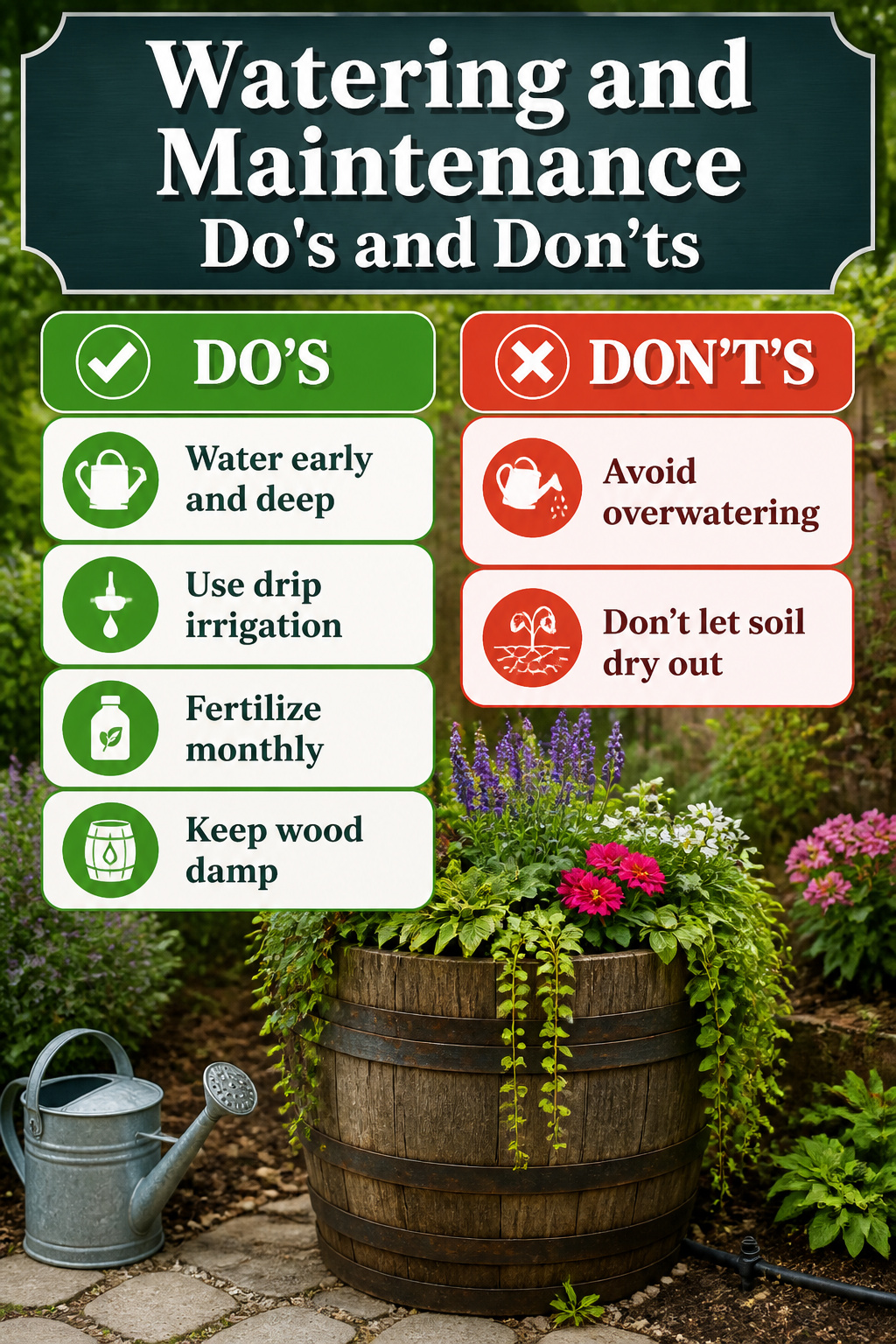
A whiskey barrel’s soil volume looks generous until July hits and the top three inches bake hard by noon. The smaller reservoir means roots run dry faster than in-ground beds, so daily checks through midsummer are non-negotiable.
- Water early and deep. A quick sprinkle leaves the lower root ball parched; aim to wet the full depth of soil each time.
- Drip irrigation on a timer changed how my containers perform. The steady, slow delivery keeps moisture even and cuts the wilt-and-recover cycle that stresses annuals.
- Fertilize monthly, not weekly. The limited soil exhausts nutrients faster than garden beds, but overfeeding burns roots in tight quarters. An organic liquid feed at half-strength every four weeks keeps growth steady without forcing it.
- Keep bare wood damp. An empty barrel left dry will shrink, loosen its staves, and come apart. Moistened soil, even without plants, preserves the structure.
Trim spillers lightly mid-season if they start swallowing the fillers. Fresh growth follows the cut, and the arrangement stays intentional rather than overgrown.
Frequently Asked Questions
How do I prepare a whiskey barrel for planting?
Drill three to eight drainage holes, each 1/2 inch to 1 inch across, in the bottom of the barrel. Space them toward the outer third so water drains evenly instead of pooling in the center. Set the barrel on bricks or pavers to keep the wood off the ground and prevent rot from below.
What are some good plants for a whiskey barrel planter?
Annual flowers like canna lily, geranium, coleus, bacopa, and Supertunia ‘Latte’ work well in the thriller-filler-spiller arrangement. Herbs including rosemary, sage, thyme, parsley, and basil thrive in barrel depth. For vegetables, tomatoes, peppers, carrots, beets, and radishes all perform strongly in the soil volume a half-barrel provides.
Can I use a whiskey barrel for vegetables?
Yes, the depth suits tomatoes especially, giving their roots vertical room to establish rather than circling at the bottom. Peppers grow well too, and root vegetables like carrots, beets, and radishes come out straight and full since the barrel matches the depth of most raised beds. The height also means watering and harvesting happen closer to standing level.