
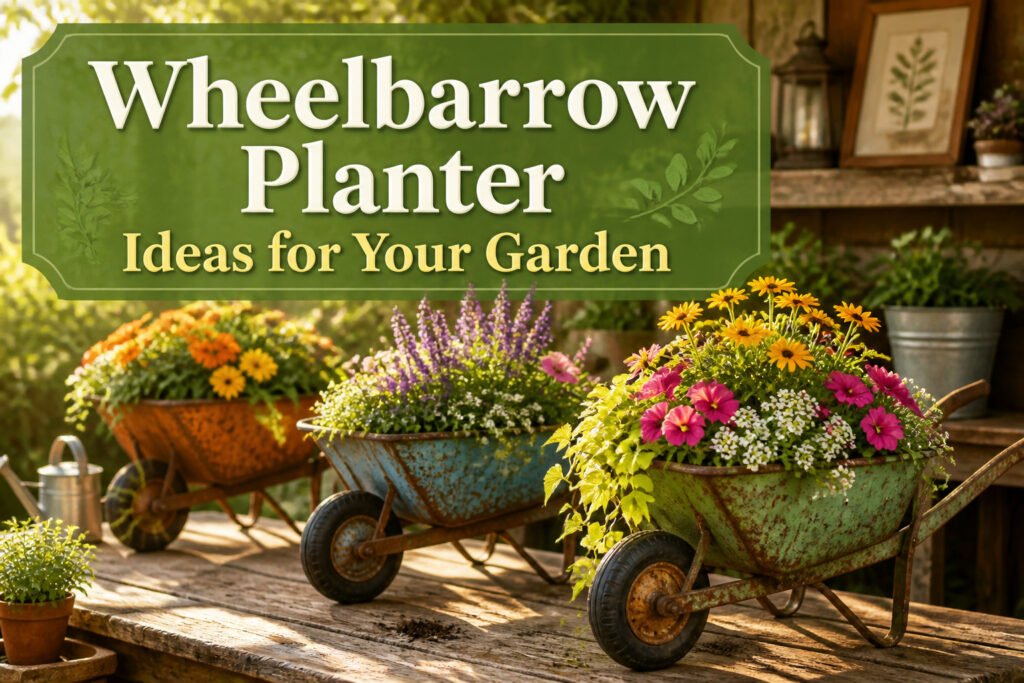
A wheelbarrow planter works best when you match the build to the burden you are willing to carry. The lightest setups hold potted plants you swap each season; the heaviest, a water feature with two hundred pounds of standing water and no way to move it once filled. Most fall between, at 35 to 100 liters of soil and a morning watering routine in July.
1. Rustic Wheelbarrow Succulent Garden Display

A weathered wooden wheelbarrow, the kind with iron bands gone russet and handles worn smooth, makes an honest frame for succulents. The limited soil volume, somewhere between 35 and 100 liters depending on what you find, dries fast in summer heat. That is the point. Sedum and echeveria handle full sun without complaint, and their sculptural forms look right against cracked paint and grain that has silvered.
Drainage holes and landscape fabric are necessities, not extras. Wood rots from the inside out when soil sits wet against it. I line with fabric, punch holes, and still expect the body to split eventually. When the floor of my first barrow started opening along a seam, the gap became its own drain. Water ran through faster than before, so I watered more often but with less each time, treating it closer to a shallow pot than a raised bed. The succulents did not mind. The wood lasted another two seasons before I retired it to holding tools.
2. Antique Wheelbarrow Planter

An antique wheelbarrow that has earned its retirement makes a better planter than one still fit for hauling mulch. The dented tray, the rust bloom, the wood gone silver at the handles: that patina is the whole point, not a condition to fix. I look for them at estate sales and farm auctions where the seller has already moved on to a poly tub on a pneumatic tire and will let the old one go cheap because the wheel seizes and the tray leaks.
The mistake is filling the tray with soil and planting directly. The weight cracks aged wood, rusts through thin metal, and come October you are committed to whatever is in there. Potted plants set inside the tray solve both problems. The wheelbarrow carries only the load it was built for, nothing more, and you swap the pots when the season turns. Daffodils in April, then geraniums or petunias once the sun has warmed the spot and stayed there. Six hours of light keeps either blooming through summer. Drainage stays simple, the pots come out for winter, and the wheelbarrow itself lasts another decade looking exactly as weathered as you found it.
3. Wheelbarrow Herb Garden

A wheelbarrow herb garden is the most practical planter conversion I have come across, and the one most worth getting right the first time. Drainage holes, drilled to about three-quarters of an inch, and a layer of landscape fabric are non-negotiable: without them, the soil turns sour and the wood rots from below. Most wheelbarrows hold somewhere between 35 and 100 liters of soil, which sounds generous until you pace out the mature spread of six or eight herb plants.
The real work is in grouping by thirst. Rosemary, thyme, and sage all prefer soil on the drier side; basil, parsley, and cilantro want steadier moisture. Planting them together by habit saves the daily guesswork of who needs what.
Do not plant mint directly in the soil. By July it will have elbowed out every neighbor and colonized the full bed, roots tangling through the drainage holes you so carefully drilled. Keep it contained in its own pot inside the barrow, or skip it and buy a sprig at the market when you need one.
4. Seasonal Displays
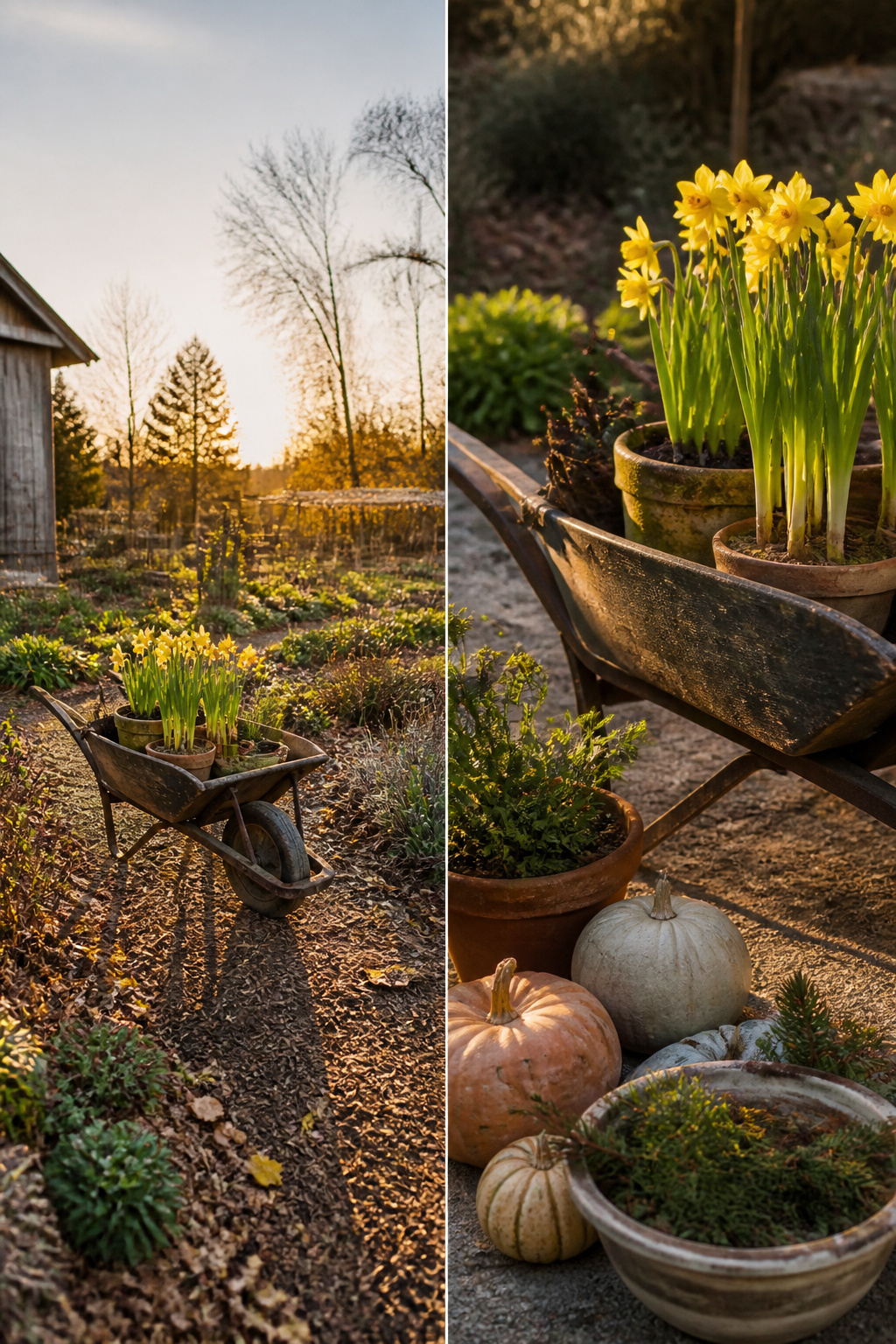
A wheelbarrow kept on the move, or one you fill with potted plants rather than direct soil, becomes a stage for the year. Swap the pots, not the soil, and you can run daffodils in March, tropical foliage through July, pumpkins and dried stems in October, and evergreen boughs with a string of LED lights by December. The sources point to a mid-sized barrow, around 70 to 100 liters, as the practical starting point for this rotation.
What the rotation demands is cleanup between acts. Deadheading spent daffodil foliage, shaking out old tropical potting mix, stripping the fall display before the stems go slimy. I skipped that last step one year, left the pumpkin stems and moldy gourd husks in place through winter, and the soil smelled like a wet basement come April. The wheelbarrow sat unused until June while the smell faded. Now I clear it the same weekend the clocks change, every season, without exception.
5. Fairy Garden Wheelbarrow

A rusty wheelbarrow with a few drainage holes drilled in the bottom is exactly the right base for this. The worn metal and flaked paint already look like something fairies might have borrowed from an old shed.
Scale matters more here than in any other wheelbarrow planter idea for your garden. Irish moss, blue star creeper, and creeping thyme stay low enough to read as lawns. Small sedums and baby tears fill the midground without crowding. For shadier corners, miniature ferns, impatiens, or begonias keep the green going where sun won’t reach. The mistake that cost me three days was using dried sheet moss as ground cover. It went crisp in a single hot afternoon and never recovered. Live moss from a nursery, pressed into damp soil and kept misted, lasts the season.
Gravel paths and blue stone "rivers" give the eye somewhere to travel. A tiny house or bench tucked against the wheelbarrow’s rim finishes the scene without needing much else.
6. Tipped Wheelbarrow Planter

Tipping a wheelbarrow changes everything about how water moves through it. The angle creates a natural cascade: soil stacks deeper at the low end and tapers to almost nothing at the raised lip, so you can watch excess water run out instead of guessing whether drainage is working. That visible flow is useful feedback most flat planters never give.
The slope also divides the planter into two zones without building anything. The deep end holds enough soil to stay damp for moisture-loving plants, while the shallow upper end dries within hours, perfect for succulents or trailing thyme that would rot in standing water. I set one up this way last spring, angling the handles toward a fence so the wheel stayed partly buried for stability.
My mistake was getting greedy with the tilt. I wanted more of that spilling-over look and pushed it past fifteen degrees. The first hard rain sent the top two inches of soil sliding right down the slope and onto the patio stones. I had to shovel it back, pack the base with rocks to hold the grade, and start over with a gentler angle. The cascade still reads, but now the soil stays where I put it.
7. Vintage Wheelbarrow with Colorful Flowers

A vintage wheelbarrow holds somewhere between 35 and 100 liters of soil, which means you need fewer plants than you expect to get that overflowing look. I once packed mine with six petunias and two geraniums in full sun, and by July the thing looked ready to tip. For shade, impatiens and begonias fill out the same way, with a fern or two at the back for height. The real work is the deadheading. Petunias in particular stall out if you let the spent blooms stay, so I run my fingers through the basket every few mornings and pinch what has browned. Last spring I tried orange marigolds against hot pink geraniums, thinking the clash would read as cheerful. It read as a mistake. I swapped the marigolds for white alyssum the following weekend, and the softer contrast against the rusted metal finally looked like something intentional.
8. Wheelbarrow Water Feature

A metal wheelbarrow can become a small standing water feature, though this is the least common idea I came across and the one I have not built myself. Three practical problems stopped me. Water weighs about eight pounds per gallon, so a standard hundred-liter wheelbarrow would hold roughly two hundred pounds of water before adding the wheelbarrow’s own weight. That load needs a flat, stable base that will not settle or tilt, and moving it afterward is out of the question. Mosquitoes breed in still water, so a pump is not optional decoration; it must run enough to break the surface, which means a waterproof seal around the cord entry and a placement where the pump sits level and reachable for cleaning. The waterproofing itself wants a metal body that can take a rubberized coating or epoxy paint without flexing, which is why plastic wheelbarrows fail here; they warp and leak at the seams. For anyone below zone 7, the whole system needs draining before hard frost or the ice splits the container. I keep looking at the rusted wheelbarrow behind my shed and thinking about it, then thinking about the extension cord, the leveling, the February night I would forget to drain it. The herb planter next to it gets more use.
Planting Tips for Wheelbarrow Planters

A few basics apply no matter which wheelbarrow style you choose.
- Drill drainage holes through the bottom before adding soil. Waterlogged roots rot fast in a sealed metal or wooden bed.
- Line the interior with landscape fabric to keep soil from washing out. I skipped this once on a wooden barrow and watched potting mix trail across the patio after every rain; the holes worked, but they worked too well.
- Use a standard potting mix rather than garden soil. The sources do not specify blends, so any quality bagged mix labeled for containers should do.
- Space plants for their mature spread, not the size they are in the nursery. A wheelbarrow looks generous until three tomatoes crowd each other out by July.
- Check soil moisture often. The shallow bed dries faster than in-ground plantings, especially in sun.
Maintenance Through the Seasons

A wheelbarrow planter dries out faster than any bed in the yard, and July is where that difference hurts. That month I water mine every morning, sometimes again by six if the day pushes past ninety-five. By September the same soil holds moisture two, sometimes three days, so I drop to a single deep soak midweek and let the plant roots reach for it.
Deadheading in tight quarters means working around the wheelbarrow walls without crushing what still wants to bloom. A pair of needle-nose pruning snips, the kind sold for bonsai, slips into gaps that standard shears won’t clear. I keep mine on a hook by the back door so I actually use them.
My rotation calendar runs simple because the container limits what thrives. Cool-season starts go in late March: violas, snapdragons, the compact kale that reads as foliage. Those come out by mid-June when the metal rim starts baking roots. Summer plantings are zinnias, portulaca, anything that shrugs off heat reflected off the sides. I pull those spent plants the first week of October and sow winter wheatgrass or cram in pansies for the last six weeks before frost. The wheelbarrow never sits empty; bare soil in a container this shallow cracks and loses its structure over winter.
Design Themes and Plant Pairings

A rusted steel wheelbarrow with a single cracked handle became the best herb planter I ever tried, mostly because I stopped fighting the rust and started planting around it. Thyme, rosemary, and sage went in together along the high side where drainage runs fastest, since all three prefer soil on the drier side and will rot if they sit wet. I tucked a trailing rosemary variety over the front edge so it could spill down toward the path, and behind it I added yellow marigolds for the height contrast and the pollinator traffic. That pairing worked because the marigolds stayed compact enough to let the rosemary cascade without crowding, and the colors read as intentional rather than accidental.
The rustic look asks for imperfection. Weathered wood, visible bolts, a wobble you correct with a flat stone under one wheel. These details read as character in a garden setting where a brand-new planter would look like a display model. For a tipped design, gravel around the base solves two problems at once: it stabilizes the angle and keeps water from pooling where the metal meets soil.
I tried thyme underneath a determinate tomato in a deeper barrow one July, and by August the tomato had outgrown every dimension of the container, roots and all. The thyme survived in the shadow for another two weeks, then gave up. Herbs with flowers succeed in wheelbarrows when both stay in the same size class; a tomato belongs in the ground or a raised bed where its roots can run.
Sunny and Shady Plant Options

The sun shifts across a yard faster than most first-timers expect, and a wheelbarrow you can roll gives you options when it does. What convinced me, reading through a dozen of these builds, is how many failed because the gardener matched the plant to the look instead of to the light.
Full sun in a wheelbarrow means petunias, geraniums, or succulents like Echeveria, Hens and Chicks, Burro’s Tail, and Sedum. Shade calls for impatiens, begonias, or ferns. The begonia variety that fried in afternoon sun was a lesson in reading the tag: what said "partial shade" got six hours of direct July light and crisped by August. Move it by 10 a.m. or pick a true shade lover instead.
| Light | Flowers | Foliage/Texture | Notes |
|---|---|---|---|
| Full sun | Petunias, geraniums | Succulents: Echeveria, Hens and Chicks, Burro’s Tail, Sedum | Drainage critical for succulents; water only when dry |
| Shade/part shade | Impatiens, begonias | Ferns | Afternoon sun burns begonias; check tag for "partial shade" vs. "full shade" |
Frequently Asked Questions
What plants grow well in a wheelbarrow planter?
Succulents like sedum and echeveria, herbs such as rosemary, thyme, and sage, and seasonal flowers including petunias, geraniums, and marigolds all do well. Group plants by their light and water needs: succulents and Mediterranean herbs want drier soil and full sun, while impatiens, begonias, and ferns suit shadier spots. Mint should stay in its own pot inside the barrow or it will take over the whole bed by midsummer.
How do I maintain a wheelbarrow planter?
Water every morning in July, sometimes twice on days over 95 degrees, then cut back to one deep soak midweek by September. Deadhead spent blooms regularly to keep flowers producing, and swap out seasonal plantings rather than letting soil sit empty. Clear out old plant material each season before it goes slimy; bare soil in a shallow container cracks and loses structure over winter.
Can I use a rusty wheelbarrow as a planter?
Yes, rust adds character and the weathered metal looks right in a garden setting. Drill drainage holes through the bottom first so roots do not rot in standing water. Line the interior with landscape fabric to keep soil from washing out through those holes, and expect the body to keep aging; the patina is the whole point, not something to fix.