

A patio can be walled off for a few hundred dollars or grown into privacy over three seasons, and the deciding factor is rarely budget: it is whether you own the dirt underneath. Renters and owners face entirely different rules, and the same lattice panel that bolts to a rental deck in ten minutes might violate a local fence code if it touches soil. That code cutoff, 6 feet in most backyards and 4 in front, is where the real planning starts.
1. Fencing

A solid fence is the most reliable way to make a patio feel like an actual outdoor room, not a stage. For that full enclosure, board-on-board or shadow box styles work best: the overlapping boards block sightlines from every angle, not just head-on. Most local codes cap backyard fences at 6 feet, and front yard versions often stop at 4 feet, so measure from your patio surface before you fall in love with a design you cannot legally build.
Pressure-treated pine and cedar are the woods you will actually find in stock. Pine costs less upfront but will ask for regular sealing or staining to keep from graying and twisting. Cedar holds its natural color longer and resists rot without the chemical bath, though the price gap is real. If the budget stretches only far enough for pine, plan on maintenance as part of the first-year cost. Semi-solid slatted designs let air through and still break the sightline, useful when a full wall would turn the patio into a wind tunnel or a dark box on summer afternoons.
2. Privacy Screens

Freestanding privacy panels solve the sightline problem without a single permit or post hole, which is why they dominated my search when I needed to block my neighbor’s kitchen window from a rental deck last summer. Most designs stand on weighted legs or bolt to existing railings, so pre-made screens work for existing decks without building a fence in the traditional sense. The material range runs wider than I expected: cedar lattice, powder-coated aluminum with laser-cut patterns, composite boards that mimic slatted wood, and tensioned outdoor fabric stretched over metal frames. What stopped me cold was the height shopping. One manufacturer’s "tall" panel measured 48 inches; another called 72 inches standard. No industry norm governs this, so the tape measure matters more than the product name. I ended up with two 60-inch composite panels linked at an angle, which blocked the window completely while leaving enough gap for air to move through. Metal and composite hold up to rain without the annual sealing that wood demands, though they cost more upfront and the lighter ones need sandbags or deck anchors against a stiff wind.
3. Plants and Green Walls

A living wall buys you height without eating floor space, which matters when the whole patio is maybe twelve feet across. Stacked planters or a freestanding trellis trained with vines turns the vertical plane into the screen.
For speed, Emerald Green Arborvitae puts on 3 to 5 feet of new growth per year and tops out around 12 to 15 feet. That same figure convinced Eco Minded Solutions to specify it for over-exposed decks:
this overachieving arborvitae can grow up to 5 feet per year
— HGTV
Three years gets you a solid green wall if you start with decent-sized nursery stock. Thuja Green Giant and Leyland Cypress fill a similar role; both hit tall, dense evergreen hedge territory fast enough that the wait is measured in seasons, not decades.
Bamboo is the outlier here. Running varieties will colonize your yard and your neighbor’s, so the only safe play is clumping types like ‘Gracilis’ or ‘Seabreeze’, or growing any bamboo in containers with a root barrier you trust. I would not chance it in-ground near property lines.
Climbing options on a trellis or the face of a pergola close the middle zone while the trees mature. Star Jasmine and Clematis grow quickly enough to matter the same season you plant them. Layering heights, tall to trailing, reads fuller than a single row of identical shrubs and blocks sightlines from more angles.
4. Pergolas

A pergola’s open framework of vertical posts and crossbeams creates partial screening by default, not the solid wall many people picture. I learned this the hard way after installing one on a small patio and realizing neighbors could still see straight through the sides. The structure defines the space, but the privacy comes from what you add to it.
Outdoor curtains hung from the crossbeams solve this flexibly. You draw them when you want enclosure, tie them back when you do not. Climbing vines like jasmine work slower but create natural screening as they twine up the posts and across the open roof. The crossbeams are built for this. Either approach lets you calibrate how much light and sightline you block, which matters on a balcony where a solid structure might violate rules or block your own view. The tradeoff is commitment: curtains need a frame or rod system, and vines need two or three seasons before they fill in. A kit with included hardware skips the guesswork, though you will still be fastening it to your own surface.
5. Outdoor Curtains

Outdoor curtains give you privacy you can undo. Draw them closed when the neighbors are out, tie them back when you want the breeze, and the patio changes its job in about ten seconds.
The fabric that survives this is solution-dyed acrylic, which holds color through years of sun and resists mildew and water without turning stiff. Sheer panels soften sightlines while letting light through; opaque ones block the view completely. Your call, and you can switch between them by swapping panels rather than rebuilding anything.
These need a structure to hang from. A pergola is the obvious partner, with rods or wire cable run between its posts. Wire with turnbuckles keeps the fabric taut on gusty days; weights sewn into the bottom hem stop the billowing that wears fabric out faster. A simple wood frame works too if you do not have a pergola in place yet. Tension rods let renters install and remove without drilling, though they handle lighter panels best.
Style-wise, neutrals read as calm and permanent. Stripes or a bolder pattern turn the curtain into the accent piece. Either way, the curtain defines the patio as a room rather than an opening, which is half the privacy battle to begin with.
6. Bamboo Fencing

Bamboo fencing carries a reputation that cuts two ways, and the divide matters for a small patio. On one hand, it grows fast enough to screen a space within a season or two, with a vertical, tropical look that reads more resort than suburban fence. On the other hand, the wrong variety turns that patio into the starting line of an invasion that hits the property line, then the neighbor’s yard.
The fix is clumping bamboo, specifically sympodial or pachymorph types. These spread slowly from a central base rather than sending runners underground. ‘Gracilis’ and ‘Seabreeze’ are two cultivars with a track record of staying put. Plant them in contained beds or in pots with solid root barriers, and you get the height without the headache.
For renters or anyone who needs the look without the commitment, pre-made bamboo stalk panels install with zip ties or basic hardware. They fill gaps along existing railings, soften the lines of a pergola, or stand alone as a lightweight screen. The natural color weathers to gray over time, which some prefer and others treat with sealant to hold the honey tone. Either way, the material itself does the visual work: vertical lines draw the eye up, tight stalks block sightlines without reading as a wall, and the slight gaps between poles let air move through on windy days.
7. Lattice Panels
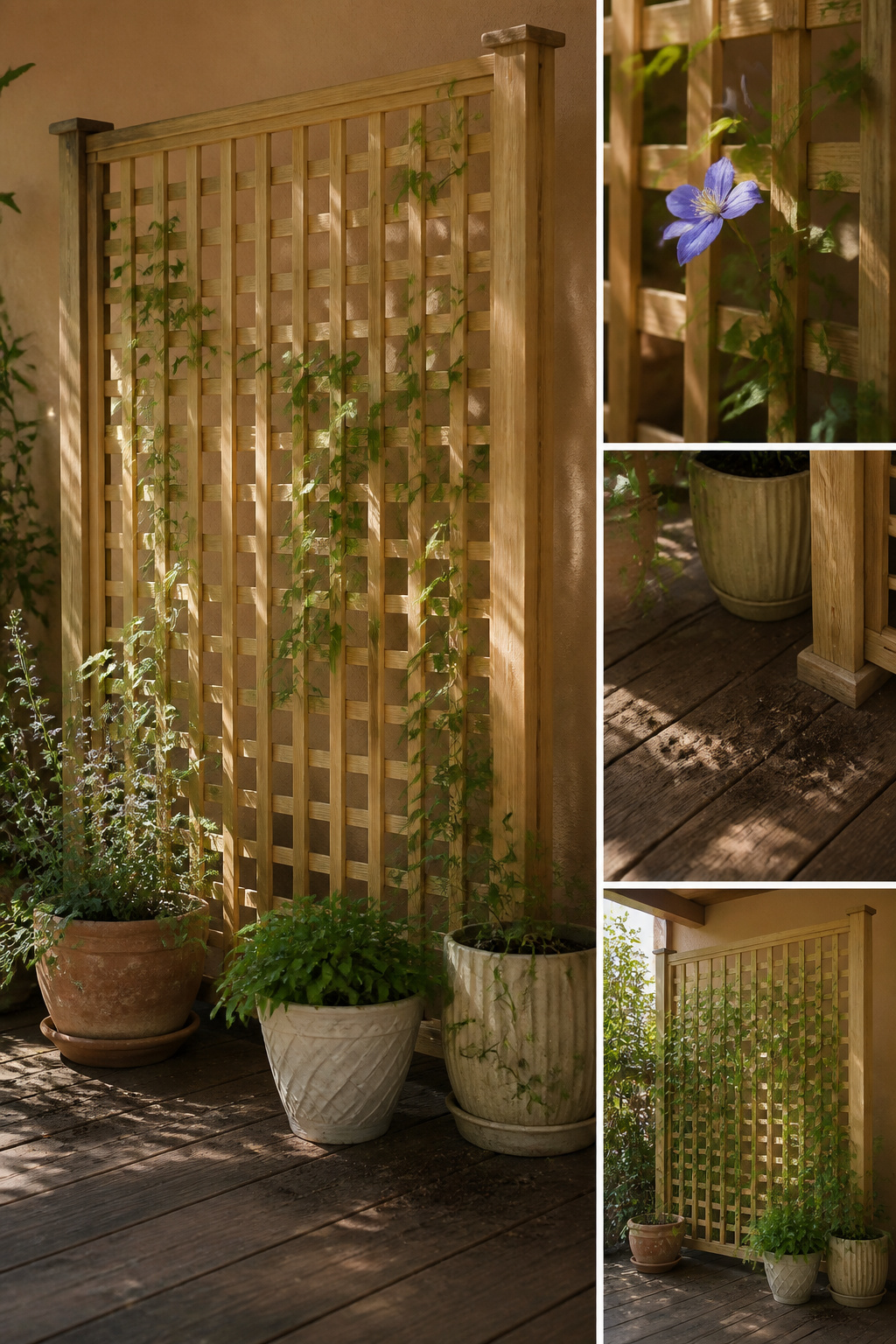
A single 4′ x 8′ lattice sheet from any big-box hardware store gives you a framework that starts at about knee height and ends near eye level, depending on how you mount it. The open grid blocks almost nothing at first, which is the whole point: light and air still move through, and you are not staring at a blank wall while you wait for coverage.
Clematis, climbing roses, or English ivy trained up the slats will close those gaps over two or three growing seasons. In my reading, the gardeners who get impatient and plant too densely end up pruning constantly; one or two well-placed vines per panel fills it more evenly than a crowded scramble. Pressure-treated wood takes stain if you want it to match existing trim, while vinyl lattice skips the maintenance entirely but locks you into its factory color.
The real payoff comes from the cut-outs themselves: most premade sheets have gaps large enough to hook a hanging basket straight through, so your privacy screen doubles as vertical growing space before the climbers ever take hold. A freestanding panel in a planter box will wobble in wind; anchoring it to a post or wall is the move that saves you from rebuilding after the first storm.
8. Shade Sails

Tensioned fabric stretched between anchor points on a patio, building, or separate posts gives you a ceiling that blocks sightlines from upper windows and adjacent balconies while it cools the space underneath. The trick is angling the sail to intercept the specific sightline you need cut, the same way you’d reposition a cantilever umbrella to catch a low afternoon sun. Triangular, square, or rectangular shapes layer well, and tilting one plane against another creates dynamic coverage that still reads as intentional design rather than a stopgap. UV protection comes standard with the shade, so the privacy gain is essentially free if you were already looking to cool a hot concrete slab. For renters, the hardware mounts to fascia, fence, or freestanding posts, and the whole assembly lifts away when the lease ends.
Fast-Growing Plants for Quick Privacy

A new patio without privacy can feel like a stage set. The fastest fix comes from plants that put on height before the second season ends.
Emerald Green Arborvitae tops most lists for good reason: 3 to 5 feet of new growth per year, eventually reaching 12 to 15 feet tall. That pace means a 3-foot nursery specimen can block sightlines from a neighbor’s deck by year two. Thuja Green Giant and Leyland Cypress match or exceed that speed, forming dense evergreen walls that hold their screen through winter when deciduous options go bare.
Clumping bamboo offers the quickest vertical cover of the group, with some varieties shooting up 5 feet in a single season. The "clumping" part matters: running bamboo will colonize your yard and your neighbor’s, while container-grown clumpers stay where you put them. Look specifically for ‘Gracilis’ or ‘Seabreeze’ cultivars, which are less likely to run.
Year one, expect modest gains as roots establish. Year two brings the first real height jump. By year three, a well-spaced hedge of Thuja or Leyland should need its first shaping trim to stay within bounds. Space them correctly from planting: crowding forces competition and slows the very growth you bought them for.
DIY Privacy Builds
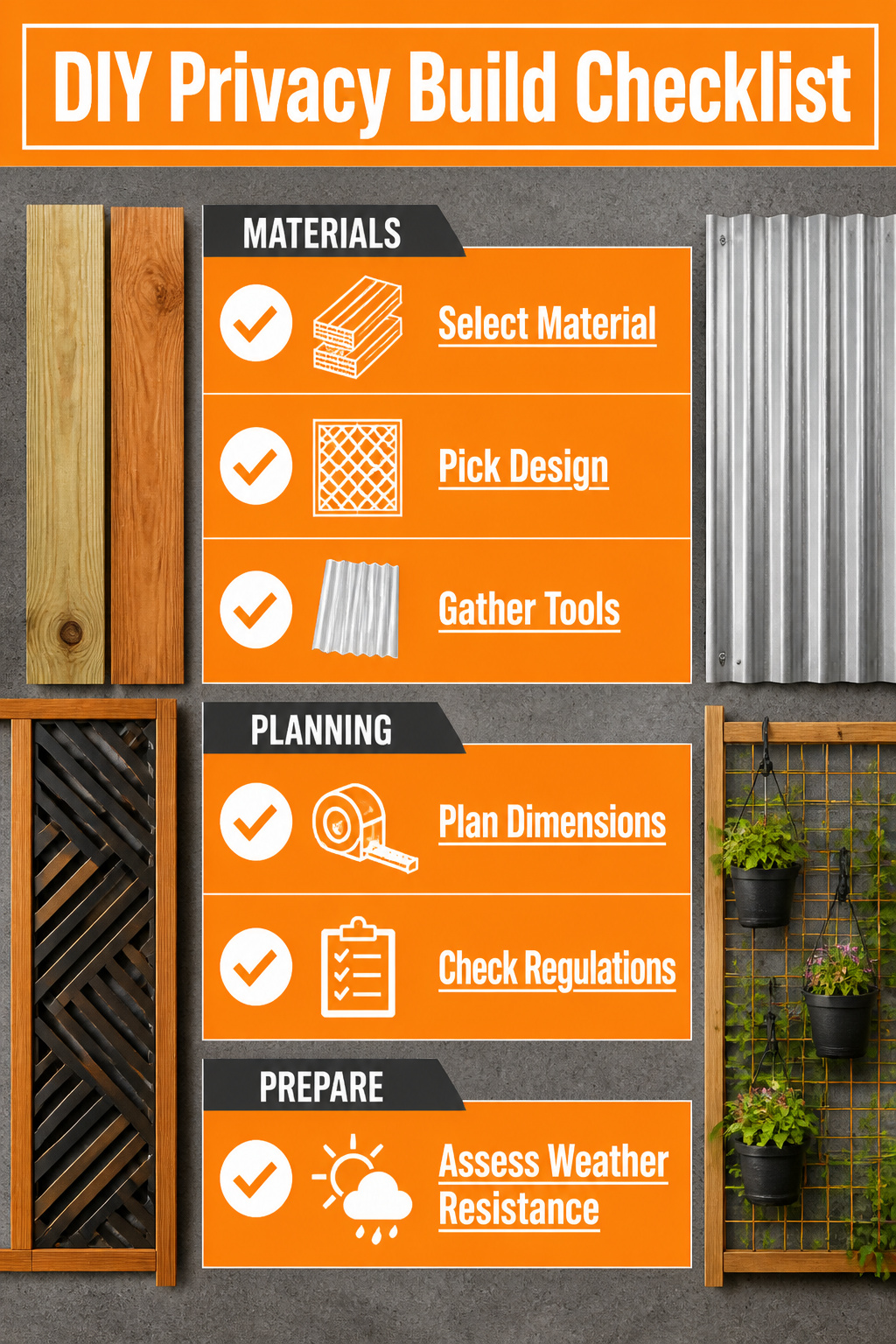
Pressure-treated pine, cedar, and corrugated metal sheets each handle the job differently, and the choice usually comes down to how long you plan to stay put and what weather your patio sees. Pressure-treated lumber runs cheap and takes stain well, which makes it the go-to for renters or anyone testing a layout before committing. Cedar costs more upfront but weathers without the chemical treatment, and after two seasons the color shift is genuinely handsome, not just aged.
Corrugated metal sheets read industrial, which works when your patio already has concrete, gravel, or stone in the mix. The texture breaks up flat planes without adding clutter. Home improvement stores stock them in standard sizes, and one person can manage a panel alone if the wind is calm.
Lattice framed in wood does double duty as structure and garden art. A non-traditional pattern, something besides the standard diagonal grid, keeps it from looking like an afterthought tacked to hide a problem. I have seen black lattice against cedar framing pull the whole deck together, though in full sun that black soaks up heat and the plants you hang there need more water than you’d think.
Freestanding builds using wood and mesh rebar let you hang potted plants with S-hooks and gain privacy as they fill in. The living wall approach costs less than mature hedging but demands patience; the first season looks sparse, and that is the test.
Layering Solutions That Actually Work
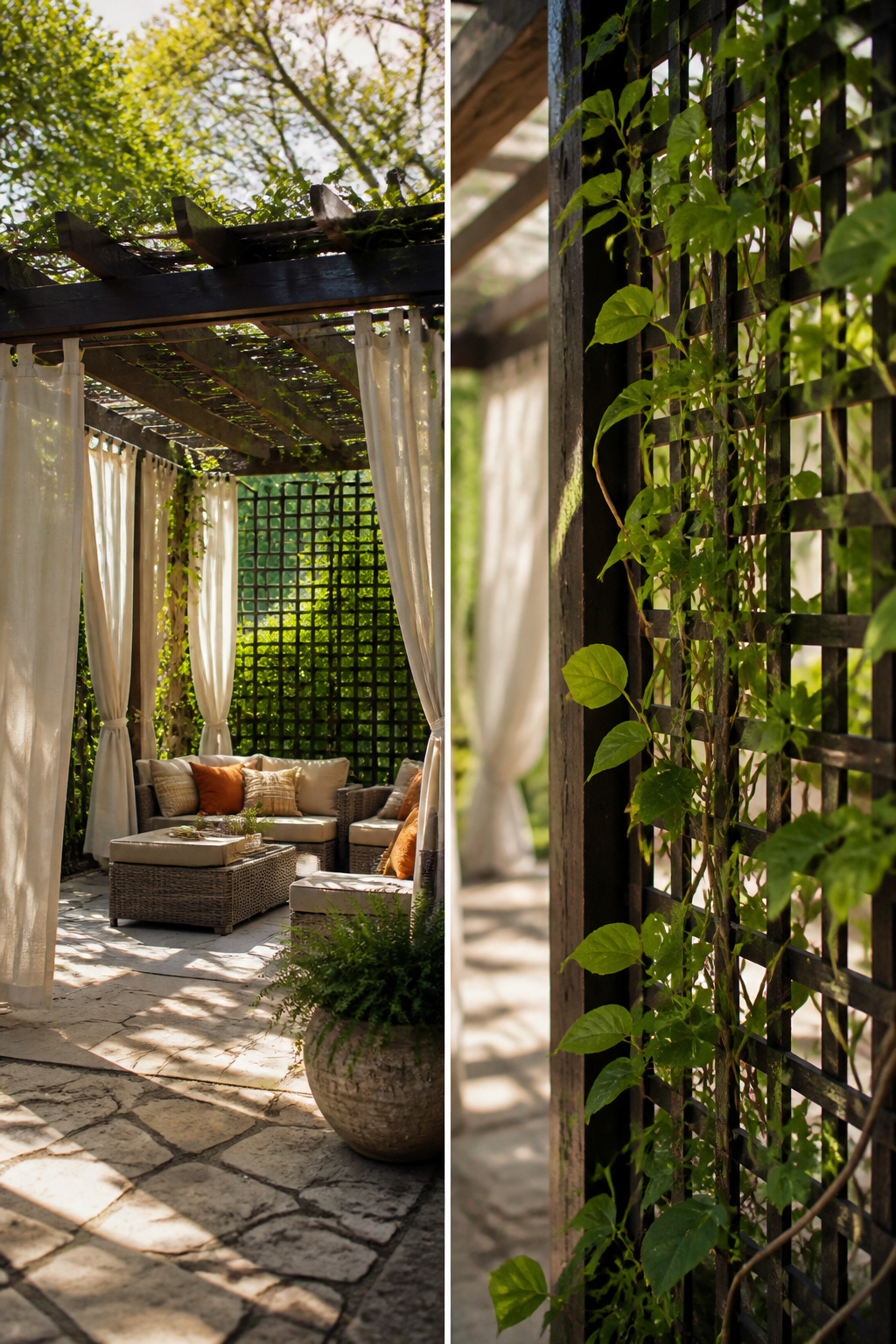
A single privacy layer on a patio usually leaves you adjusting around its gaps. The neighbors still catch an angle, or the afternoon sun cuts through just where you sit. Layering fixes that by letting each piece handle what it is actually good at.
The pairing that convinced me, reading through a dozen setups, is a pergola with outdoor curtains on the sides and a climbing vine threading the roof beams. The pergola gives the structure: it defines the space as a room, keeps airflow moving, and holds hardware without you drilling into siding you do not own. The curtains drop for instant screening when you need it; roll them back and the space opens up again. The vine, something like clematis on the lattice sides, fills the slower months with leaf cover that fabric alone cannot match.
Each layer covers the others’ weak spots. Curtains block sight lines but not sound; a wood or bamboo fence on the open side adds that. A fence gives total visual block but reads as a wall; the vine softens the edge and gives something to look at that is not your neighbor’s siding. Two years in, one of those three layers can fail and you still have privacy enough to sit outside with coffee. That redundancy is what makes a layered setup worth the extra planning.
Checking Local Rules Before You Build
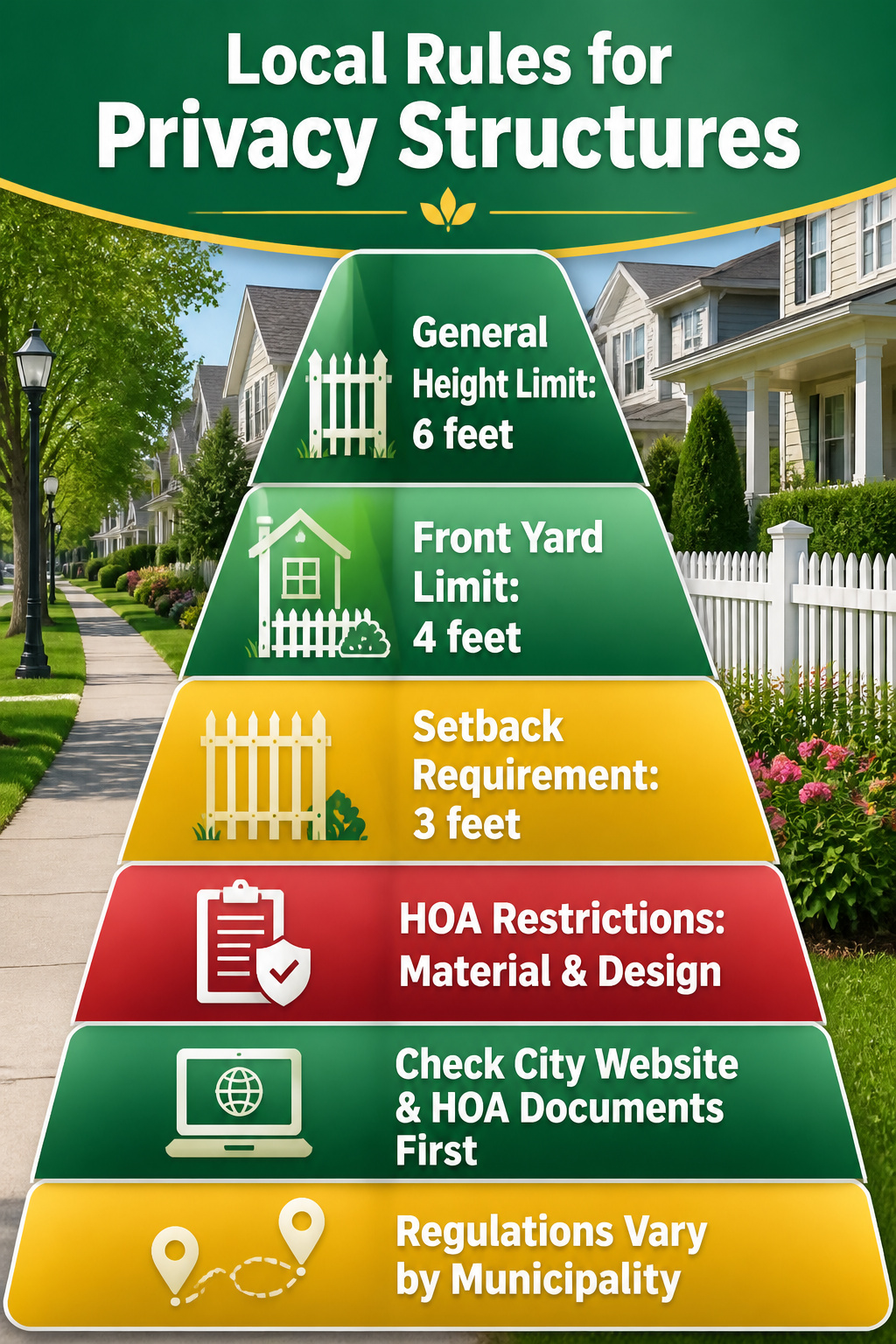
Zoning rules on privacy structures catch more gardeners than weather does. Most municipalities cap backyard fences at 6 feet, and many drop that to 4 feet for front yards, though the exact numbers change block by block. Your HOA may layer on tighter limits for material or style, sometimes banning solid fencing entirely in favor of shadow box or other semi-open designs that let light through.
I spent an afternoon last spring comparing two city codes online for a friend moving across county lines: one allowed board-on-board to the property line, the other required a 3-foot setback for anything over 42 inches. The permit office picked up on the second ring and confirmed what the pdf left vague. That call saved her a summer of guessing.
Check your city website first, then your HOA documents if you have them. Regulations vary by municipality enough that what worked at your last address is only a starting point here.
Maintenance That Determines How Long Privacy Lasts

A privacy screen that looked effortless in June can feel like a part-time job by August if you picked the wrong materials. Solution-dyed acrylic curtains are the fabric to look for: the dye runs through the fiber itself, so sun and rain fade the surface without bleaching the backing. I learned that distinction the hard way after a cheaper set went chalky at the hems in one season. The acrylic holds color and resists mildew without the re-treating schedule that canvas demands.
Plants are where the real time math lives. Arborvitae and privet both build a solid hedge, but privet wants two or three cuts a year to keep dense and neighbor-appropriate. Clumping bamboo and native hedging plants tend to hold their shape with less intervention. The difference between one spring pruning and three weekend sessions is the difference between a privacy screen you maintain and one you eventually neglect into a thin, leggy row. Match the plant to the hours you actually have in May, not the ones you imagine in February.
Frequently Asked Questions
What are the best fast-growing plants for natural patio privacy?
Emerald Green Arborvitae is the standout, adding 3 to 5 feet of new growth per year and eventually reaching 12 to 15 feet tall. Thuja Green Giant and Leyland Cypress match or exceed that pace, forming dense evergreen walls that hold their screen through winter. For climbing coverage on a trellis, Star Jasmine and Clematis fill in quickly enough to matter the same season you plant them.
Can a cantilever umbrella be used as a moveable privacy screen?
Yes, a quality cantilever umbrella with a tilt function angles its canopy vertically to block sightlines from elevated decks, neighboring windows, or low sun. It works as an instant, repositionable wall that you move rather than build. The same principle applies to shade sails, which you angle to intercept the specific sightline you need cut.
How can I add privacy to my existing deck without building a fence?
Pre-made privacy screens stand on weighted legs or bolt to existing railings, so no posts or permits are required. Tall planter boxes with grasses or bamboo line the perimeter with height immediately. Outdoor curtains hung from a pergola or tension rods add a soft, removable enclosure that renters can take down when they move.
What are the best materials for a DIY outdoor privacy wall?
Pressure-treated pine is the budget choice, though it needs regular sealing to stop graying and twisting. Cedar costs more upfront but weathers handsomely without chemical treatment and resists rot on its own. Corrugated metal sheets give an industrial look that breaks up flat planes of concrete, gravel, or stone, and one person can handle a panel alone if the wind stays calm.
How do vertical gardens work for patio privacy?
They use height instead of floor space, which matters when the whole patio spans maybe twelve feet across. Stacked planters or a freestanding trellis trained with vines turns the vertical plane into the screen itself. A living wall blocks sightlines while adding cooling greenery, and the slight gaps between plants or slats let air move through so the space does not turn stale.