
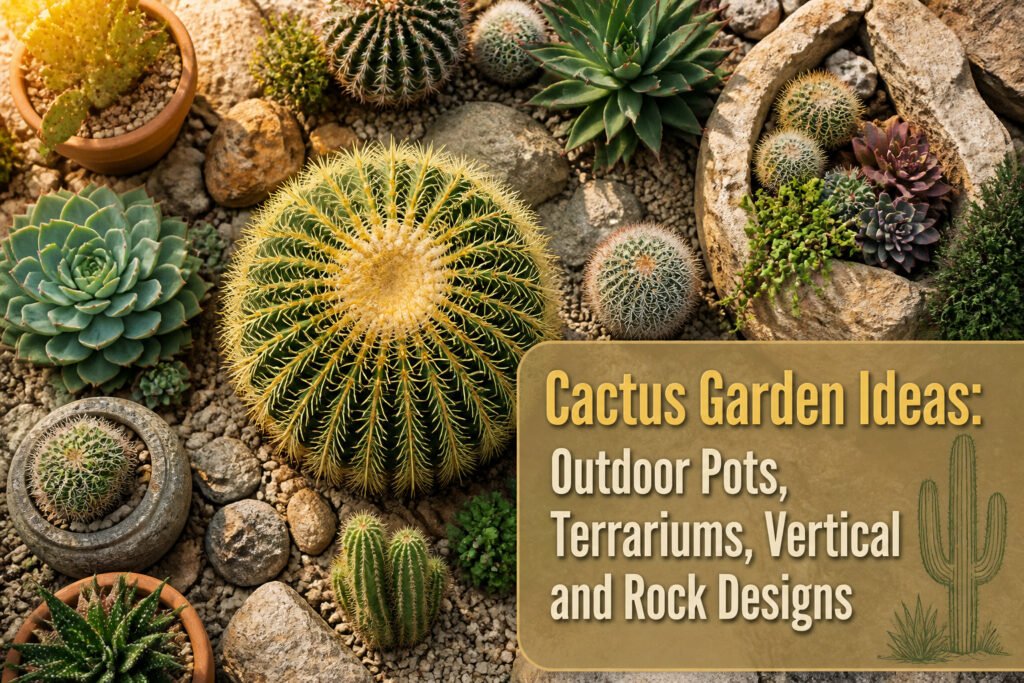
A cactus garden is a planted space built around drought-tolerant cacti rather than conventional flowers or shrubs, though it does not have to replace what you already grow. The shift can start with one dry corner where annuals keep failing, and cold-hardy varieties make this possible in most US zones, surviving temperatures down to -35 degrees. A Golden Barrel Cactus reaches 3 feet tall and 3 feet around, so spacing needs more room than most people expect.
Outdoor Cactus Gardens
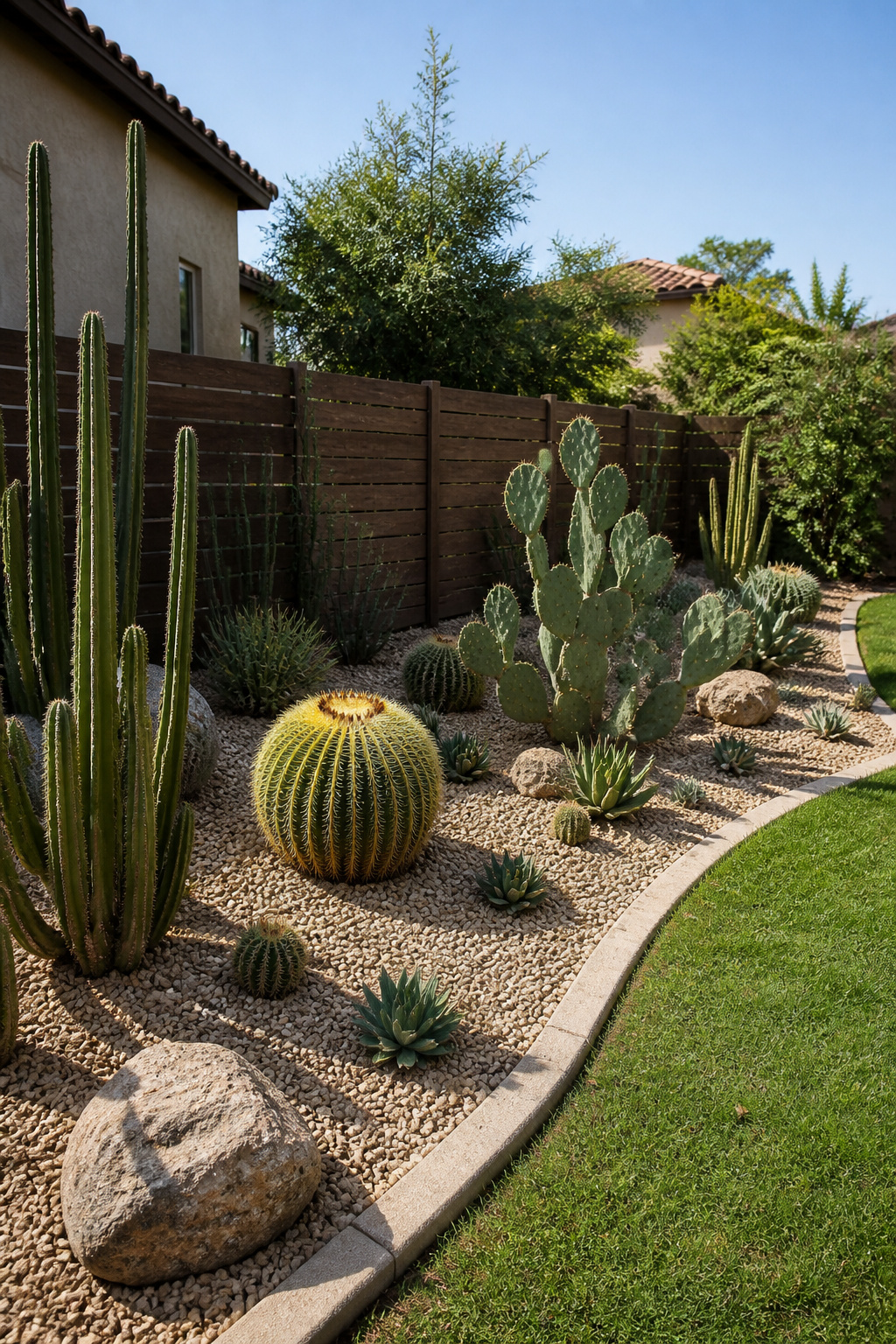
A cactus garden does not have to replace what you already grow. In my own yard, the shift started with one dry corner where annuals kept failing, and the cacti turned out to be the lower-maintenance answer.
Cold-hardy varieties make this possible in most US zones. The Eastern prickly pear, hedgehog cactus, and escobaria survive temperatures down to -35 degrees, though harsh winds cause more damage than snow itself. Most cacti prefer the 45 to 85 degree range, so site selection matters: a south-facing bed with some windbreak from a fence or shrub keeps the margin wider.
Spacing needs more room than you expect. A Golden Barrel Cactus reaches 3 feet tall and 3 feet around, and its spherical shape demands clear ground on all sides. Prickly pear ranges anywhere from 12 inches to 6 feet depending on variety, so check the mature size before you dig. I planted a Santa Rita too close to a path once; three years later the purple winter pads were beautiful but impassable.
The transition from a conventional flower bed is mostly subtraction. Remove plants that need regular water, loosen the soil for drainage rather than amendment, and space cacti in a grid or scattered pattern that lets each form stand alone. The yellow spines on a mature barrel cactus carry enough color that you will not miss the flowers until they arrive.
Container Cactus Gardens
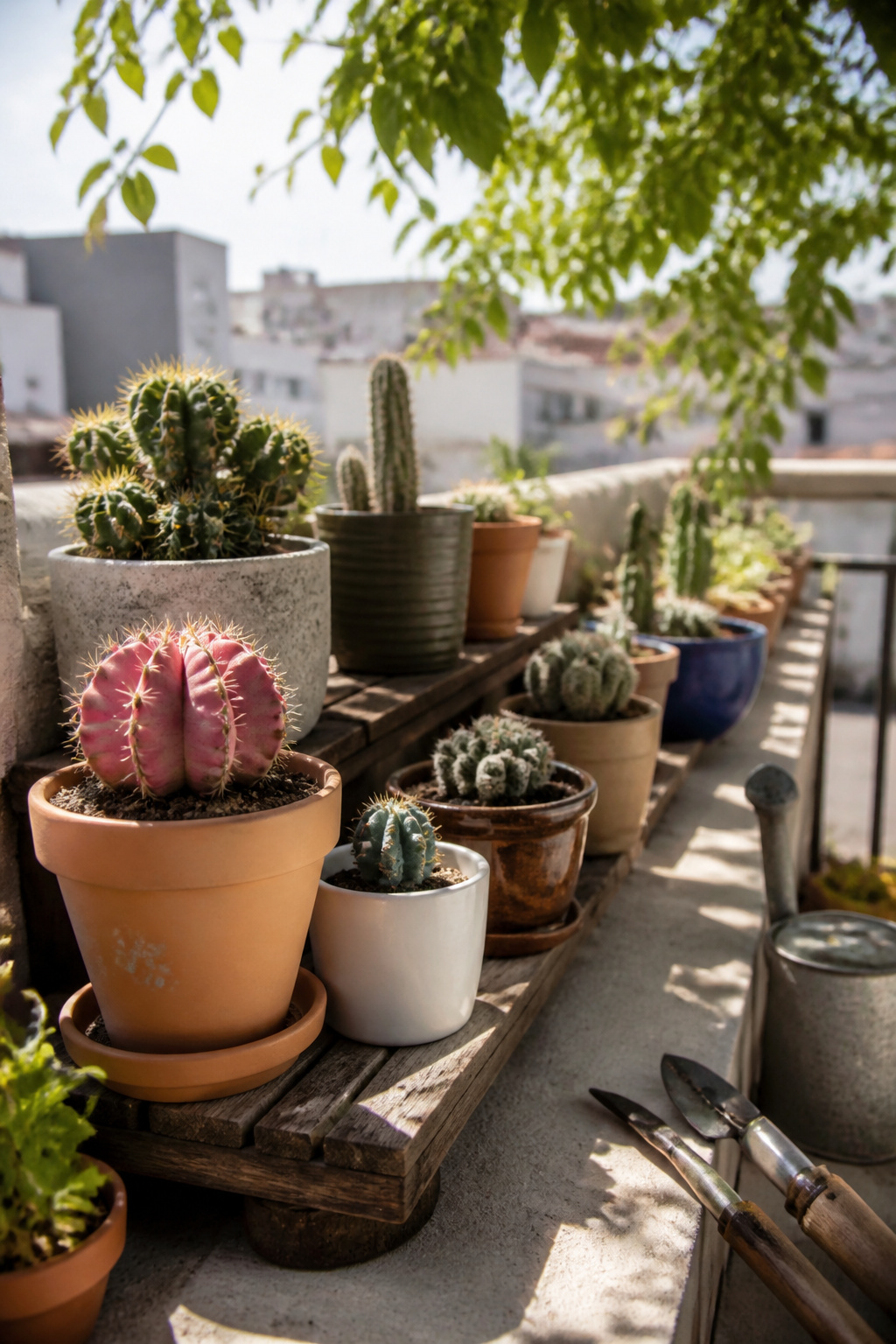
A container is the first cactus garden most of us actually build. My own started on a balcony with a terra-cotta pot that cost less than lunch and a gymnocalycium from the nursery shelf. The pot was nothing special, but it had the one feature that matters: drainage holes on the bottom, plural if the pot is wide. Without that, water sits and the roots rot before you notice the plant going soft.
Depth is the next thing to get right. Bowls and dishes between 2.5 and 6 inches deep work better than standard nursery pots for most small cacti; the roots spread sideways, not down, and the shallower profile shows off the plant’s shape. Terra cotta, clay, or ceramic all breathe, which helps soil dry faster between waterings, though any material works if the drainage is there.
The real advantage of pots is mobility. A balcony rail that gets morning sun turns into afternoon shade once the trees leaf out, and a container on a saucer moves in ten minutes. Grouping pots by height and color ties the collection together without matching them exactly. Leave cacti in their nursery pots if the roots aren’t pushing through; slip those plastic pots straight into the decorative container and pull them out when watering needs checking.
Cactus Terrariums
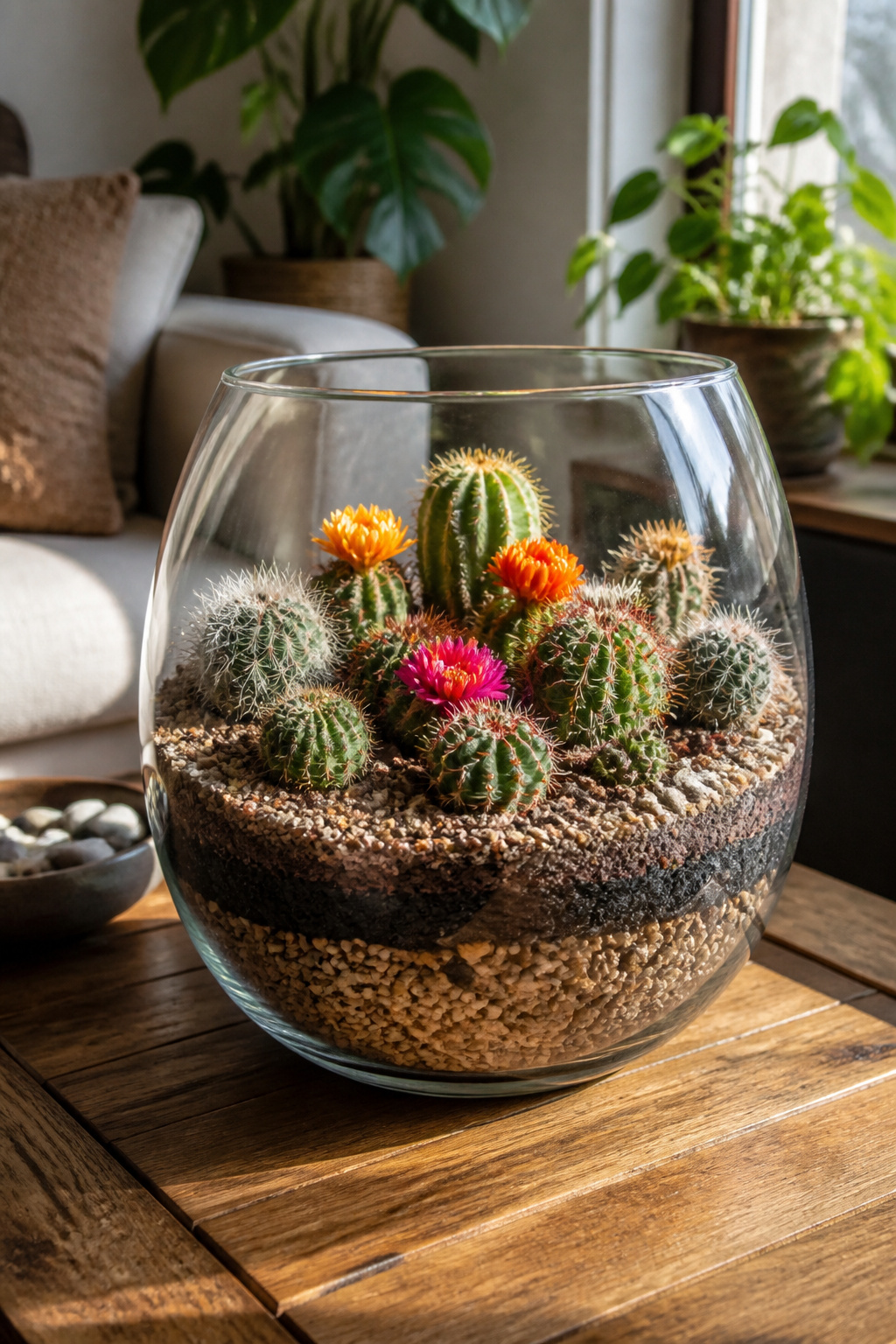
A glass container turns a few small cacti into something you can study from every angle, but the same walls that show off the spines will kill the plants if they trap moisture. Open containers beat closed ones every time for this reason; a lid or narrow neck holds humid air against the stems and invites rot.
The fix is in the layers underneath. I start with one to two inches of gravel at the bottom, then a thin spread of activated charcoal to filter water and keep the reservoir from souring. On top of that goes a well-draining cactus mix, not standard potting soil. Without a drainage hole, that gravel layer is the only thing standing between a watering and root rot.
Scale matters more than you think. Mammillaria and small Rebutia species stay compact long enough to justify the trouble; faster growers outgrow their glass in a season and leave you prying spines out of a narrow neck. The whole appeal is a miniature desert that holds its proportions.
Vertical Cactus Gardens

Wall-mounted planters and hanging pockets turn a bare balcony railing or fence into growing space you do not have on the ground. The felt pocket systems sold by Florafelt and GroVert hold shallow-rooted cacti in a grid that stays light enough for most brackets, while a simple shelf at eye level lets you cluster pots and still walk past. Water only when the pocket or pot feels dry and tilted forward, so runoff drips onto the balcony floor where you can wipe it rather than onto the neighbor below.
East- or west-facing walls do the most work. Morning or afternoon sun throws the curved and spiky shadows Noelle Johnson points out against a plain surface, which means even a single columnar cactus in a wall bracket reads as architecture.
One design element often overlooked in the garden is the shadows that plants can reflect, adding another layer of interest.
For a balcony with no ground to work, that shadow play costs nothing extra and fills the vertical plane. Stay small with your choices: Ric Rac and Monkey Tail cactus trail but stay narrow, and most Mammillaria top out under six inches across. A specimen that outgrows its pocket is a specimen you have to repot while standing on concrete six floors up.
Rock Gardens
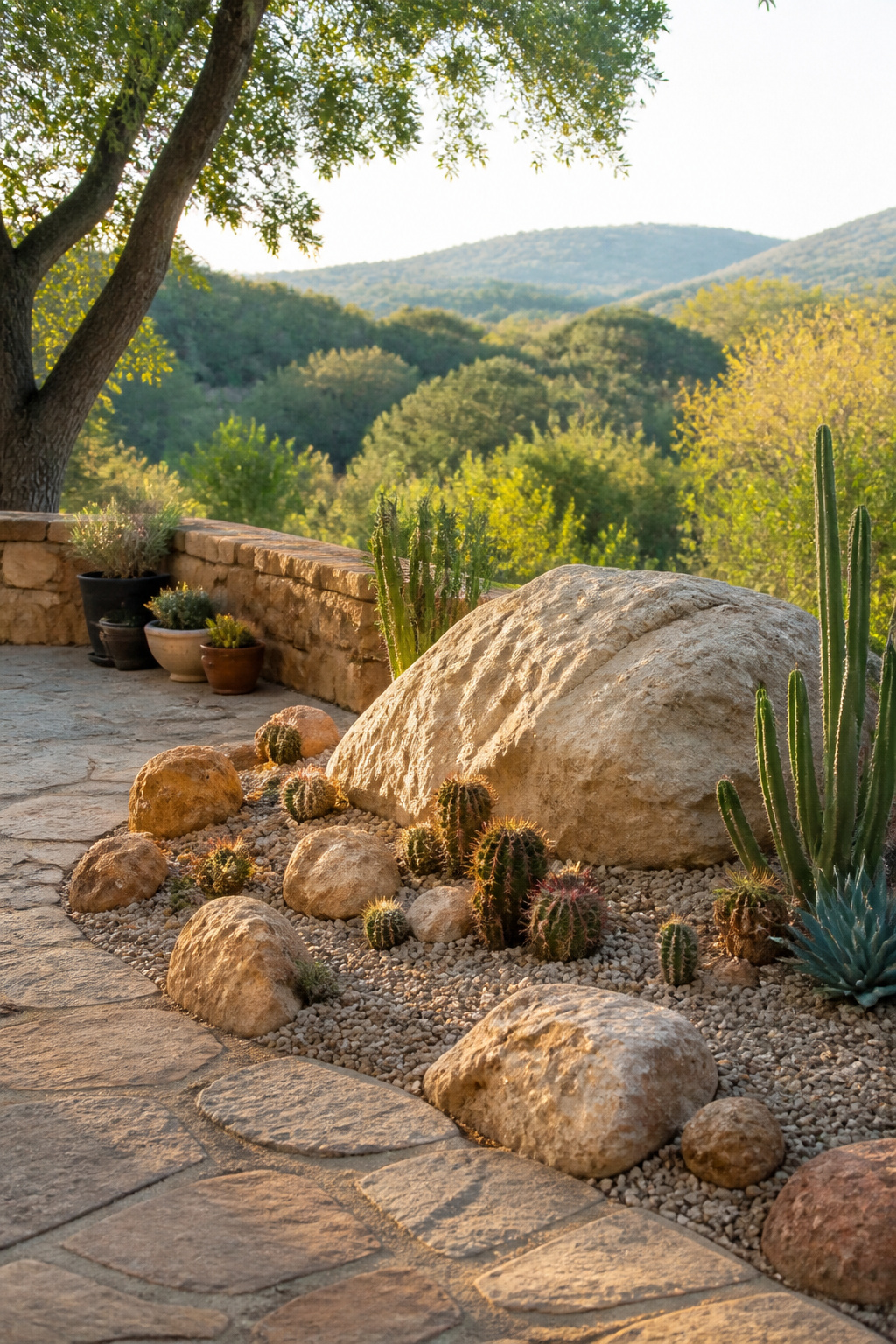
Rocks do more than frame a cactus; they reshape the ground itself. Stone absorbs heat through the day and releases it after dark, keeping soil temperature steadier than bare earth through cold snaps. That thermal mass lets you tuck cold-hardy cacti against a south-facing boulder and gain half a zone of protection, or shade a corner with a larger rock to cool roots that would otherwise bake.
Gravel top-dressing finishes the look while holding moisture in the soil and suppressing weeds. A layer of crushed rock reads as finished ground rather than neglected dirt, and the lower moisture levels suit cacti far better than the damp of a traditional flower bed.
The Saguaro Cactus can reach 40 feet and makes an iconic silhouette where climate allows, but most cacti in a rock garden stay well under that. Smaller species cluster naturally among stones and gravel, reading as a landscape rather than a collection of specimens set out in rows. The difference between a "pincushion garden" and something that feels like place is usually that spacing: groupings that echo how you’d find them on a mountain path in the Chihuahuan Desert, not even spacing from a nursery tray.
Themed Cactus Gardens
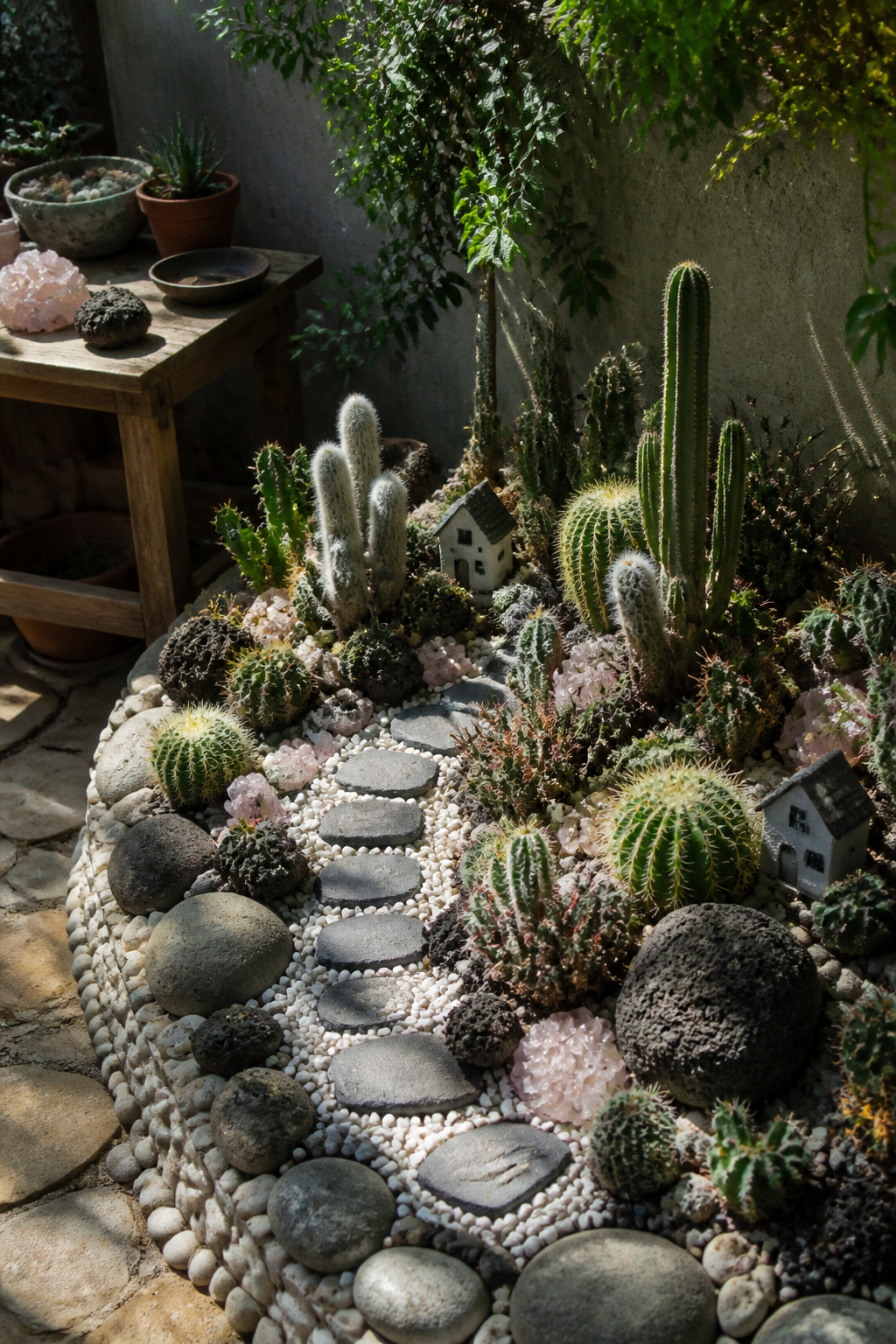
A fairy garden or desert diorama turns a cactus pot into something you walk past and notice twice. The trick is building the scene around the plants, not stuffing props between them until the whole thing looks like a gift-shop shelf.
Start with the hardscape before you plant. Lay down miniature stone pathways, position any larger rocks for grade changes, and set houses or figures where you want them. This keeps you from rearranging sharp objects around already-rooted spines. Kitchen tongs, learned from a cactus nursery stop near Joshua Tree, make the planting itself far less painful than bare fingers.
Topdressing finishes the look: clear glass chips, colored pebbles, black lava rock, even mineral pieces like pyrite or rose quartz picked up at shows. The layer should not fully cover the soil. Too thick, and it traps moisture where cactus roots need air and dry intervals between waterings.
The theme guides plant choice, but light and drainage still rule. A moonscape with pale gravel needs the same unshaded hours and gritty mix as any other outdoor pot. A fairy village in a dim corner will fail no matter how charming the miniature architecture. Match the plants to the actual conditions, then dress the scene to suit them.
Cactus Arrangements

A shallow bowl of cacti works best when you treat it like a still life that happens to grow. The growers I spoke with in Tucson, where cacti are sold in 2", 3", and 4" grow pots, all said the same thing: combine plants with similar water needs and growth rates so one does not overtake or drown another. Cacti grow slowly enough that overtaking is not an immediate worry, but a thirsty parodia and a dry-loving mammillaria in the same dish will punish one or the other every time you water.
Texture and height carry the design. A flat green disk of echinopsis beside the upright pencils of a cereus, both anchored by the woolly areoles of a small opuntia, gives the eye three places to land without crowding the container. Color comes from the plants themselves, not flowers: the blue cast of glaucous species, the rusty spines of some ferocactus, the almost white fuzz of certain mammillarias.
The container matters less than the drainage. Handmade pottery shows off well, but any shallow bowl needs holes or a very careful hand with the watering can. I have made arrangements in low dishes that sat on a kitchen counter for years, barely changing, because the plants were matched to each other and to the light they received.
Cactus Landscaping

Xeriscaping with cacti cut my summer water bill by roughly half the first year I tried it, though I learned the hard way that HOA restrictions in some neighborhoods ban spiky plants near sidewalks or require a certain percentage of turf grass. Check your covenants before you dig; a friendly conversation with the board beats a removal notice.
Cold-hardy varieties like Scarlet Hedgehog Cactus work as structural anchors where a boxwood or small flowering tree would normally go. Their bold evergreen stems hold visual weight through winter, and the spring flowers arrive when little else is blooming. I have used columnar types as corner punctuation along a driveway, spaced so they read as intentional geometry rather than accidental placement.
The spination itself becomes a feature if you need a boundary that discourages foot traffic. A row of densely spined cacti along a low fence line looks deliberate and eliminates the need for an ugly gate in some spots. Just site them where falling leaves from deciduous neighbors will not collect; wet debris against the crown causes rot faster than drought ever will.
Soil and Water
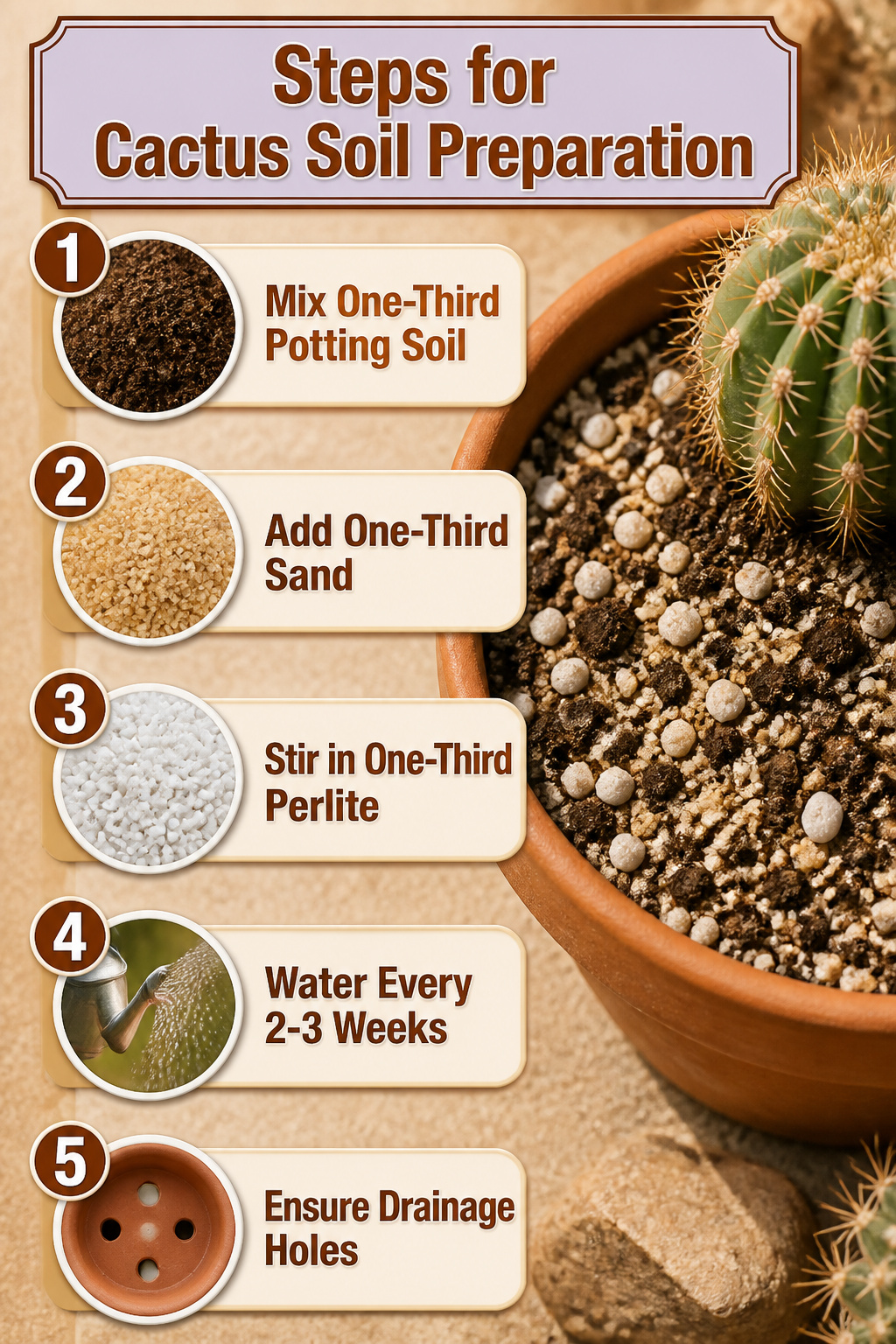
A cactus mix that actually drains starts with one-third potting soil, one-third sand, and one-third perlite or pumice. I buy plain bagged potting mix and coarse horticultural sand from the same nursery, then stir in the perlite until the blend feels gritty, not spongy. For terrariums, that same mix goes on top of a bottom gravel layer so water has somewhere to go.
Watering every two to three weeks in spring and summer works for most setups, though I check the top inch with my finger first. In fall and winter, the interval stretches longer; the plant is dormant and barely pulling moisture. Overwatering shows up as yellowing pads or a soft base, while underwatered cacti wrinkle and go dull but perk back up after a drink. The line between the two is narrow, which is why I keep a cheap moisture meter around rather than guessing.
What I learned the hard way: drainage matters more than any other factor for keeping these plants alive. A perfect soil mix in a pot without holes still traps water against the roots, and rot sets in before you notice the plant looking off. I lost a Mammillaria to that mistake in my first season. Now every container gets holes, every saucer gets emptied, and I still tilt pots after watering to let the last drops run free.
Light and Placement

Most cacti need at least six hours of direct sun daily to stay compact and bloom. South-facing windows give the strongest light indoors, which is where I keep my own collection during winter. Apartments with northern exposure or deep overhangs will not cut it without help; full-spectrum LED strips in the 5000-6500K range, run 12-14 hours on a timer, keep plants from stretching into pale, bent versions of themselves.
The move outside in spring trips people up. Cacti sunburn just like we do, and the damage scars permanently. I learned to shift mine gradually, starting with an hour or two of morning sun and adding time over a week. Shade cloth or a spot under open tree canopy works as a halfway house if you are impatient. Rotate pots monthly too; the growth toward the light gets lopsided fast otherwise.
Choosing Cacti That Survive
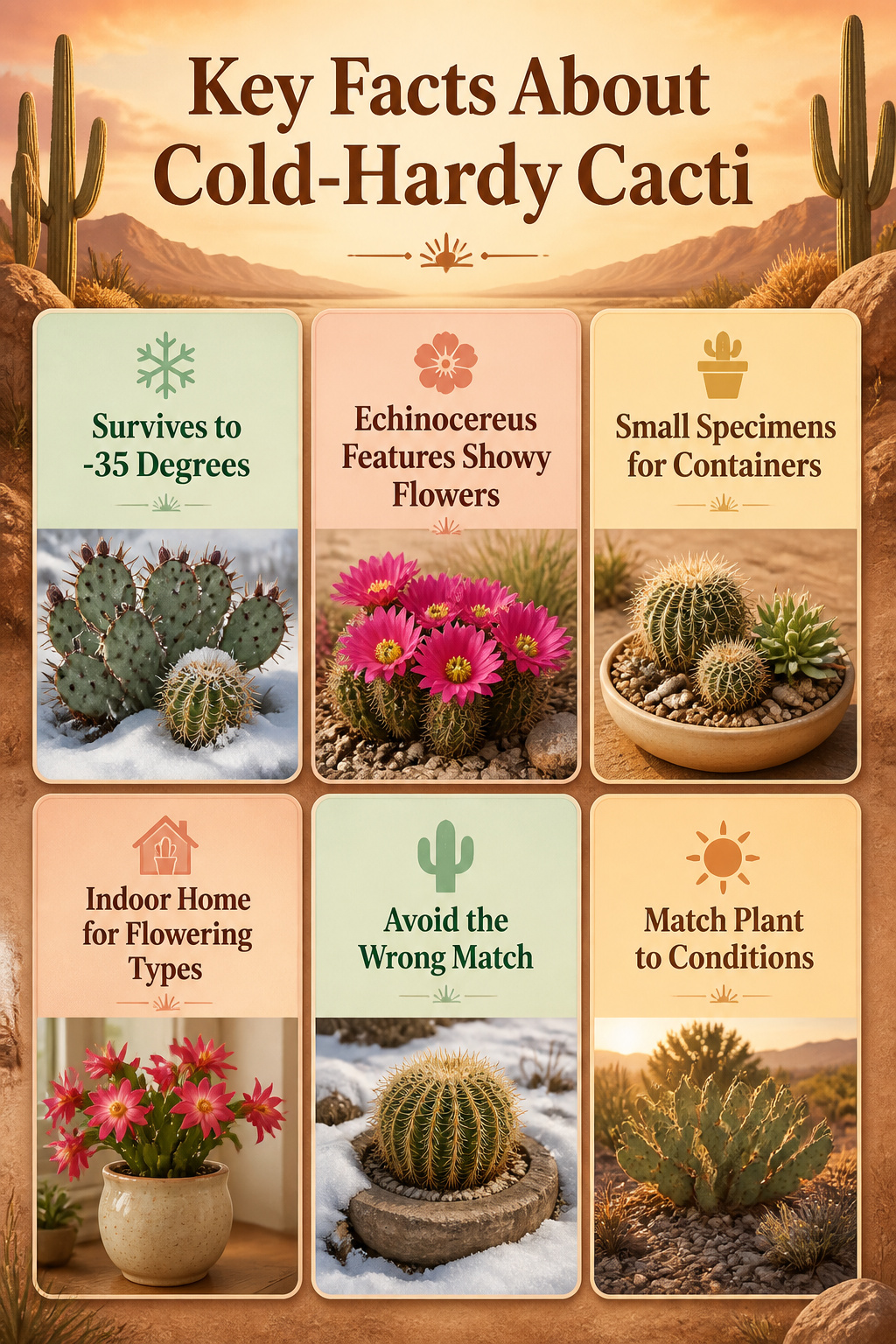
Cold-hardy cacti open up outdoor planting in places most people assume are off-limits. Eastern prickly pear, hedgehog cactus, and escobaria survive temperatures down to -35 degrees, though wind matters more than snow: the same plant under a roof overhang fares better than one in open yard. Echinocereus, the largest genus of these hardy types, carries showy flowers that pair well with native grasses and low perennials.
For containers and smaller spaces, the 2-inch to 4-inch specimens sold for interior use stay manageable. Any small cactus works if light is sufficient; mixing heights and shapes matters more than specific names. A dish garden I assembled four years ago has barely outgrown its pot, so crowding is less urgent than with leafy plants.
Flowering types like Christmas cactus belong indoors for most US gardeners, where they deliver color without the hardiness gamble. The mistake is buying for looks first, then retrofitting conditions. A zone 5 gardener forcing a tender Mexican species into a sunken pot wastes effort a prickly pear would have spared. Match the plant to the actual winter low, the actual hours of sun, the actual space on a balcony rail. The surviving garden is the one built from those numbers up.
Cacti and Succulents Together
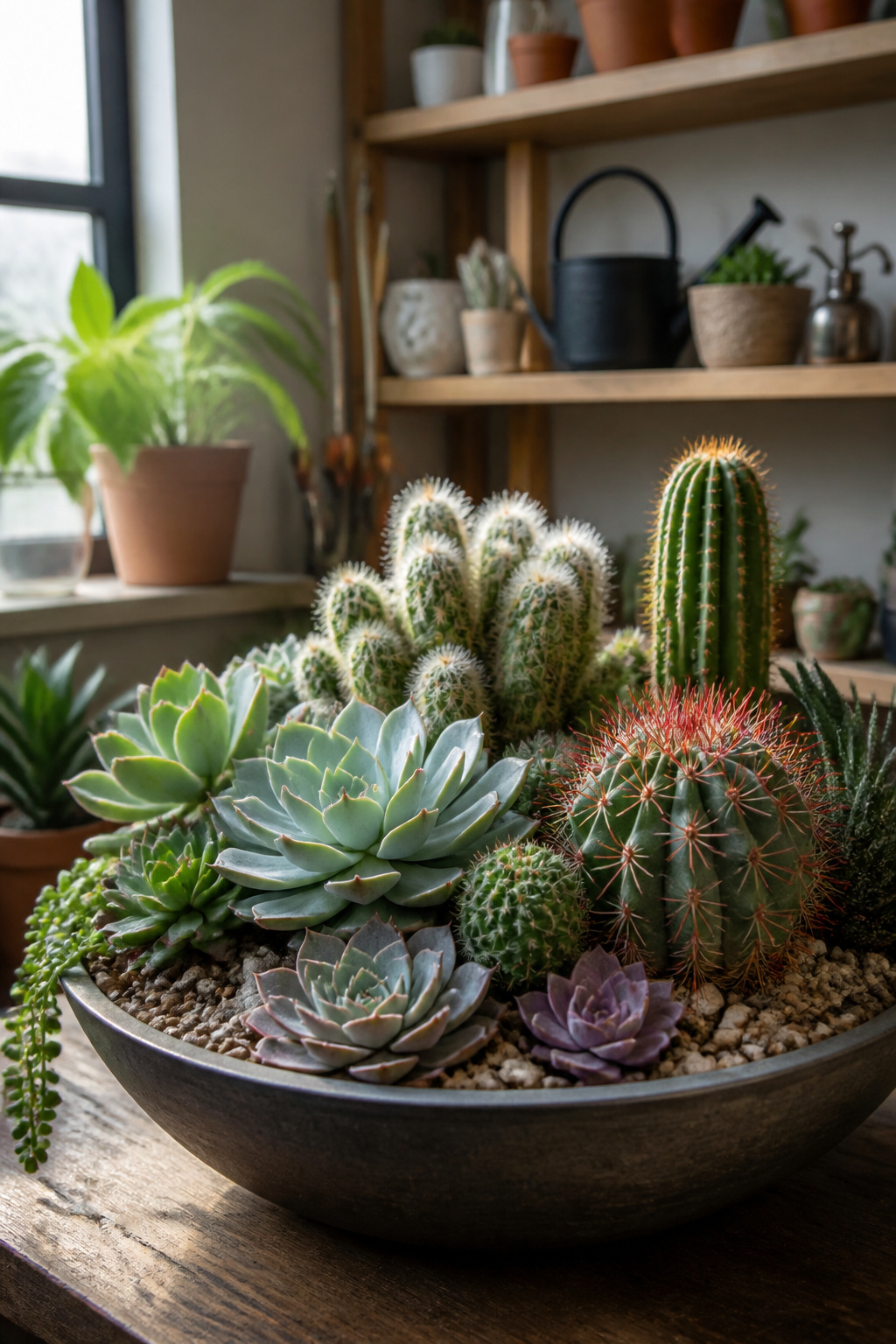
Cacti and succulents share the same core demands: gritty, fast-draining soil, plenty of sun, and water only when the mix has nearly dried. That common ground makes them natural companions in pots or beds, though their habits differ enough to keep the pairing interesting. Cacti are generally slower growers with more architectural, upright forms; succulents like echeveria or sedum spread and mound, filling the lower spaces and softening the spines above. The visual contrast is what makes a mixed planting work: vertical against horizontal, smooth against ridged, the repetition of rounded shapes at different scales.
Not every succulent can handle the dry edge cacti prefer. Genera such as agave, haworthia, gasteria, and senecio tolerate the same extended drought and lean soil without turning mushy. I group by water needs rather than looks alone: a jade plant or aloe wants more frequent drinks than a barrel cactus, so placing them together means one will suffer. The safer move is to match the truly dry-tolerant succulents with cacti and keep thirstier ones in their own container.
Frequently Asked Questions
What are some good cactus garden ideas?
Outdoor beds, containers, terrariums, vertical wall planters, rock gardens, and themed miniature scenes all work well. Outdoor gardens use cold-hardy varieties like Eastern prickly pear and escobaria that survive down to -35 degrees. Containers offer mobility for balconies and patios, while vertical systems from brands like Florafelt turn railings and fences into growing space.
How do you care for a cactus?
Cacti need well-draining soil, infrequent watering, and at least six hours of direct sun daily. Water every two to three weeks in spring and summer after checking the top inch of soil; stretch the interval in winter when plants are dormant. Use a mix of one-third potting soil, one-third sand, and one-third perlite or pumice, and never plant in a container without drainage holes.
Can you plant cacti and succulents together?
Yes, if you match species with similar water needs and growth rates. Agave, haworthia, gasteria, and senecio tolerate the same drought and lean soil as cacti. Avoid pairing thirstier succulents like jade or aloe with dry-loving cacti; one will suffer each time you water.