

The right face planter idea depends on whether your plant will live indoors year-round or eventually move outside. Lemon Coral Sedum, for instance, spills like bright chartreuse hair but will go leggy and pale if you try to stretch it past a single season inside; the color stays cleaner on a porch step anyway. That condition, what a plant actually costs in care, is what separates the entries ahead.
1. Lemon Coral Sedum for Spilling Hair
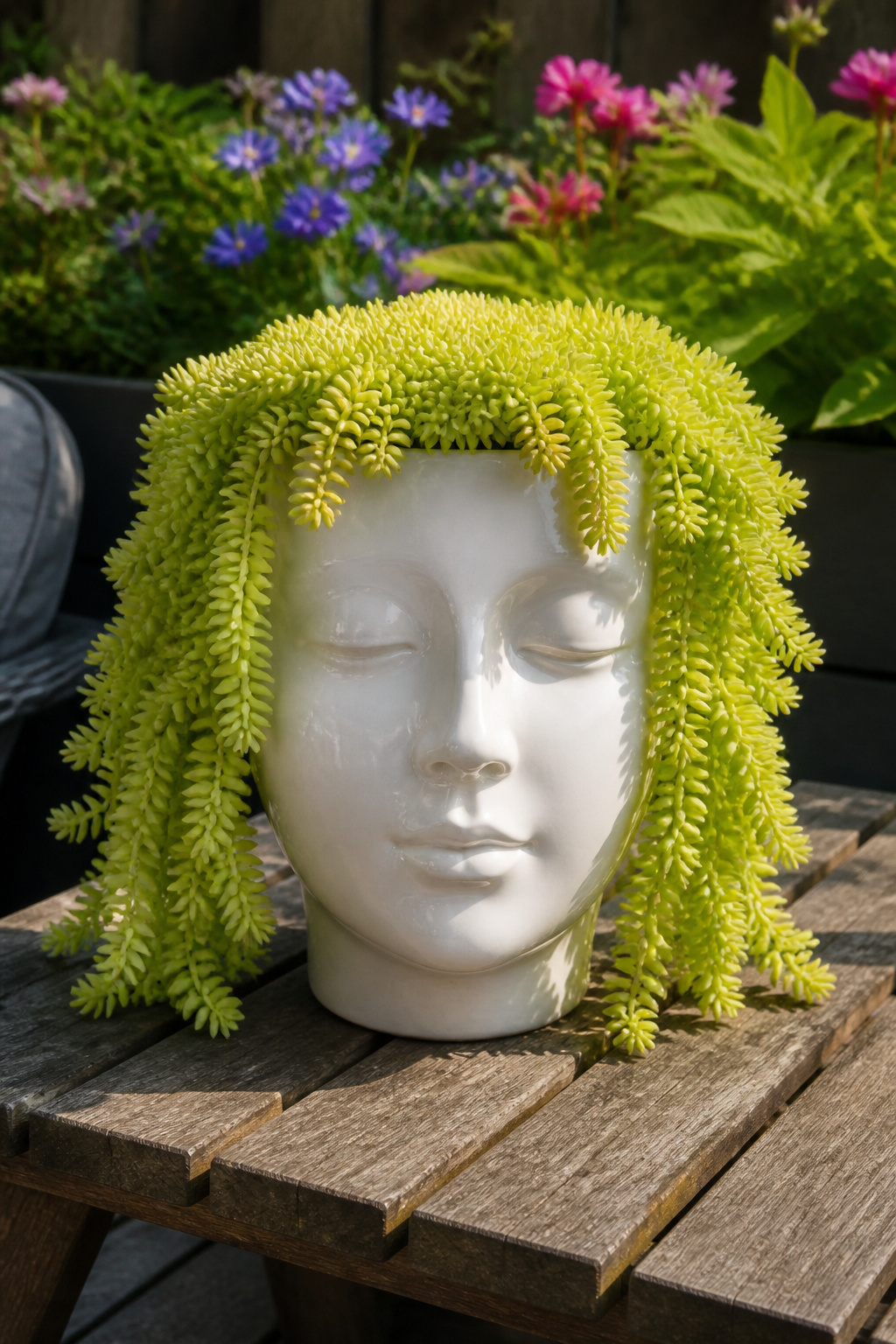
Lemon Coral Sedum grows low and spills over the edges of a face planter in a way that reads immediately as hair. The chartreuse color is bright enough to catch the eye from across a patio, and the soft cascade softens the hard edges of ceramic or concrete that most head-shaped pots are molded from.
The catch is that this sedum is not a true indoor plant. It will look fine on a kitchen counter or bookshelf for a few weeks, maybe through a single season if the light is strong enough. Eventually it wants to move outside to full sun and sharper drainage. I have seen gardeners try to stretch this, and the stems go leggy and pale, the spill turns into a thin reach toward the window. Better to plan the planter as a temporary indoor display, then shift it to a porch step or garden edge once the weather settles. The color stays cleaner outside anyway, that yellow-green turning almost neon with enough sun.
2. Hoya Exotica as a Pet-Safe Drape
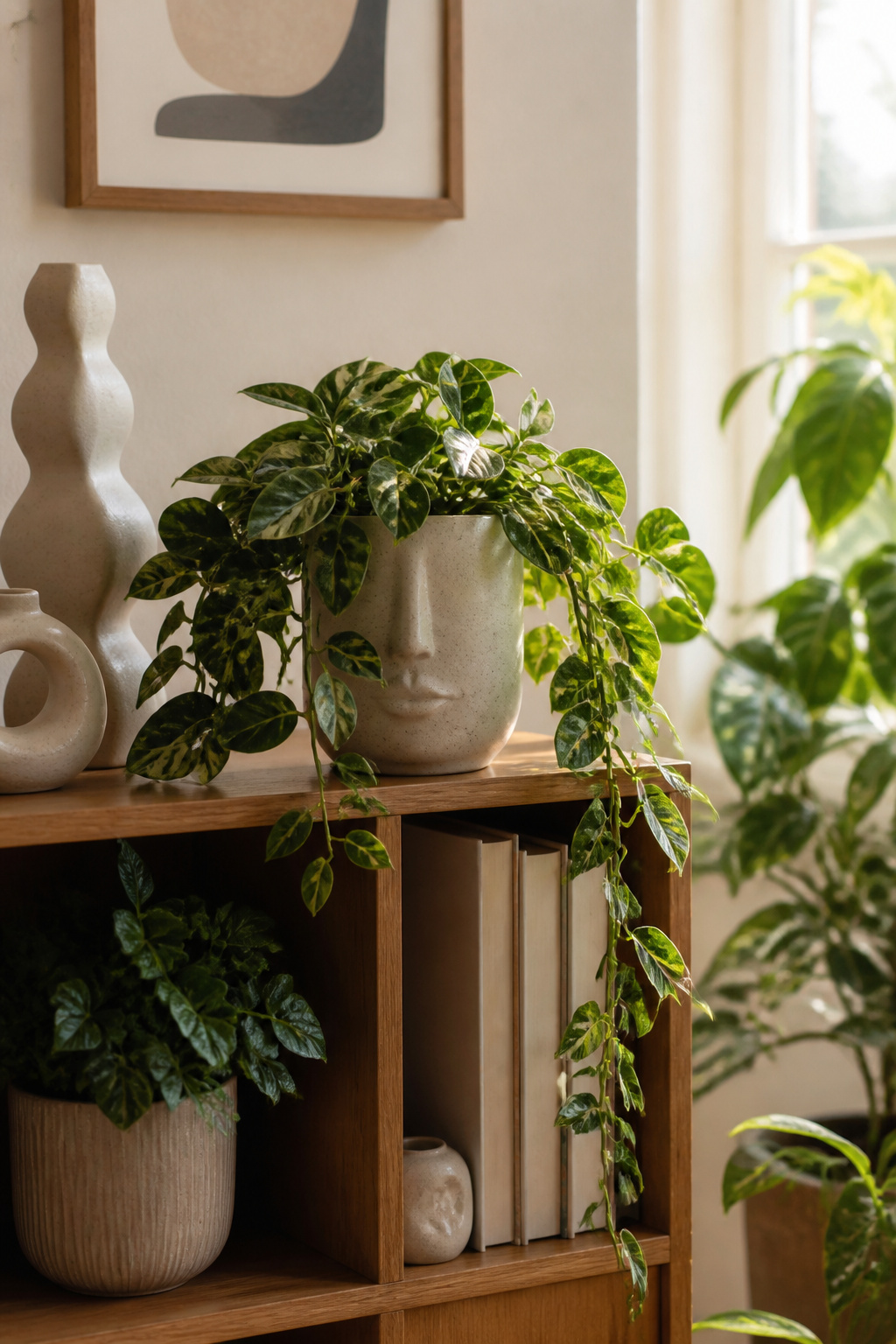
A trailing plant with soft, variegated foliage can turn a face planter into something that feels alive, and Hoya Exotica is pet-safe for households where cats or dogs might sample the leaves. I keep one in a ceramic head pot on a shelf my cat can reach, and the slow, elegant drape over the edges has only gotten better as it settles in. The variegation reads as highlight streaks against deeper green, so the "hair" catches light differently from every angle. Growth is deliberate rather than explosive, which means you will not be trimming it back every two weeks to keep the face visible. That same measured pace makes it forgiving if you forget a watering; the leaves stay plump and the stems keep their soft, controlled spill without turning brittle. For a planter meant to sit where pets roam, the combination of non-toxic foliage and a drape that behaves itself is hard to improve on.
3. Aloe Vera for Upright Structure
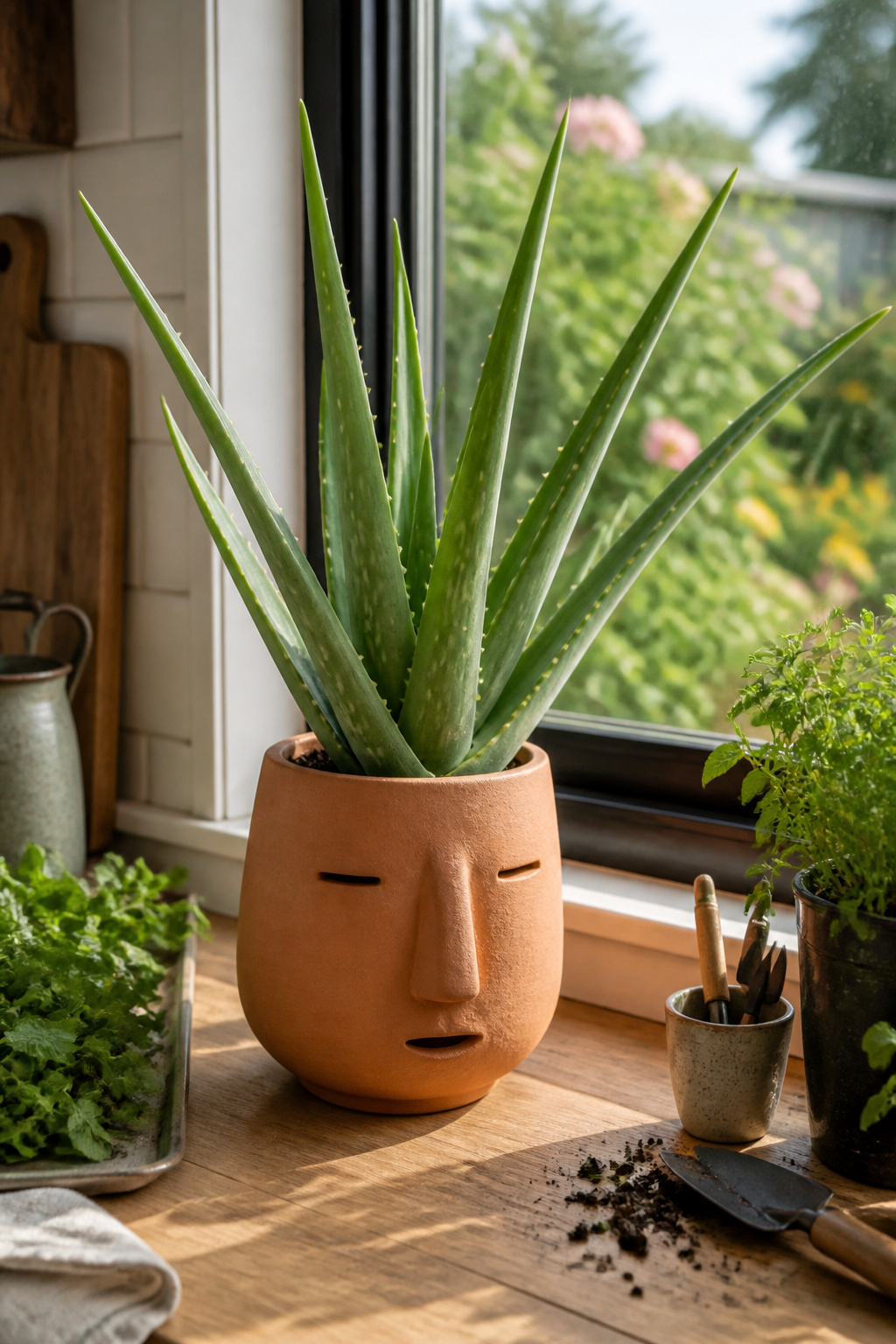
A small aloe vera sits upright in the crown of a head-shaped planter like a fresh, spiky cut. The thick, lance-shaped leaves radiate from a central point, giving sharp architectural structure where trailing plants would only spill. Low water needs suit the shallow soil volume most face planters hold; a thorough drench followed by dry weeks keeps the roots sound.
The practical payoff matters too. A kitchen-window aloe means a leaf is always within reach for a minor burn or a cut caught on garden wire. Break a lower leaf, squeeze the gel, and the sting eases. That usefulness nudges it past pure decoration, especially in a planter that already reads as playful.
Size stays manageable in these pots. The small specimen that fits a head planter keeps its tidy rosette form without the 18–24 inch spread the species can reach when given garden room. A terra-cotta or concrete face pot, left unglazed, pulls extra moisture away from the root crown and prevents the rot that finisher glazes sometimes invite.
4. Toffee Twist Sedge for Height and Color
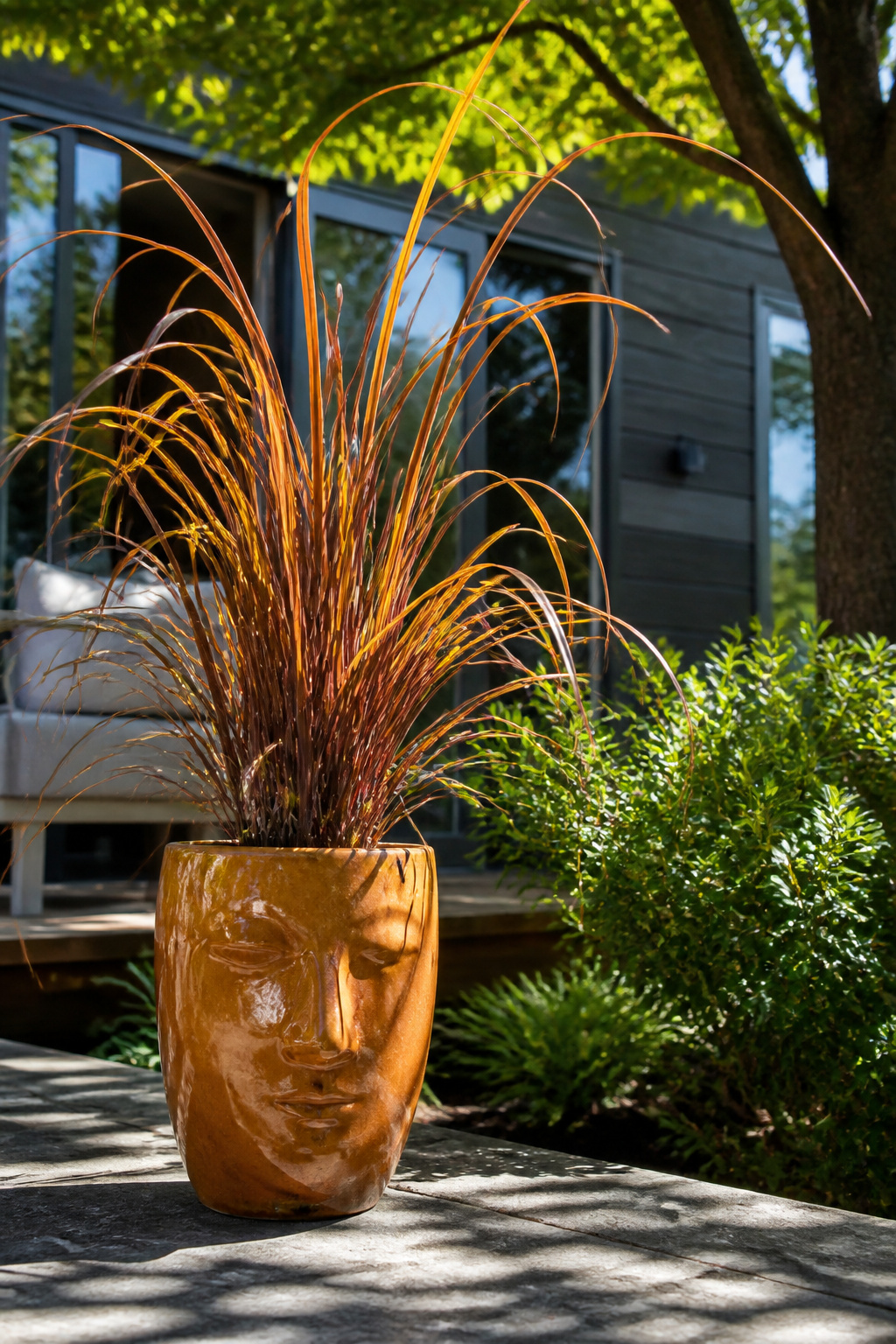
Toffee Twist Sedge carries a copper-bronze color you do not often see in a face planter, and at 18 to 24 inches tall it gives you real vertical presence instead of a low mound. That height puts it in the back of a grouped arrangement or demands a planter with enough depth to keep it from looking top-heavy. The blades curl and twist as they grow, which reads as windblown hair catching some movement, especially if you set the pot where a breeze passes through. I would not try to force it into a small head pot; the scale fights the joke. Give it room, let the bronze catch late light, and the plant does the character work for you.
5. Coleus for Easy Color and Propagation
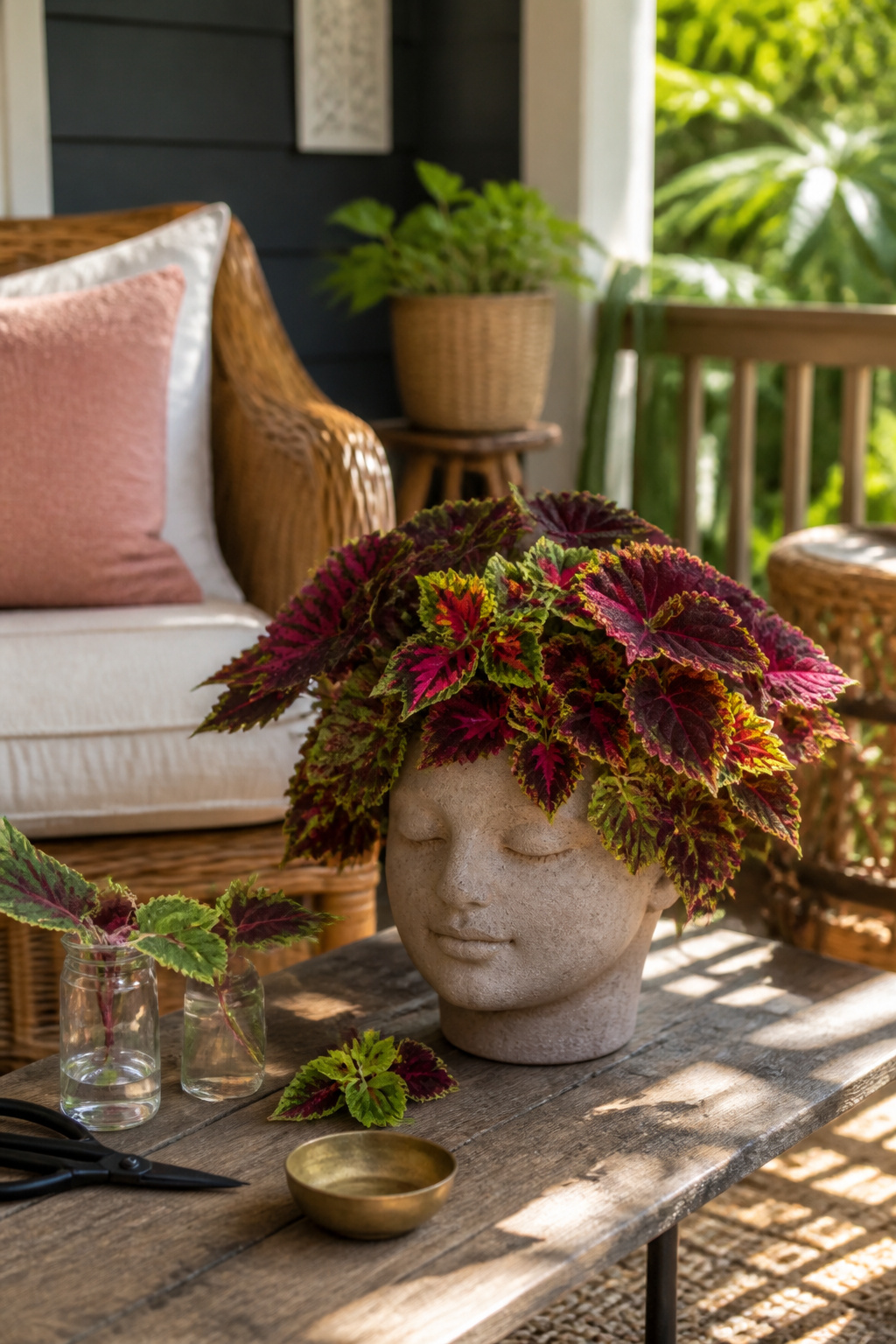
Coleus packs enough color in one leaf to read as hair from across a patio, the reds and limes and purples mixing in patterns that shift as the plant fills out. I like them in face planters because the visual weight sits up top where you want it, and the texture from a distance is bold without being busy.
What makes coleus especially practical for this project is how freely it roots from cuttings. A single plant in a 3-inch pot can become three or four with nothing more than water and a week of patience. Snip a stem below a node, strip the lower leaves, and let it sit in a jar on the windowsill until the roots show. This matters when you are working a small space and want to repeat the look without repeating the receipt.
The other advantage is shade tolerance. Coleus prefers partial shade, which in practice means the covered porch or the patio corner that gets morning light and afternoon protection. That opens up spots where succulents would stretch and lean, and it keeps the colors from bleaching out the way they do in full sun. In upstate New York they push well into fall, lasting until the first hard frost, so a late-summer planting still has time to establish and look deliberate.
6. String of Pearls for Wiry Hair
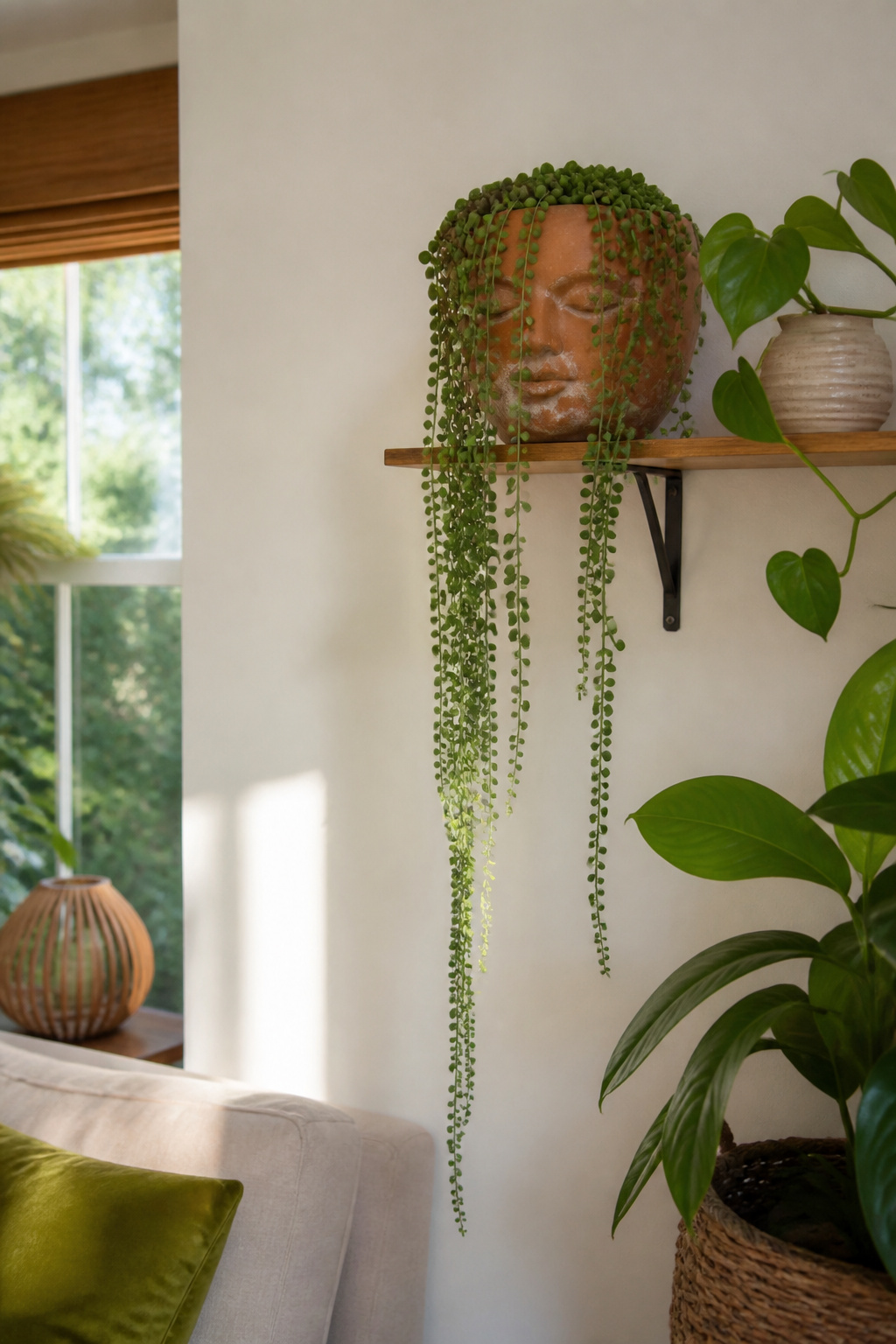
Senecio rowleyanus drapes from an elevated face planter like beaded braids caught mid-swing. The marble-sized leaves thread along thin, wiry stems that can reach two or three feet before they start branching, so a shelf or hanging pot lets them do what they do best: cascade. Without that drop, the plant just piles up on itself and the effect is lost.
Bright, direct light for several hours a day keeps the stems firm and the pearls plump. Shift it too far into shade and the gaps between leaves stretch, the beads shrink, and the whole thing starts looking stringy rather than strung. Watering is where most people lose it. The stems store moisture, and wet soil around shallow roots rots them fast. Let the pot go almost dry between drinks, and cut back sharply in winter when growth slows. A clay pot helps, since it dries faster than plastic and gives you more margin for error.
7. Asparagus Fern for Feathery Drape
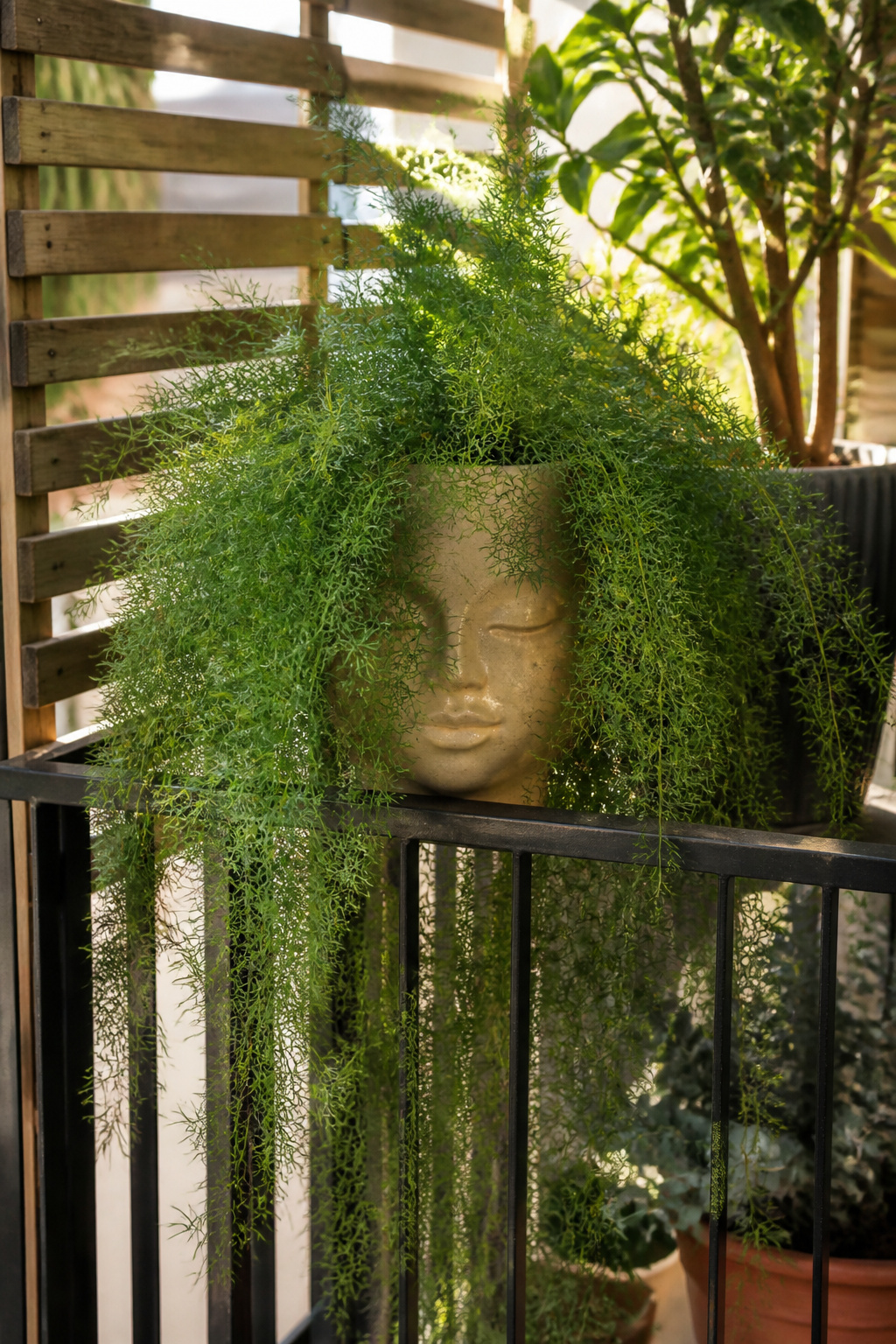
The airy plumes of an asparagus fern spill over a face planter’s edges like hair that has never met a brush, soft enough that your fingers want to trail through it. Those wiry stems carry hundreds of thread-like cladodes, each one a tiny green needle, so the overall effect is cloud-like and weightless rather than dense. The plant fills space without crowding it, which matters when a head pot sits on a narrow balcony rail or a cramped patio table.
What sold me on trying it was the light tolerance. Asparagus setaceus is not a true fern, despite the common name, and that distinction matters for placement. Real ferns burn in direct sun and sulk in anything less than bright shade. This imposter handles several hours of morning light without bleaching, and in my experience it recovers faster from a missed watering than any actual fern would forgive. The tradeoff is thorns on mature stems, nothing fierce but enough to snag a sleeve when you move the pot. Wear gloves for heavy pruning, or position it where the cascading growth hides the woody base and you rarely need to reach in at all.
8. Bunny Tails for Whimsical Texture
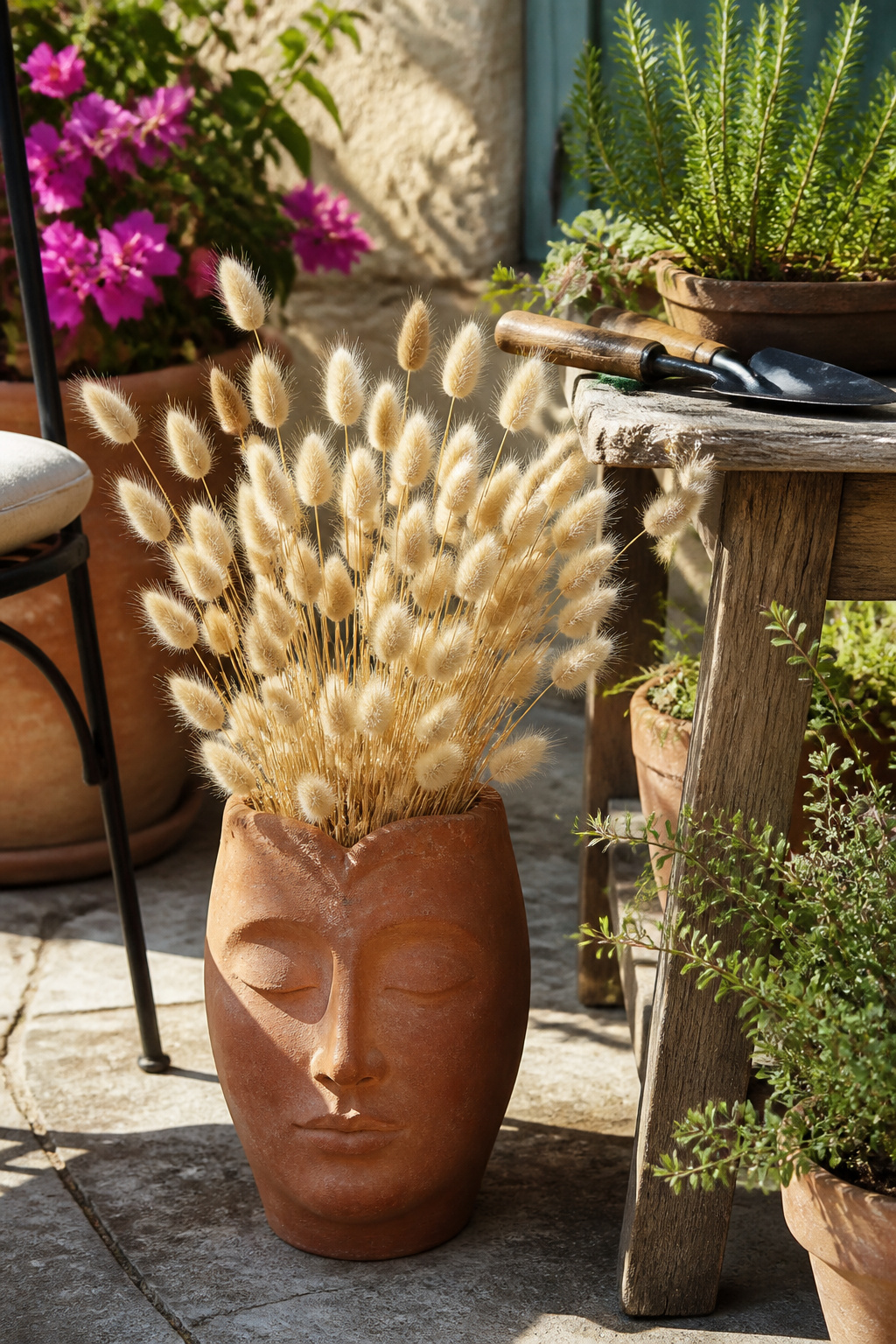
Bunny tails grass earns its name from soft, oval seed heads that look like small pom-poms or tight curls bobbing in the breeze. In a face planter, those fluffy heads sit right at the crown line, giving the impression of a cropped, playful haircut rather than trailing vines that spill everywhere. The texture reads as tactile even from a few feet away, and the pale, bleached-straw color works with almost any pot finish, from raw terracotta to glossy white ceramic.
What convinced me, reading through a dozen of these planter setups, is how the grass moves. A stiff breeze sets the seed heads swaying, which animates the whole face in a way static succulents never manage. One full sun pot of bunny tails, kept on the dry side, carries that movement through late summer even as other annuals start to flag. The stems stay upright without staking, and the seed heads dry in place if you forget to water for a weekend, so the "haircut" does not collapse into a mess. Cut stems back hard in late fall, or pull the whole clump if you treat it as an annual. Either approach takes under five minutes.
9. Pothos for Wavy, Forgiving Trails

The first pothos I ever owned survived a three-week vacation with no water and a north-facing bathroom window. That same resilience makes it a natural match for face planters, which tend to sit in spots we forget about and light that would starve fussier plants.
Heart-shaped leaves emerge on wavy, trailing stems that spill downward like uncombed hair. Within a single growing season, a four-inch starter can stretch to fill a six-inch head pot entirely, softening the planter’s edges and giving the face its shape. Growth slows in dim corners, but the plant does not sulk or drop leaves; it simply waits.
Watering can be erratic without penalty. The stems root easily where they touch moist soil, so a sparse patch fills back in. For a planter that reads as hair rather than stray vines, pinch the longest trailers once they pass the chin line; energy redirects to lateral growth and the whole head thickens. A monthly feeding at half strength through spring and summer keeps the color deep green instead of washed out yellow, the main sign that a pothos has been left too hungry for too long.
10. Celosia for Velvety Color

Celosia carries its color like velvet absorbs light, dense and saturated without any shine. The flower heads sit upright, rounded or rippled depending on the variety, in coral and magenta and a deep gold that reads almost orange in late afternoon sun. That density matters in a face planter: the silhouette holds its shape, reading as a crown or a deliberately styled updo rather than loose spillover. The surface has a soft, almost plush texture that catches differently than glossy leaves, and the color stays honest through real heat, the kind that wilts petunias by noon. I treat it as a seasonal accent, not a permanent resident. It will finish in fall, and the planter will need something else by first frost. For the months it lasts, though, it gives a solid block of color that does not ask for deadheading every other day. A 4-inch start fills a small head pot inside six weeks if the soil stays warm. The tradeoff is the replant.
11. Petunias for Reliable Summer Color
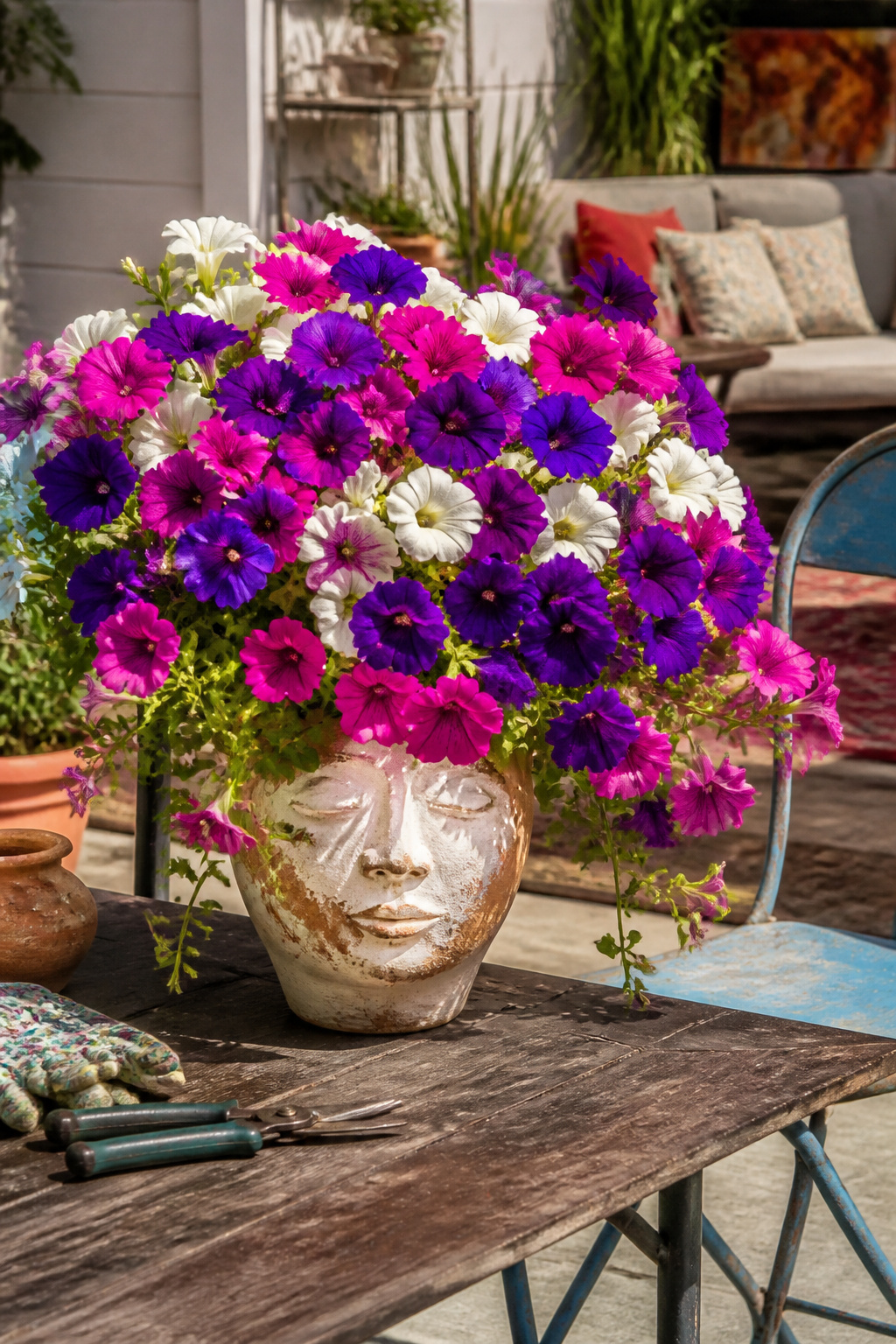
Petunias are the workhorse most people reach for when they want a face planter to actually read as hair from June through September. Their natural mounding habit fills out the crown of a head pot with rounded volume, while trailing varieties can be positioned at the back or sides to spill over like a bob cut growing out or deliberate waves.
The color range is almost unfair. Solid purples, pinks, and whites give you a single bold statement; the striped or veined bicolors add the kind of visual texture that reads as layered or highlighted from a few feet away. What separates a petunia display that holds for four months from one that gives up by mid-July is deadheading every three or four days and never letting the soil dry past the top inch. The plants flag dramatically when thirsty, flowers crisping and stems wilting, but they recover fast if you catch it early. Let them go dry twice in a row and the lower leaves yellow, the bloom set thins, and the whole shape starts to look threadbare rather than lush.
In a face planter, that full shape is doing the visual work. A sparse petunia just looks like a few flowers stuck in a pot, not like hair growing from a head. The moisture demand is real, though: in full afternoon sun you may need to water daily, and a planter under twelve inches across dries out faster than most new gardeners expect. Pairing petunias with a water-retaining potting mix and a saucer underneath buys you a little forgiveness, but not much.
12. Succulent Mixes for Sculptural Looks
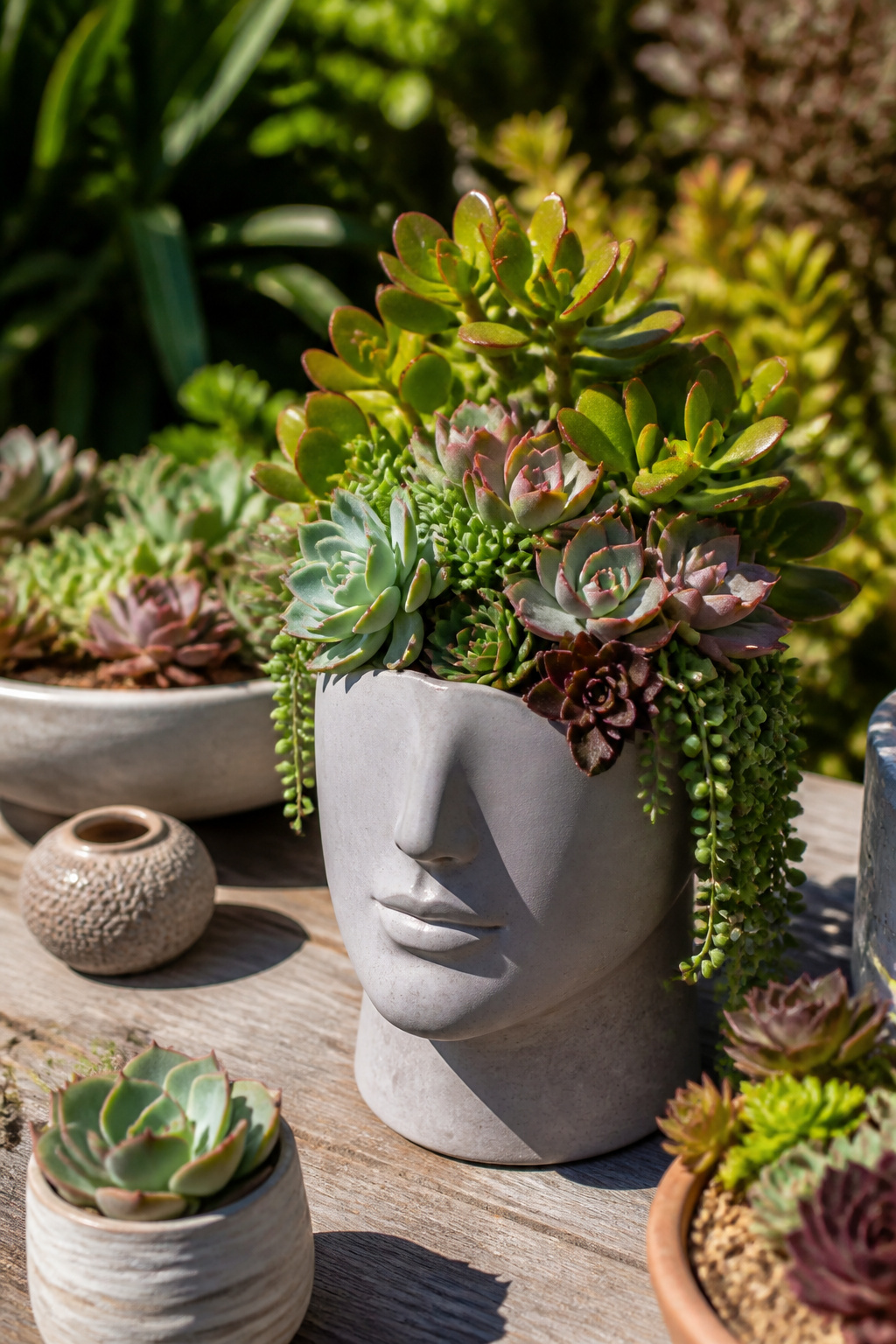
Succulents in a face planter read as deliberate architecture rather than happy accident. Rosette-forming varieties like Sempervivum and Echeveria sit like precision-cut bangs or a geometric bob, their spiraled leaves catching light the same way a styled haircut catches shadow. Jade, with its stacked, paddle-like growth, works better at the crown or nape where you want vertical lift without softness.
The real interest comes from mixing textures. Pair the tight geometry of a small rosette against the looser, almost rubbery fingers of a larger Echeveria, or let a creeping Sedum spill from one side to break the symmetry. One texture reads as a wig; three read as living hair.
These arrangements demand two non-negotiable conditions. The soil must drain fast, even faster than standard potting mix allows, because succulents in a closed ceramic head will rot before they wilt. And the light needs to be bright enough to keep growth compact; stretched, reaching stems lose that sculptural quality entirely and the whole effect collapses into a green mop. A south-facing patio or a windowsill that gets direct sun for most of the day keeps the forms tight enough to read as styled.
Making Your Own Face Planter
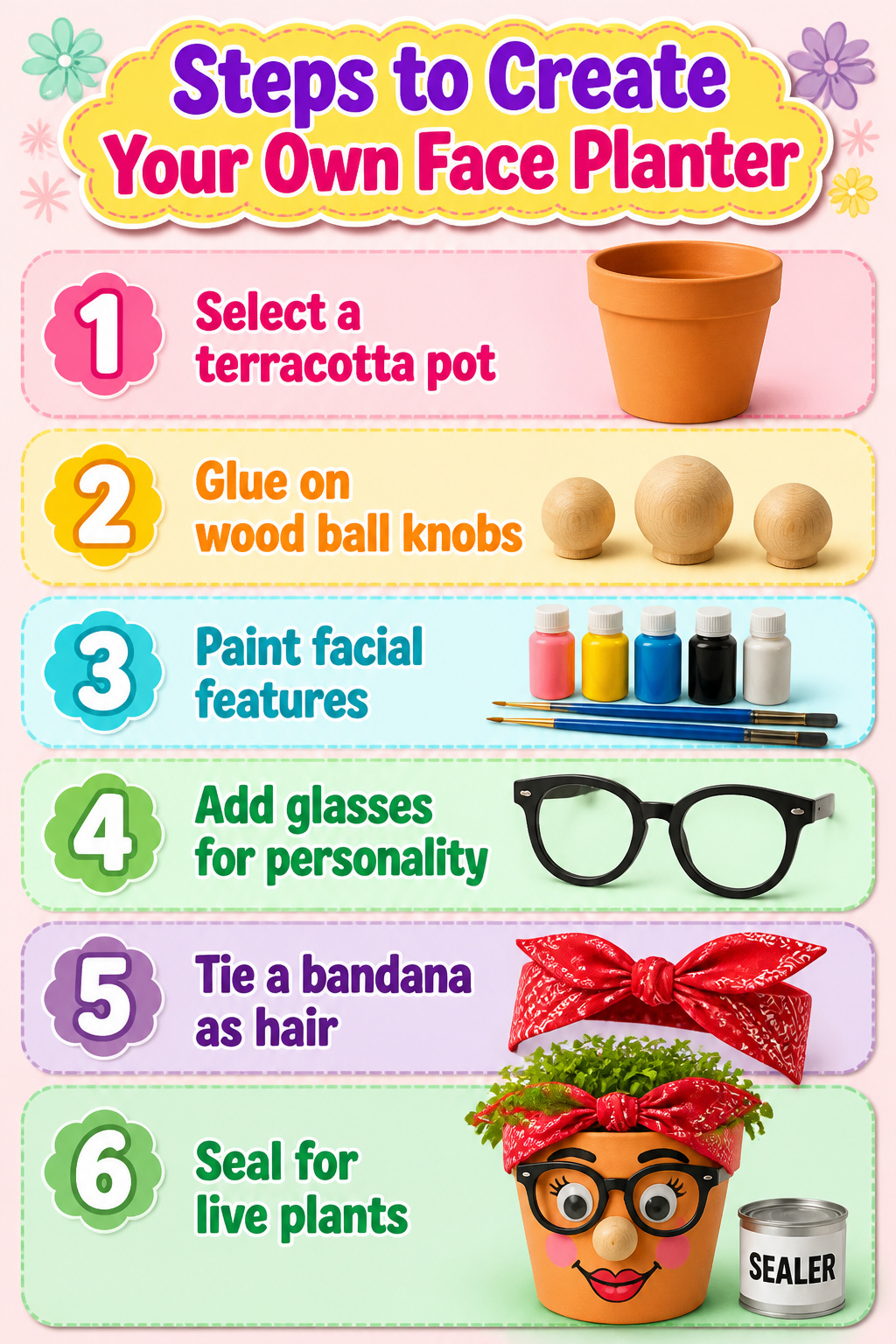
A medium terracotta pot, roughly 8 inches tall, is the starting point most people reach for, and it gives you enough surface to paint a face that reads from across the patio. Wood ball knobs around 1 inch across glue on cleanly for noses, and craft paint with a few brush sizes lets you block in features without needing portrait skills. The glasses are where the personality lands, party-store finds or old prescriptions with the lenses popped out, and a bandana tied around the rim covers the top edge while standing in for hair.
What convinced me, reading through a dozen of these builds, is how little the outcome depends on neatness. Mismatched wiggle eyes, oil pastel blushed onto cheeks with a cotton ball, felt scraps or yarn swapped for the bandana, the whole thing gets better the less you try to match a template. Even adhesive vinyl cut into eyebrows and lips works if your hand shakes on fine lines.
Seal the inside if you are planting live plants, not just the paint on the outside, since terracotta wicks moisture straight through to the face you spent an afternoon on. The craft stays cheap, the look stays silly, and the only real mistake is treating it like a kit instead of a sketch.
Arranging Plants to Mimic Hairstyles
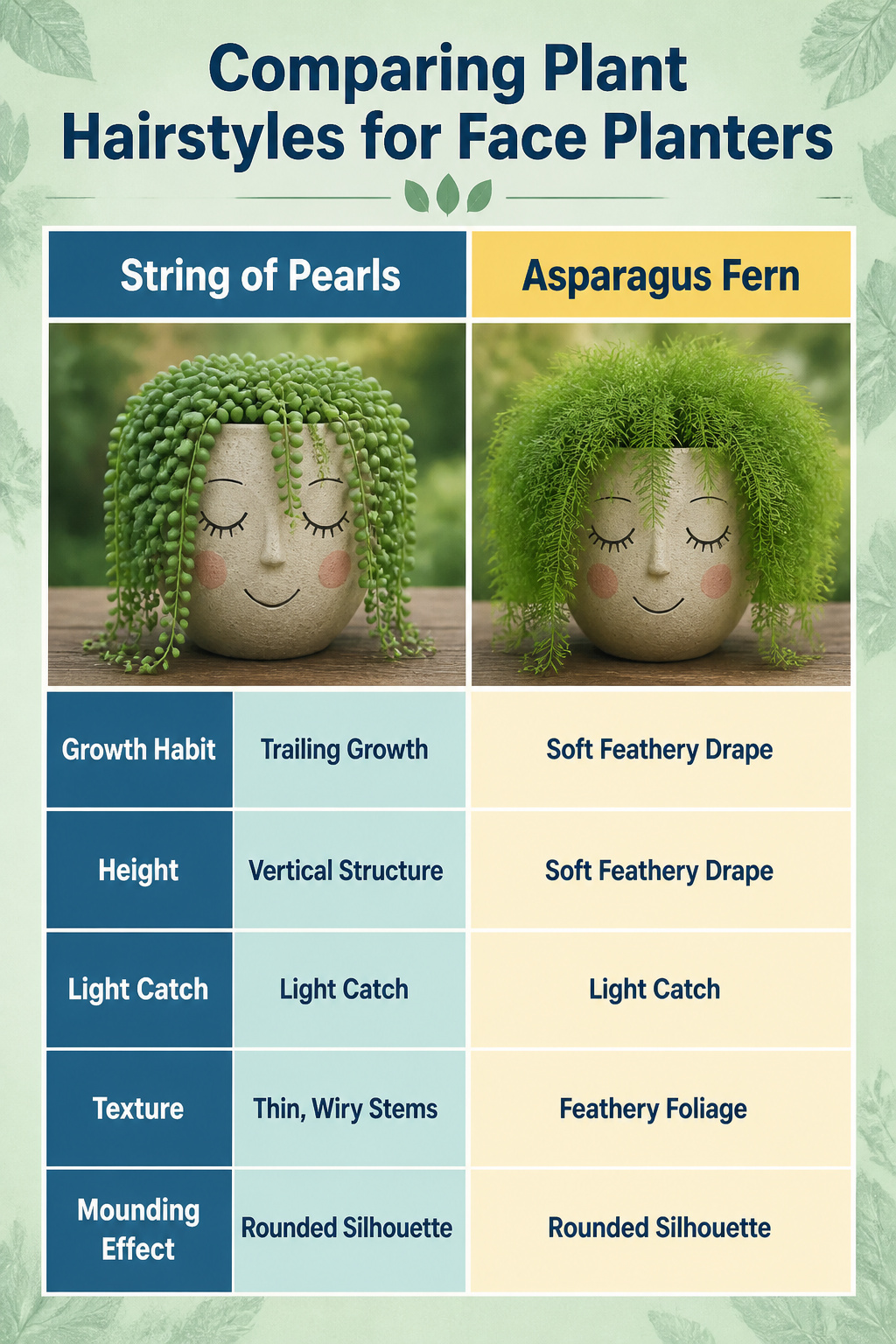
The growth habit of a plant matters more than its leaf shape when you are trying to build a hairstyle. Trailing plants give you the cascade down the sides of the pot, the long strands that read immediately as hair. String of Pearls works here because those thin, wiry stems hang and keep hanging, and the small round leaves catch light the way individual strands would. Asparagus Fern does something similar with a softer, feathery drape, wilder and less controlled, which reads as volume rather than length.
Upright plants build the opposite effect: structure, height, the sense of hair that has been cut and styled to stand. The sources do not name a specific upright specimen for this, but the logic is clear enough from the contrast they draw. You would look for something with stiff, vertical growth that stays where you put it.
Mounding plants sit in between. Bunny Tails, with its soft, fluffy seed heads in white or pink or beige, gives you a rounded silhouette, a bob cut or a cap of curls rather than flowing hair. The texture is the point here; the plant does not spill dramatically or spike upward, it fills a shape.
What convinced me, reading through these, is that the same face planter can read as completely different characters depending on this one choice. A trailing plant turns the pot into a portrait; a mounding plant turns it into a caricature. Both work, but they do not work for the same mood, and mixing them without a plan usually just looks like a plant that needs pruning.
Where to Hunt for Face Planters
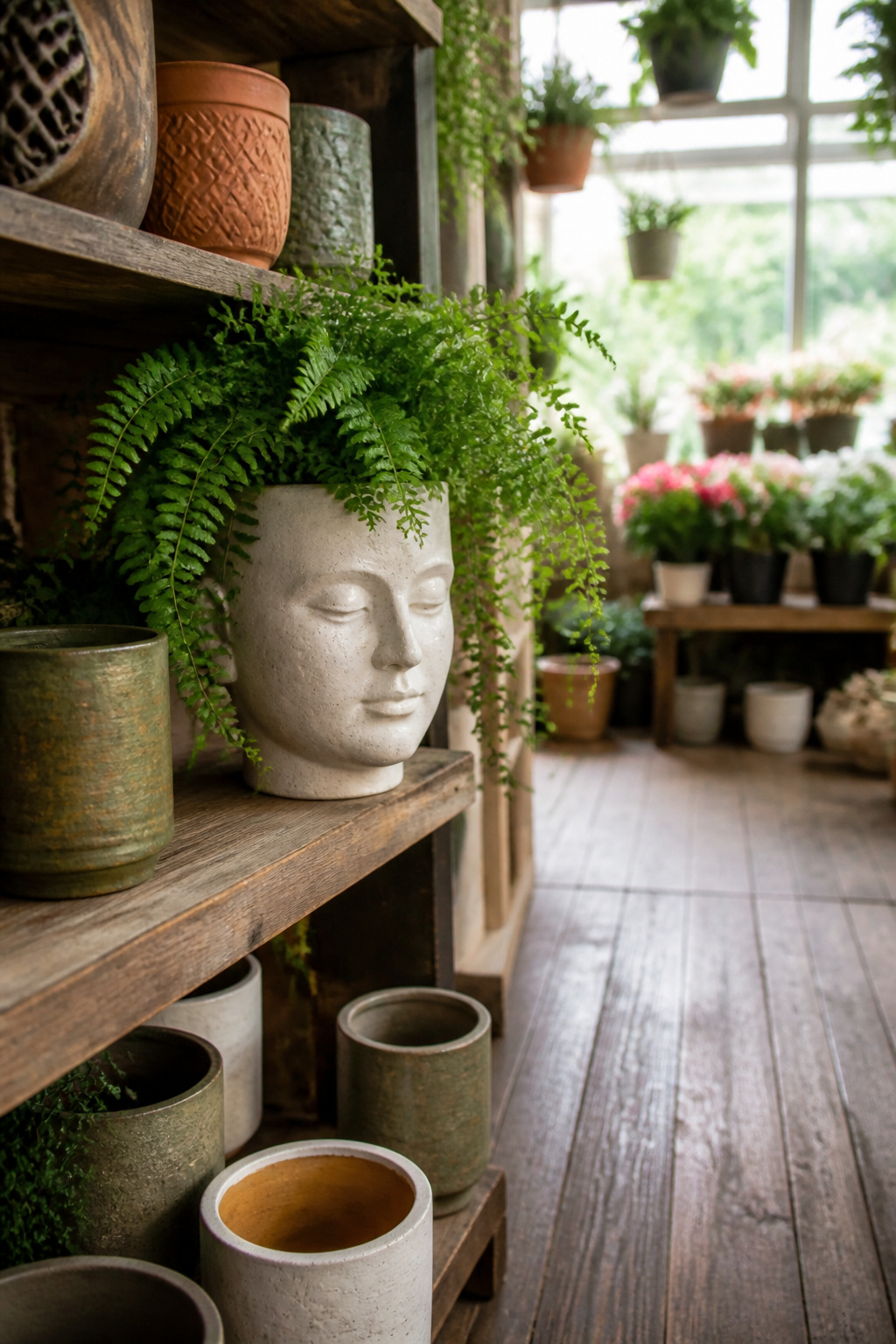
The best face planter I almost bought was a sea goddess with a shell headdress, sitting on a shelf at Ross Dress for Less in Pennsylvania. I had no use for her yet, so I left her. Two seasons later I still think about that pot.
Discount stores change stock with the tides, which is exactly why they are worth checking. Ross, TJ Maxx, Marshalls, Home Goods, and Ollies all get head planters in unpredictable waves. Most are stone, cement, or pottery, heavy enough to stay put on a windy balcony. Giant Supermarket in Pennsylvania has carried small person-shaped heads sized for air plants, the kind of oddball find that only happens because you were buying milk and wandered.
Local nurseries are the steadier bet. Wendy’s Flowers in Gilbertsville stocks ceramic men’s heads, mini goddess busts, and other styles you can match to an actual plant while you stand there. You will pay more than at Ross, but you will know the scale and weight before you commit.
Online sellers fill the gaps when you need something specific. Filter by material if you are hanging the planter; concrete reads charming in photos and ships like a boulder.
Frequently Asked Questions
What plants can I use in head-shaped planters?
Lemon Coral Sedum, Hoya Exotica, Aloe Vera, String of Pearls, Asparagus Fern, Bunny Tails, Pothos, Celosia, Petunias, Coleus, Toffee Twist Sedge, and mixed succulents like Sempervivum and Echeveria all work well. Trailing plants give you cascading hair, upright ones add spiky structure, and mounding varieties create rounded volume like a bob cut.
Where can I buy face planters?
Check discount stores like Ross, TJ Maxx, Marshalls, Home Goods, and Ollies for unpredictable stock at lower prices. Local nurseries such as Wendy’s Flowers in Gilbertsville carry steadier selections you can size in person. Online sellers work for specific styles, but filter by material if you plan to hang the planter; concrete looks charming but ships heavy.
How do I arrange plants in head planters to look like hair?
Match the plant’s growth habit to the hairstyle you want. Trailing plants like String of Pearls or Pothos create long cascading strands. Upright plants like Aloe Vera or Toffee Twist Sedge build spiky, architectural styles. Mounding plants like Bunny Tails or Celosia fill out rounded shapes such as bobs or curls. Mixing textures, like pairing tight rosette succulents with creeping Sedum, keeps the look from reading like a solid wig.