

The right front porch idea depends on what your space can actually hold. A four-by-six concrete slab needs a rug and a wreath, not a rocking chair that blocks the door, while a deeper covered porch can carry seating, layered lighting, and the symmetry that reads as intentional from the curb. The budget swings wide too: resin planters run about $30 each, a painted door costs a quart of paint and an afternoon, and building even an 80-square-foot porch from scratch starts near $2,000. Start with what faces the street, then match the effort to the square footage you have.
1. Add Potted Plants
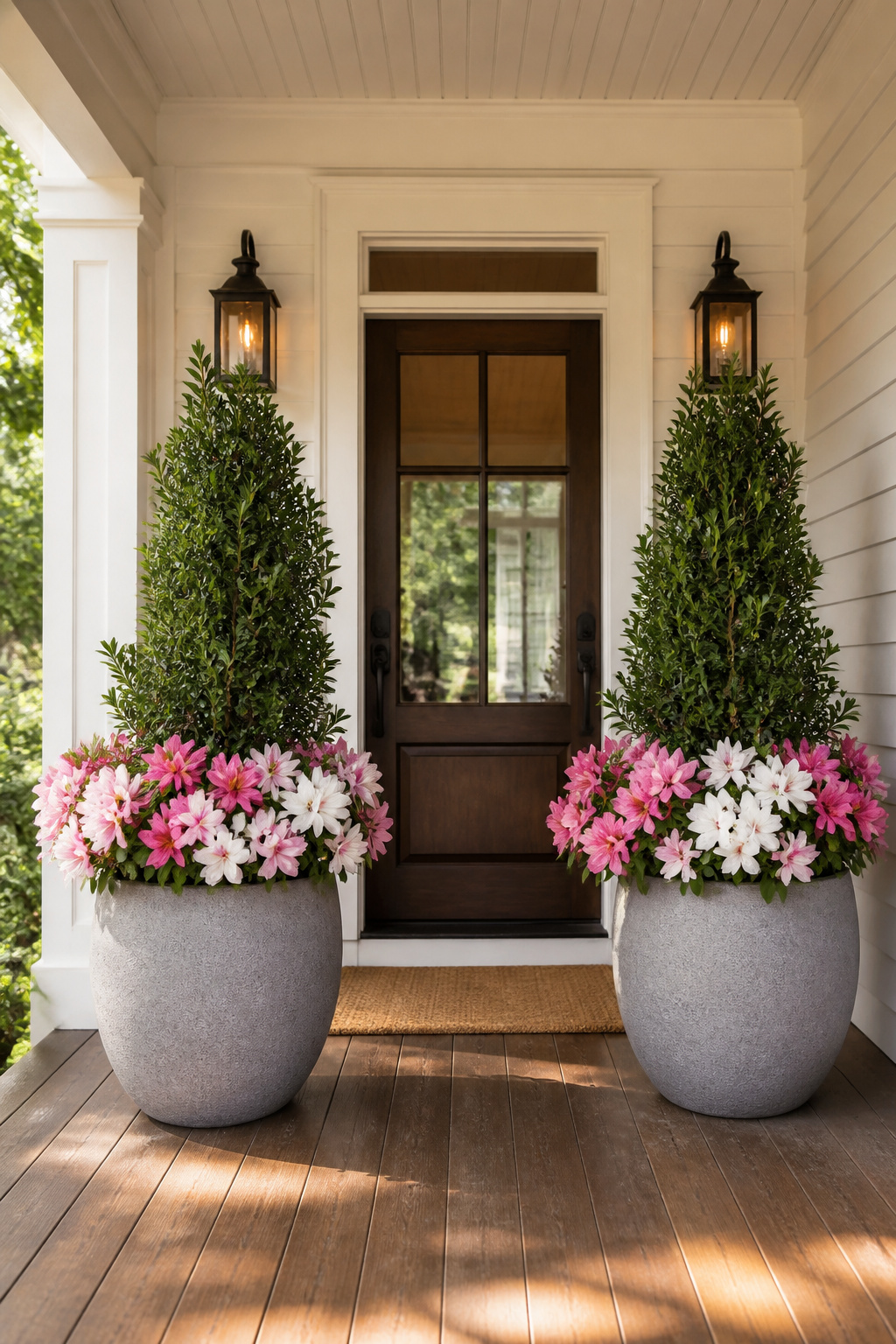
Greenery changes a porch from a pass-through to a place where someone actually lives. Two large planters flanking the door do the heavy lifting; they add structure without clutter, and on a small porch they read as intentional rather than crowded. Resin pots run about $30 and pass for stone or ceramic from the sidewalk, which matters when the budget has to stretch across the whole yard.
I like a single tall plant in each planter, something with upward lines like a boxwood or a small cedar, paired lower down with seasonal color. Hydrangeas, begonias, geraniums, or azaleas keep the door visible and welcoming. The direction the porch faces matters more than the variety, so I ask the nursery for what survives a north-facing overhang or whatever exposure the house actually gets. Mixing heights keeps the eye moving, and if the growing season runs short or the water bill stings, UV-treated faux plants have gotten convincing enough to carry a porch through several years without the replacement cost.
2. Use Outdoor Rugs
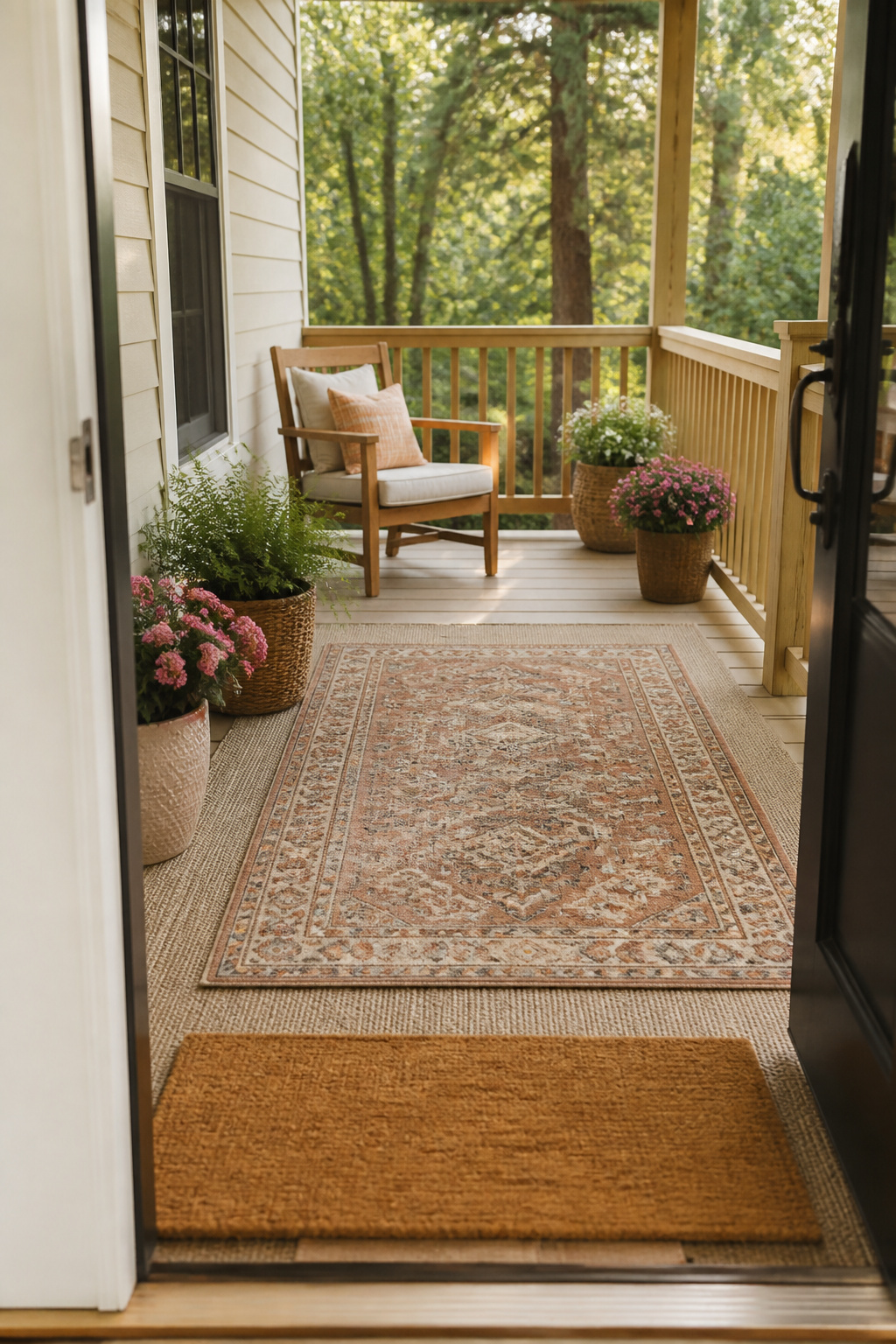
A single large rug can ground a small porch the way furniture grounds a living room, giving your eye a place to land before you notice the square footage. Water-resistant polypropylene rugs withstand mildew and hose cleanings, which matters more than pattern when you are tracking in pollen and spring rain.
Layering adds depth without adding clutter. A neutral jute base underneath a smaller patterned rug creates zones, a trick borrowed from indoor design that works even on a four-by-six concrete slab. The top rug can swap seasonally, the base stays.
My preference runs oversized and plain for the doormat itself, letting the shape or scale carry the statement rather than a printed greeting. A braided mat in a half-moon or extra-wide rectangle frames the door with more presence than words would. If the budget allows one splurge, put it here: the entry point sees the most wear, and a thin mat that skids or frays reads as an afterthought.
On a truly tight porch, skip the chairs and let the rug alone define the space. The texture underfoot signals "room" without the bulk of seating you will rarely use.
3. Paint the Front Door
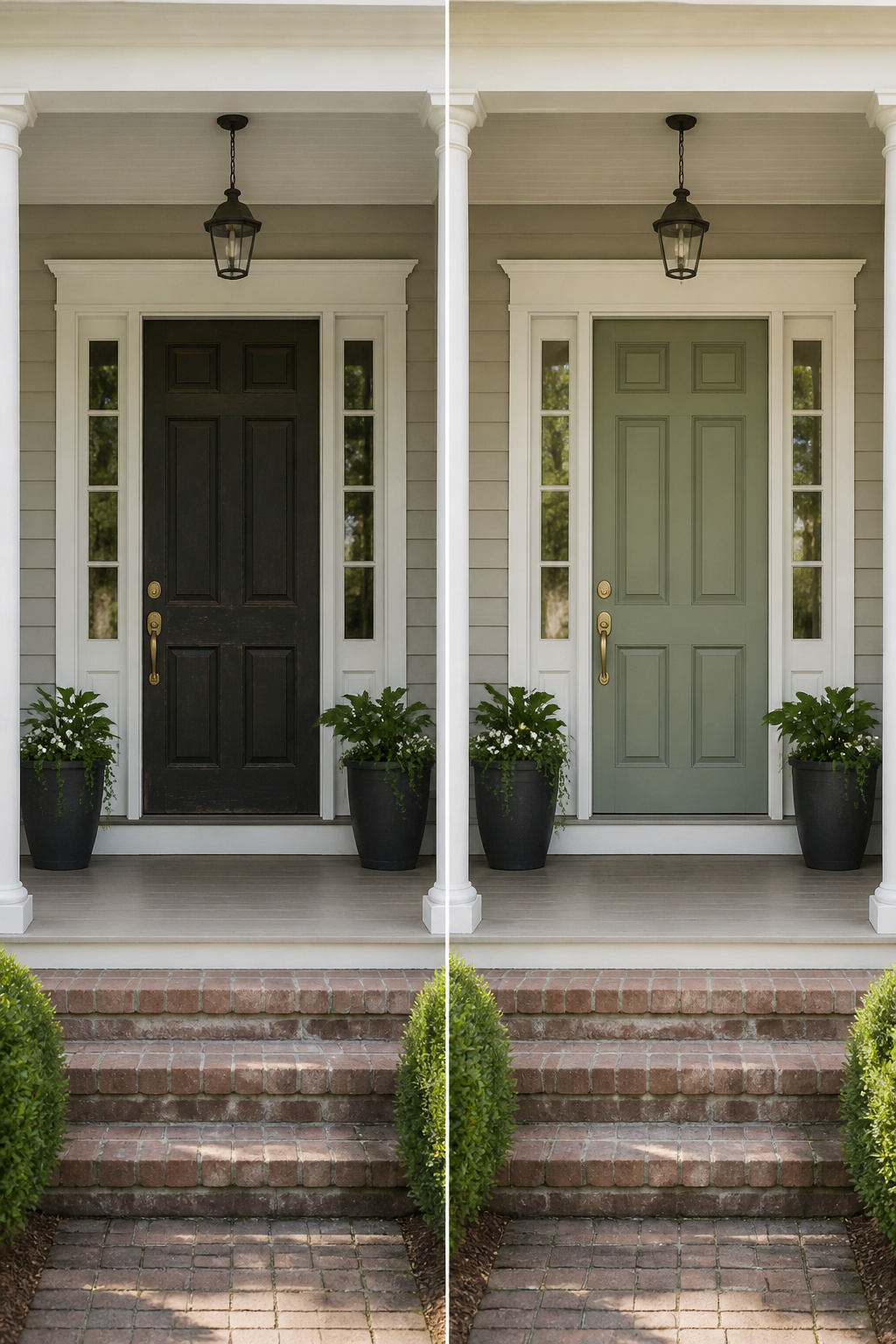
A front door painted in a color that fights the siding instead of blending in will pull every eye on the street straight to your entry. Evergreen Fog, Sherwin-Williams’s 2022 Color of the Year, works as that kind of deliberate contrast: a muted sage with enough depth to read as a statement against red brick, white clapboard, or gray painted siding. The effect is immediate. Where a door matches its surroundings, the porch reads as one flat plane; paint it Evergreen Fog and the door becomes the single point the rest of the porch arrangement can orbit around. Cost stays low, since a quart of exterior-grade paint and an afternoon with a brush is the whole job. The risk is choosing a color so bright it competes with itself. Evergreen Fog sidesteps that; it carries enough gray to stay grounded while still reading as color from the curb. Two coats, light sanding between, and the door does the focal-point work that furniture or planters would struggle to match at ten times the effort.
4. Install Lighting

Lighting on a porch is often the last thing anyone thinks about until they trip on a step or fumble for keys in the dark. Sconces flanking the door give a cleaner look than overhead fixtures, and they actually light faces instead of casting shadows under hats. Scale matters more than most people expect: fixtures should run larger than 12 vertical inches to read properly from the street and to balance the front elevation of most homes. String lights overhead or a hanging pendant can soften that brightness into something usable after dinner. Solar-powered path lights along the walk save on wiring and stay lit even when you forget the switch, though they dim where tree cover is heavy. Matching the fixture style to the house, whether modern brackets or lantern-style mounts, keeps the porch from looking like an afterthought.
5. Create a Cozy Seating Area
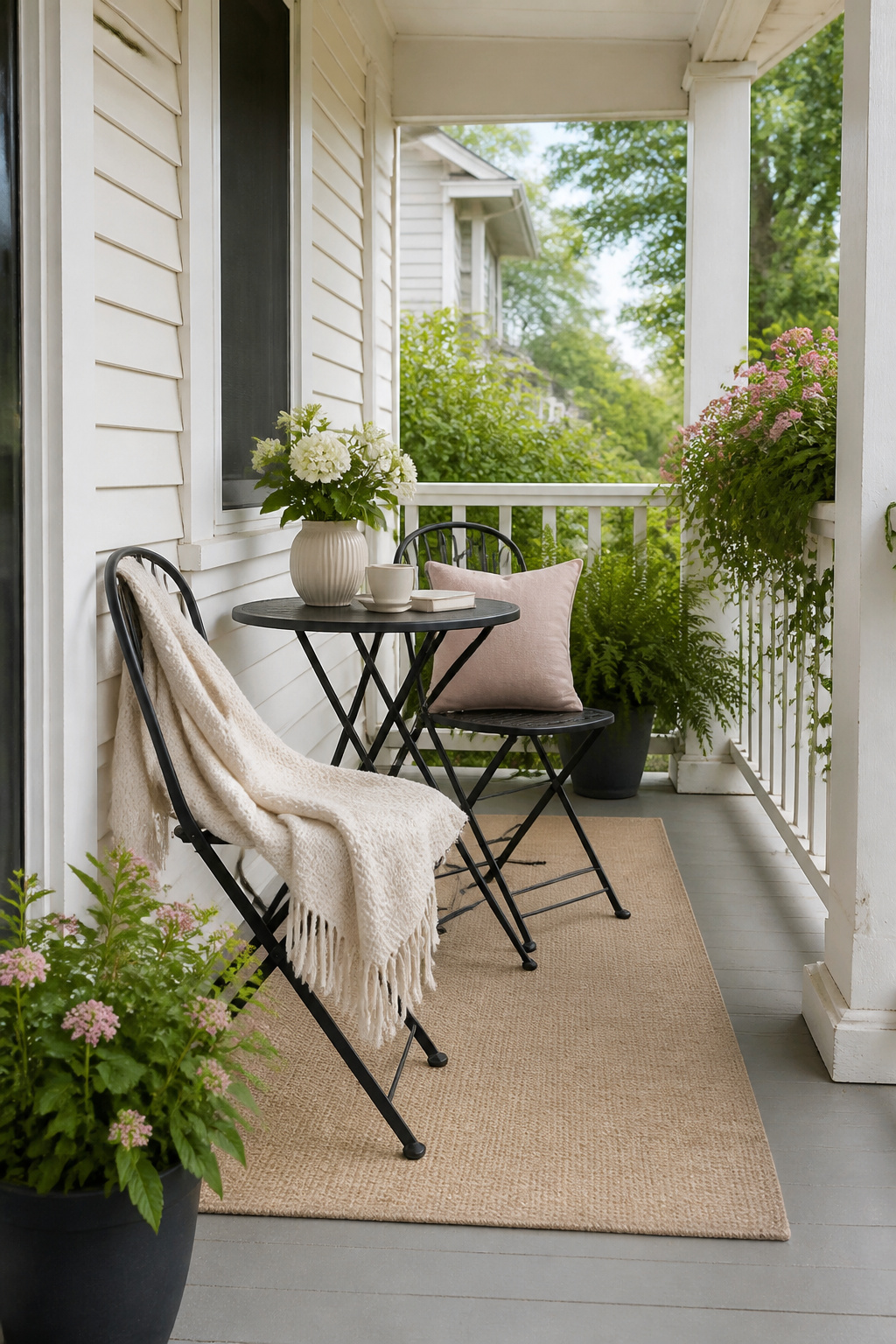
A bench or a single rocking chair can turn a front porch from a pass-through into a place you actually use. The mistake I keep seeing, and nearly made myself, is grabbing full-scale patio furniture meant for a backyard deck. On a small porch, that one oversized piece blocks the door, crowds the steps, and makes the whole house feel smaller than it is.
Lightweight, movable seating wins here. A slim bistro set, a narrow bench, or even a pair of hanging chairs keeps the floor open and lets you shift things when you need space for packages or guests. Proportion matters more than square footage. What convinced me, reading through a dozen of these setups, is how often a single chair with a small side table felt more inviting than a crowded two-piece set. If the porch is too tight for any floor seating at all, swinging chairs from the ceiling or a bench just off the porch by a tree can still give you that same pause-and-sit moment without the clutter. Throw pillows in a neutral or soft pattern finish it, but only after the scale is right.
6. Hang Seasonal Wreaths

A wreath on the door is the quickest signal that someone lives here and pays attention. I swap mine four times a year, and the neighbors notice before they notice anything else on the porch. Spring gets the bright florals, summer something lighter, autumn leaves or dried grass, winter greenery that can carry from December through February without looking forgotten.
Cheaper wreaths need replacing every year; better ones last several seasons and hold their shape through humidity and frost. The difference shows in the wire frame underneath and whether the materials are glued or wired on. I learned this after a $15 box-store wreath shed its berries across my porch by mid-January.
The rotation itself matters more than any single wreath. A porch that changes with the seasons reads as tended rather than decorated once and abandoned. Pair the wreath with whatever is alive in your planters, or let it carry the seasonal weight if your space is too small for much else. The door becomes your calendar.
7. Incorporate Decorative House Numbers

Peeling house numbers are the kind of detail you stop noticing after the third time you walk past them, but a stranger sees them immediately. A quick refresh, either with new hardware or a coat of lacquer on existing metal, pulls the whole entry together.
Brass, black, or stainless steel each read differently against siding or brick. Brass warms up a porch with wood accents; black stays legible against pale stucco from the street. For midcentury or modern exteriors, a slim sans-serif in a stark finish keeps the look intentional rather than apologetic. Older homes carry serif fonts more naturally, and the slight formality suits craftsman or colonial details without trying to fake age the house never earned.
Placement matters as much as the numbers themselves. Eye level beside the door, or centered on a porch column where the light actually hits them, beats tucking them under an overhang where delivery drivers squint. I have learned to step to the curb and check: if the contrast drops after thirty feet, the size or finish is wrong for the approach.
8. Utilize Vertical Space
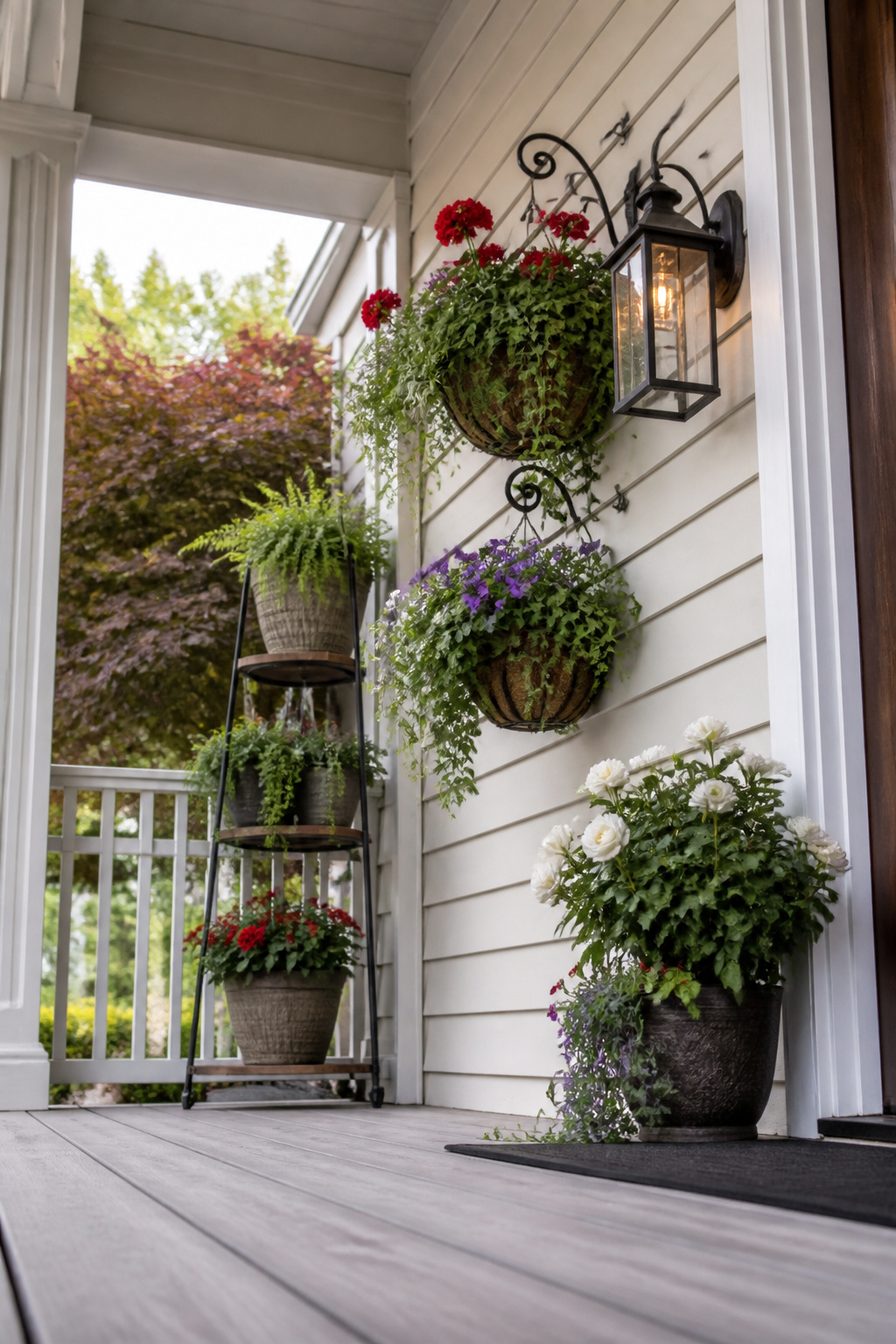
Wall hooks changed how my narrow porch works. Six inches of blank siding now holds a hanging planter, a lantern, and the welcome sign that used to lean against the door and fall every time the wind picked up. Vertical space is the only square footage you can add without a contractor.
For planters specifically, mixing wall-mounted and floor-based ones keeps the eye moving. A tiered plant stand in the corner draws attention upward and stops the space from feeling boxed in. The same principle works for storage. Small wall-mounted crates or a bench with hidden compartments keep shoes, umbrellas, and the trowel you always forget outside from colonizing the floor. On a porch that doubles as an entryway, that distinction matters. You walk through, not around, your own front door.
9. Keep It Tidy
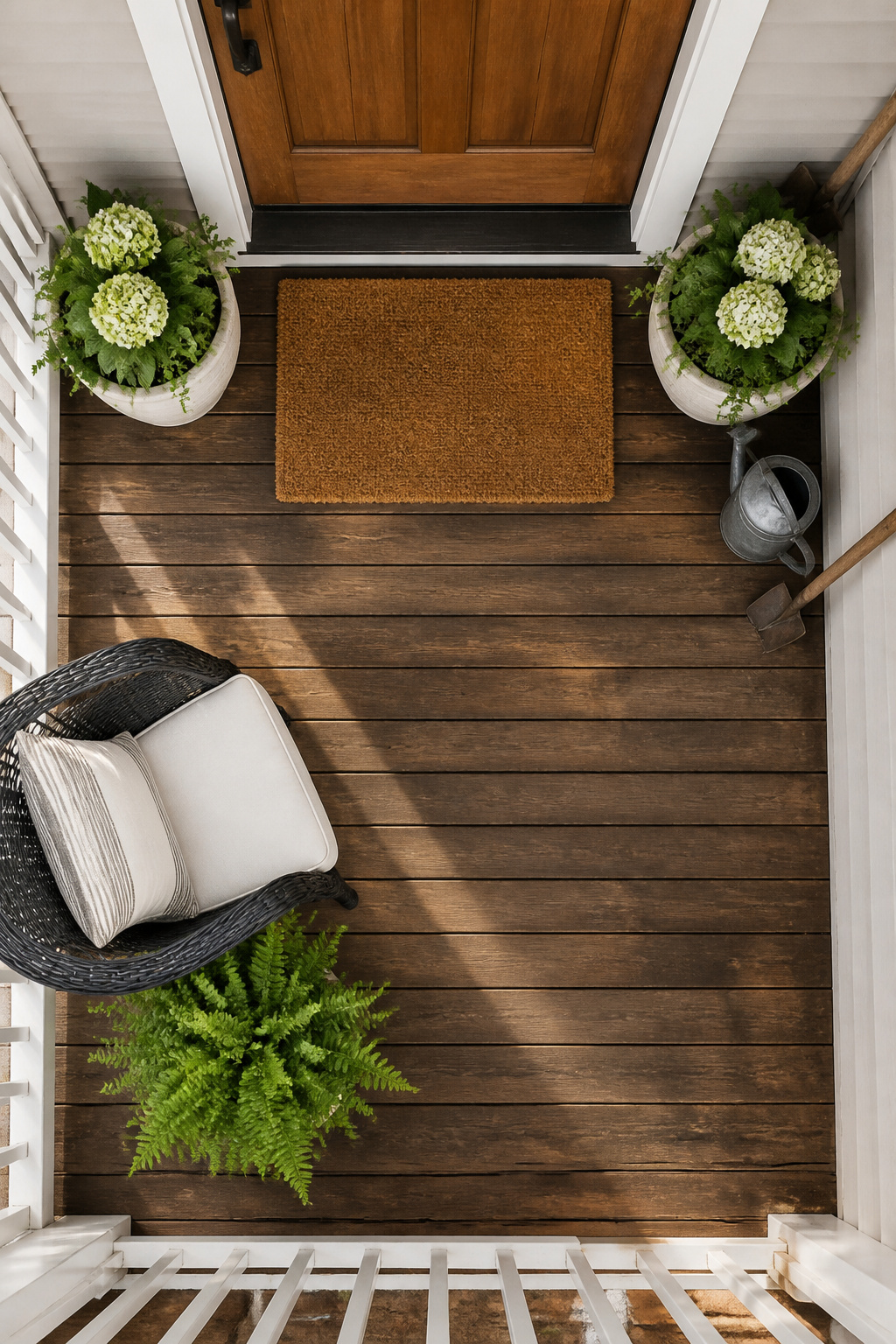
A porch that looks inviting in June can turn into a storage shelf by August if you are not deliberate about what stays and what goes. Extra shoes, garden tools, and the odd Amazon box have a way of colonizing the flat surfaces first, then the floor space, until guests are stepping around your life instead of into it. Sweeping weekly and storing the non-essentials is the difference between a porch that reads as a room and one that reads as a landing zone.
I keep a battery-powered leaf blower in the garage for this exact routine. It takes about ninety seconds to clear pollen, leaves, and the grit that tracks in from the driveway, and the small investment in a tool you will actually grab matters more than buying the most powerful model. For small porches, the real discipline is resisting the urge to fill every corner. A few chosen pieces, kept clear of daily clutter, will always outlast a crowded arrangement that looked charming in the catalog.
10. Add Unexpected Decor
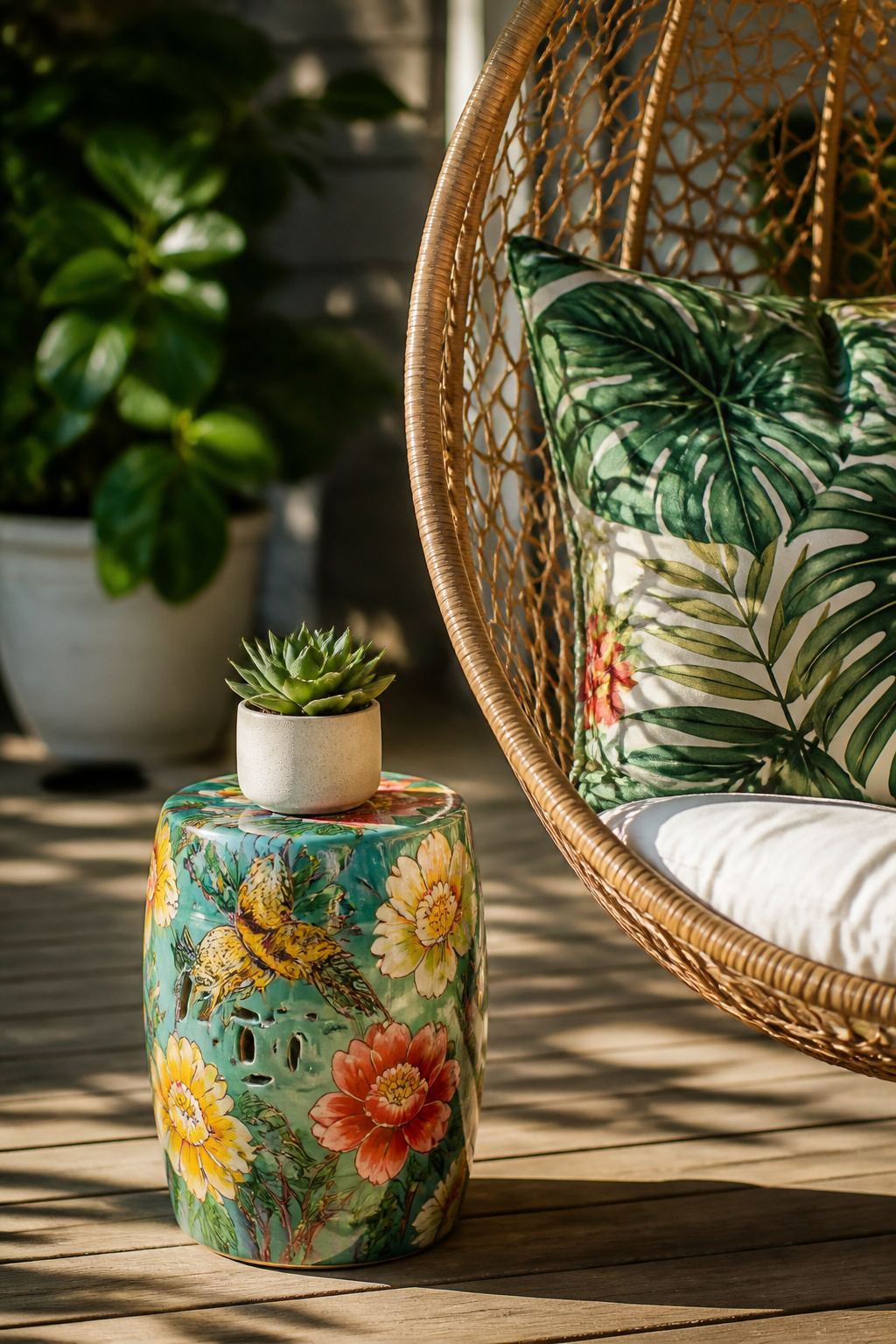
A garden stool can do more than hold a drink. In Florida porches, the ceramic ones work as side tables that hose clean and never rust, and the cut-out navy styles running about $75 carry enough pattern to read as art. That tropical bird-decorated piece does the same job while looking like something you brought back from somewhere.
Metal wall sculptures or weather-resistant pieces hung where the light catches them shift a porch from decorated to personal. The trick is matching the mood you already live with, whether that runs modern, rustic, or traditional, rather than letting the art fight the rest of the house.
DIY options keep the budget inside that $500-800 yearly spend. Painted wooden signs with a last name, house number plaques you letter yourself, or a wooden door hanging in non-traditional colors and patterns do what bought decor rarely manages: they show the actual person who lives there. A homemade wreath with bright flowers for spring, evergreen for winter, or those hanging Easter eggs scattered through a small yard tree costs little and reads as intention rather than default.
The seasonal swap matters. Pumpkins and plaid for cold months, playful wreaths when it warms up, keeps the porch from going static. Lighted pieces layered in carry the same effect after dark. What reads as clutter is usually sameness: one piece that actually means something outperforms three that matched from a catalog.
11. Use Symmetry in Decor

A front porch is the face of your home, and symmetry gives it an expression that reads as intentional before a guest even reaches the door. The eye picks up balance in about a second, which makes it one of the fastest ways to build curb appeal without adding clutter.
The simplest move is a planter on each side of the steps and another pair flanking the door, topped with a single wreath at center. That four-point frame draws the visitor forward without competing for attention. If you have the depth, mirrored chairs or a pair of rockers on either side of the entry do the same work at living scale; the repetition signals that the space was planned rather than accumulated.
Small porches especially benefit from this approach. Mirroring a few pieces, chairs, side tables, or planters, makes the area read as organized rather than cramped because the brain processes the pattern as one calm unit instead of several objects to sort through.
Where I draw the line is forcing symmetry onto an asymmetrical facade. A centered door with sidelights wants matching sconces and pots; a door shoved to one side by a staircase fights it. In that case, the balance to chase is visual weight, not mirror images. The goal is a porch that looks considered, not a set that looks staged.
What Size Porch Costs to Build

An 80-square-foot front porch runs $1,840 to $8,800 to build from scratch, which puts the idea of new construction in perspective for anyone already working with an existing slab or deck. Most readers landing on this article are not pouring footings; they are dressing up what they have. Still, knowing the starting cost of raw structure helps you judge how much budget to leave for furniture, paint, and the plants that actually show up in your photos.
A 100-square-foot porch lands between $2,300 and $11,000, and a 12-by-12-foot space averages $3,312 to $15,840. The spread is wide because materials and local labor swing the number, but the floor is the floor. If you are renting or working a small lot you do not plan to stay on, the case for improving what exists rather than building new gets obvious fast. For homeowners with a crumbling stoop or no cover at all, the question becomes which size buys you enough square footage for a chair and a pot without eating the whole year’s yard budget.
Furniture That Fits Small Porches

Oversized outdoor furniture is the first mistake that shrinks a porch visually, even when the square footage is technically enough. A rocking chair or bench that crowds the railing leaves no room to move, and the whole entry starts to feel like storage. What works instead is furniture scaled to the space, with a slim profile and light visual weight.
On my second house, the porch was too small for even a potted plant. Floor space simply was not an option, so I learned to read proportion differently: a tailored doormat, a seasonal wreath, and railing with actual detail substituted for seating without cluttering anything. Swinging chairs hung from the beam overhead solved the same problem elsewhere, offering a perch that never touches the floor.
For porches that do fit a seat, a single bistro chair or compact bench beats a set. Thrift stores and yard sales turn up small-scale outdoor pieces regularly, and indoor-outdoor fabric on a throw pillow softens the look without adding bulk. The rule I follow now: one well-chosen piece reads as intention; two marginal ones read as cramped.
Color Schemes That Work

A front porch looks finished when the door, the rug underfoot, and the plants at the steps all read as the same decision. Two or three coordinating colors across furniture, rugs, planters, and decor will do it; more than that and the eye starts to hunt for a place to rest.
The door is the place to commit. A painted front door in a bold red, cheerful yellow, or calming blue gives the whole house a refreshed face, and that color can thread through pillows, throws, and the blooms you choose. Soft white mixed with greys and greenery reads as calm; bright pinks paired with burgundy add energy. Either route works if you stay on it.
Neutrals that sit close to your exterior paint or your front yard landscaping help the porch feel like a continuation of the house, not a separate room tacked on. I like to add one plant that draws the eye upward, boxwoods or a small topiary, then a seasonal pot of hydrangeas, begonias, geraniums, or azaleas for color at the door. Asking your local nursery for varieties suited to your porch’s light, north-facing shade or otherwise, saves a season of wilting.
A few pieces chosen within the palette look more elegant than a crowded collection. The wreath, the planters, the seating: each one should earn its place by reinforcing the scheme you started at the door.
A Seasonal Refresh Calendar

A front porch that looks intentional in March and spent by August is a problem most of us have lived with. The fix is less about buying more than it is about timing what you already rotate.
Wreaths are the easiest entry point. A single greenery base carries January through, then you layer in the shift: lighter florals when the weather turns, leaves or dried elements come fall, evergreen back again before the first freeze. The same door hardware, three distinct statements across the year. What convinced me, reading how others handle this, is that the people who make it look effortless are not crafting from scratch each season. They own maybe four wreaths total and swap on a schedule that matches what their local nursery stocks.
That nursery timing matters just as much for planters. A north-facing porch like mine means shade-tolerant plants: hydrangeas, begonias, the ones that do not fry by June. Ask which direction your porch faces before you buy. The garden center staff have answered this enough to know which varieties will survive your specific light, and swapping them out as the seasons change keeps the porch from going static.
Lighting adjusts too, though more subtly. Café strings under the overhang work year-round but read differently against summer greenery versus bare winter branches. The wattage stays the same; the surrounding material does the visual work.
The calendar itself is the tool: not a rigid plan, but a reminder to look up from the routine and notice when the porch has drifted off-season.
Lighting for Safety and Mood
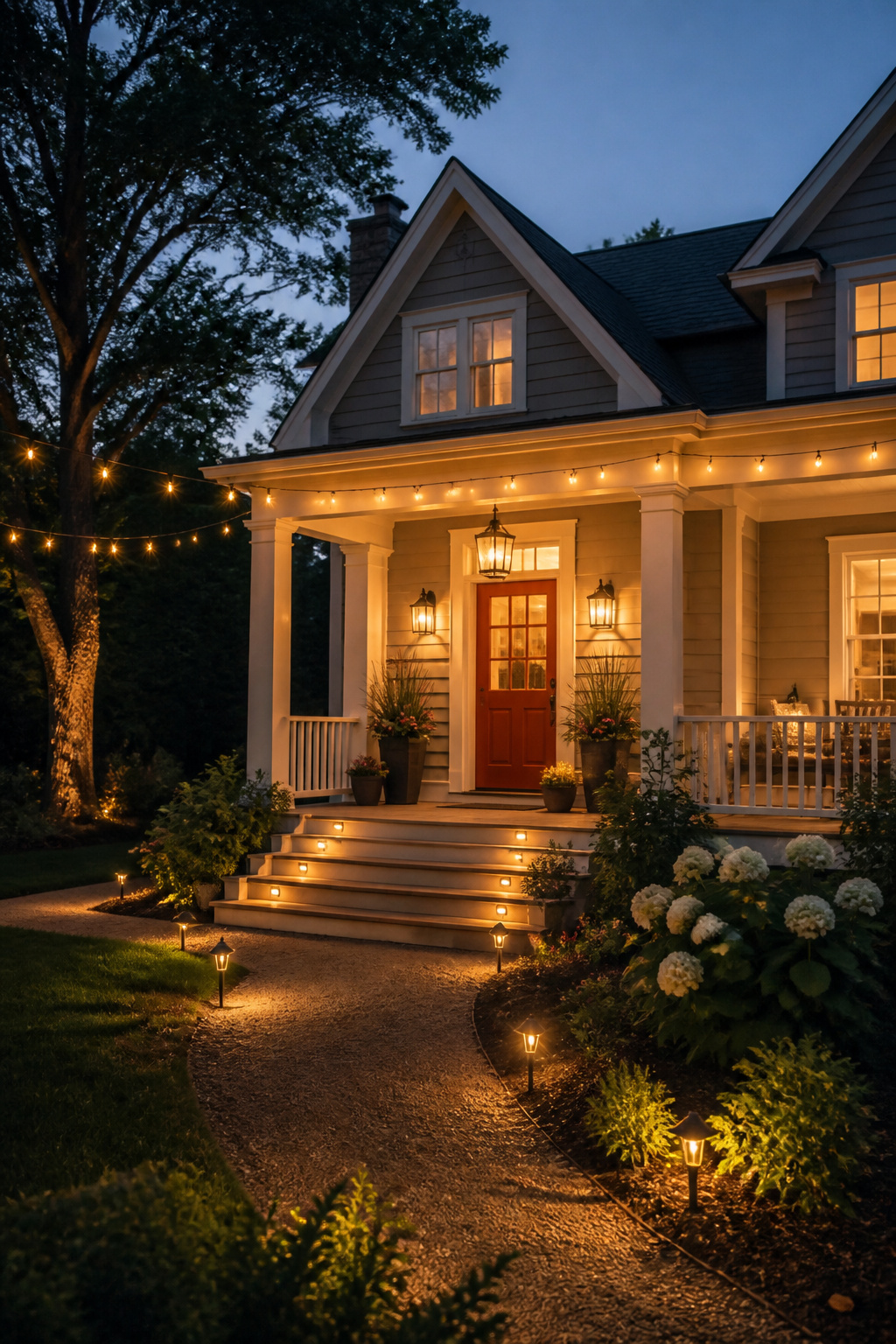
Walking up to a dark porch at night makes a space feel closed off before you even reach the door. Solar-powered lights solve the wiring problem entirely, running along railings or tucked beside planters where a cord would trip someone. I like them for steps and pathways, since the charge runs out eventually and you want that light exactly where feet land.
For the porch itself, hanging fixtures or matching sconces flanking the door give enough glow to linger outside after dinner. An oversized lantern overhead does the same work while anchoring the whole look. What changed my mind about going all-solar was seeing how patchy the coverage gets under an overhang or when trees block the panel. Electric or battery-powered wall sconces stay consistent right where you need them.
String lights strung overhead shift the mood without asking much of you. Gas lanterns carry a different warmth than standard electric, worth considering if your house leans traditional. The real move is layering: something practical for the steps, something softer for sitting, so the porch stays usable past sunset rather than just visible from the street.
Frequently Asked Questions
What is the best way to decorate a small front porch?
Use potted plants, an outdoor rug, and a painted front door to add structure without crowding the floor. Two large planters flanking the door read as intentional even on a tight space, while a single large rug can ground the area the way furniture grounds a living room. On a truly narrow porch, skip chairs entirely and let the rug and vertical elements like wall hooks or hanging planters carry the design.
How can I make my front porch more inviting?
Add comfortable seating scaled to the space and layer in warm lighting that lights faces rather than casting shadows. A single rocking chair or slim bench with a side table feels more welcoming than crowded full-scale patio furniture. Sconces flanking the door or string lights overhead soften the brightness into something usable after dinner.
What plants are best for a front porch?
Pair one tall plant like boxwood or small cedar with lower seasonal color such as hydrangeas, begonias, geraniums, or azaleas. The direction your porch faces matters more than the variety, so ask your nursery for what survives your specific light exposure. UV-treated faux plants carry a porch through several years without replacement cost if the growing season runs short.
How do I keep my porch tidy?
Sweep weekly and store non-essentials out of sight so the porch reads as a room rather than a landing zone. A battery-powered leaf blower clears pollen and grit in about ninety seconds. The real discipline on a small porch is resisting the urge to fill every corner; a few chosen pieces kept clear of daily clutter always outlast a crowded arrangement.